

The Vintage Japanese Porcelain Collectors Dream Of Finding Has A Hefty Modern Value
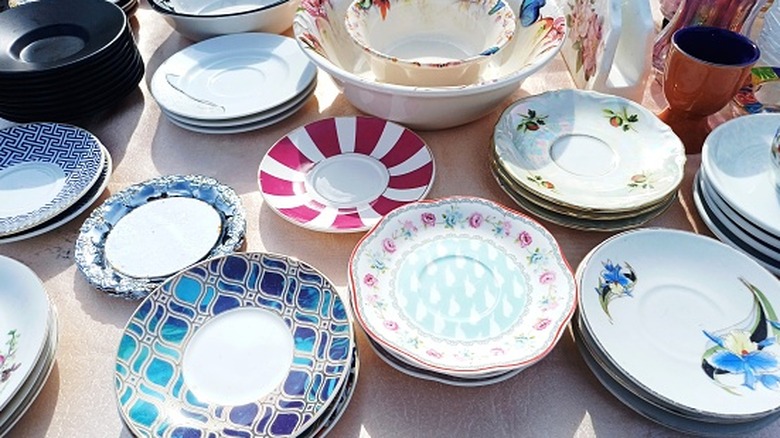
Thrifting for kitchen finds is all the rage, and it's no surprise why. Giving items a second life is more sustainable, and shopping secondhand at stores, estate sales, and online marketplaces is often more affordable. Many older items are also high quality and built to last, while vintage finds bring an eclectic, unique aesthetic that can make your kitchen feel more personal.
Before you set out for the flea market, it pays to brush up on valuable kitchen treasures to keep an eye out for. Plates, in particular, are fertile ground for valuable finds, with plenty of iconic brands and gorgeous designs to discover. Depending on their condition and material, these dishes can also serve a purpose beyond collecting, whether you use them for serving or display. Among the top vintage plates worth a fortune today, eagle-eyed shoppers may be on the hunt for Kutani porcelain. These dishes, vases, teapots, and other pieces feature vivid, detailed enamel depicting Japanese scenes, often detailed in gold.
Kutani porcelain dates back about 400 years, so the value of a piece depends largely on its age, condition, and rarity. The producer still operates today, and a contemporary plate can cost around $54. At the other end of the spectrum, pieces from the "Ko-Kutani" period, which lasted from 1655 to 1730, have sold for between $10,000 and $100,000. Pieces from the "Meiji" period, which spanned 1868 to 1912, are also antique and rare, but they're easier to find than Ko-Kutani pieces because this was when the company began exporting outside Japan. Meiji serveware can still be valuable, though it typically doesn't command six-figure prices. Individual plates can sell for around $115 to $210.
How to identify Kutani porcelain
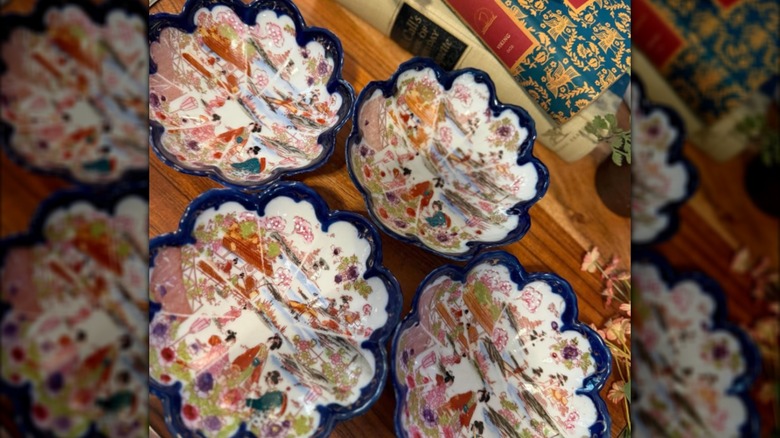
Porcelain has been crafted in some form since the seventh century in China. In the mid-1600s, Japan developed the signature Kakiemon style, named for its inventor. The technique uses overglaze enamel, meaning the patterns and scenes are painted onto the piece after it has been glazed, resulting in a more vibrant finish. When porcelain was discovered in Japan's Kutani region, a local artisan studied under Kakiemon himself. His Kutani kiln operated until 1730, marking what is now known as the "Ko-Kutani" period.
In 1807, production of Kutani porcelain resumed, ushering in what is known as the "Revival Kutani" era. Pieces from this period are relatively rare. Then in 1870, Kutani began exporting its porcelain, marking the start of the "Export Kutani" period, which includes the Meiji era. Increased production and exports made pieces from this period more prevalent. They're known for detailed scenes and abundant golden trim, with two particularly popular patterns being Thousand Faces and Thousand Butterflies. "Modern Kutani" refers to pieces made from 1920 onward, which can still be stunning and valuable.
Kutani is antique serveware that would be a dream thrift store find, though you might have better luck on sites like eBay and Etsy or at estate sales. Beyond the patterns, the maker's mark can offer another clue to a piece's age and origin. Ko-Kutani pieces may be unmarked or carry a "Fuku," or "happiness," mark, while Revival Kutani pieces may be signed by the artist. Export pieces can also be dated by their markings: those made before 1891 were stamped "Kutani," pieces from 1891 to 1921 bear "Nippon," and those made after 1921 say "Made in Japan."