

What's The Difference Between Bud Light And Coors Light Beers?
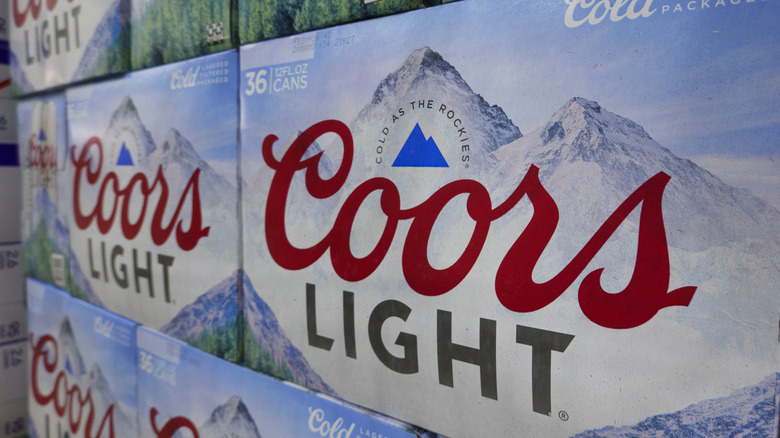
Sometimes, you have to feel sorry for light beer — since it first rose to popularity, it almost immediately attracted the opprobrium of detractors who, despite not drinking the stuff, were keen to loudly let everyone know how much they hate it. Amidst all this performative disdain, it's easy to forget that not all light beers are created equal. If you are considering joining those who prefer a lighter brew, you may be wondering about two of the best-known offerings on the market — what exactly is the difference between Bud Light and Coors Light beers?
Superficially, the two beers — both light lagers — appear similar, with a pale yellow coloration, discernable carbonation, and a noticeable but insubstantial head of foam. Neither was the first major light beer to hit the American market — both were launched in response to the advent of Miller Lite. They even have the same ABV of 4.2%.
The actual differences between the two beers are small. Being low-calorie is a selling point for light beers, and while Bud Light clocks in at 110 calories per 12-ounce can, Coors Light has only 102. The production of the beer also differs, which has in the past been a source of controversy — Bud Light is made by using rice in its mash, while Coors utilizes corn syrup directly into the boil, but the end result is similar, i.e. sugar being fed to yeast during the latter's fermentation.
Some find Bud Light more beer-like than Coors Light, but both have faced criticism for tasting watery
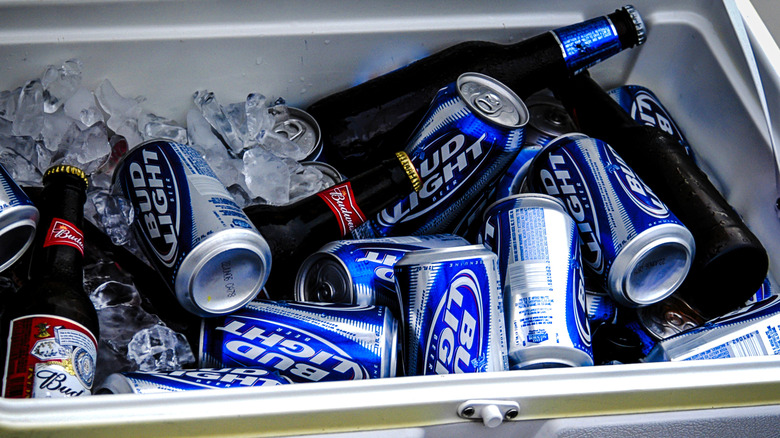
In our ranking of nine popular light beers from worst to best, our critic anointed Coors Light with the number one position, describing it as "an almost perfect encapsulation of what a light beer should be," and warmly praised its notes of malt and citrus. By contrast, Bud Light was consigned to the number six spot, despite earning some polite acknowledgement for its "refreshing crispness and easy drinkability".
Unsurprisingly, critics who do not care for light beer to begin with tend to be unenthusiastic about either, but some have expressed a grudging preference for Bud Light for tasting more, well, beer-like. It's arguably fair to say that no one drinks light beer for the intense flavor, with both Bud Light and Coors Light facing accusations by some drinkers of tasting watery (which is unsurprising, as your favorite light beer could just be a diluted version of stronger brew). That said, some don't necessarily see this as a negative — writing on the r/beer subreddit, one commenter argued: "Coors Light is a great beer for people who don't like the taste of beer."
Despite this, both remain among the top-selling light beers in America. Paradoxically, the main thing that divides them may be one of the main characteristics they have in common — the loyalty of their customers. It might be a mystery why light beer is so darn popular, but it continues to reign in the U.S.