

5 Disadvantages Of Flat-Top Grills
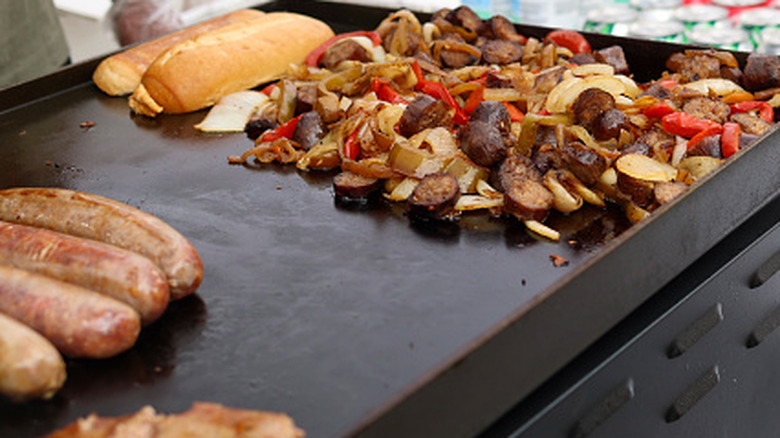
Flat-top grills are a cherished staple in all kinds of commercial kitchens. Cooks at fast-casual bistros love them for their vast cooking surface that can withstand an afternoon rush of handheld foods, and fine dining chefs find them handy for holding sauces at a constant low heat. Flat tops are also a diner cook's best friend, as making hashes, flapjacks, and eggs are some of the best uses for a flat top griddle. Chophouse chefs, too, keep them around for a quick cook-up on an underdone steak. Still, flat-top grills carry a number of disadvantages that might cause some home cooks to revert to the stove.
For one thing, most flat tops are expansive, hefty pieces of equipment, so their maintenance can grow to be a burdensome task if they aren't given proper care during and after each use. When sustained just right, these cooktops keep a clean, mostly nonstick surface compatible with just about any kind of dish, but keeping them in condition takes some maintenance. They may look tough, but they do require a great deal of nurturing.
Many of the positives that come with flat-top grills have to do with efficiency, which is ultimately the goal of many cooks in the kitchen world, though some may find these efficiencies a substitute for culinary tradition or process. For example, you may find the lack of baste-ability or toss-ability to be no-goes for a family recipe. So, whether you're a high-end culinarian or a motivated home cook, it's important to look at the cons of this common appliance before making your move.
Flat cooking surfaces garner gunk quickly
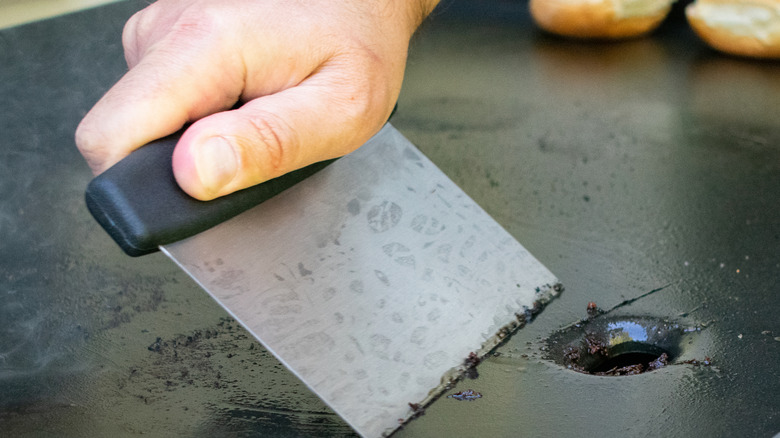
Flat-top grills work best when they take on the traits of a perfectly seasoned cast-iron pan: smooth, slick, and salty. If you're well familiar with the cast-iron seasoning and maintenance process, then the process of re-seasoning a flat top will come rather naturally, though the build-up of char and grime on a flat-top grill happens fast, especially in commercial settings.
Due to this more rapid build-up, some extra ingredients in cleaning are necessary — namely, a grill brick, a block of abrasive pumice meant for scrubbing away grime and grease while avoiding scratching the flat top itself. Without an extra tool like this, and without a dedication to using these tools almost daily, your flat top is likely to gather rust and solid grease at a rate that can be hard to catch up to. Re-seasoning a cooking surface so broad also takes a whole lot of salt — for gently scrubbing, and oil — for keeping it non-stick, which in large quantities can add up to a heavy price.
Flat-top grills substitute sear for smokiness
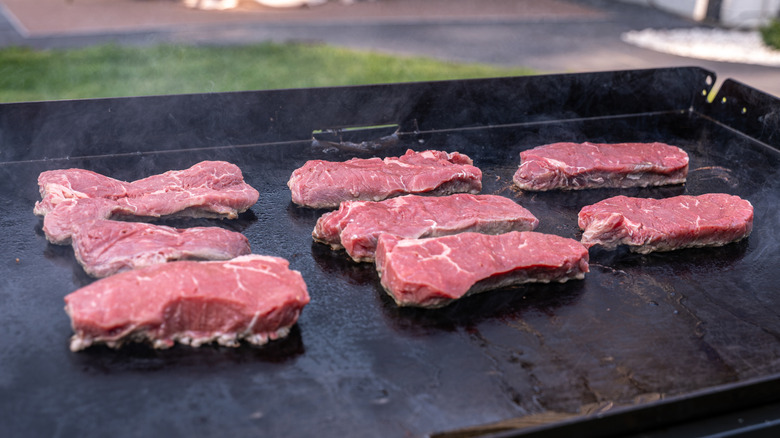
A good, crispy sear is easily achieved on a flat-top grill, especially with the ideal temperature and oil, but texture isn't everything; the smoky flavor granted by a traditional grill is lost when using a flat top, which might prove an unworthy trade-off for some cooks. Not only are flat tops typically not wood-fired, but the cooking surface creates a barrier between the open flame and the food on the grill.
In many cases, the flat top's consistent delivery of a perfect crust makes using it a no-brainer, but for steaks in particular, some might find gaps in the meat's flavor. There are a few smoky pantry stables that can fill in these gaps a bit (paprika, smoked salts, liquid smoke), but nothing comes out quite as charred and delightfully earthy as a steak fired on a classic open-flame grill.
Flat-top grills inhibit basting
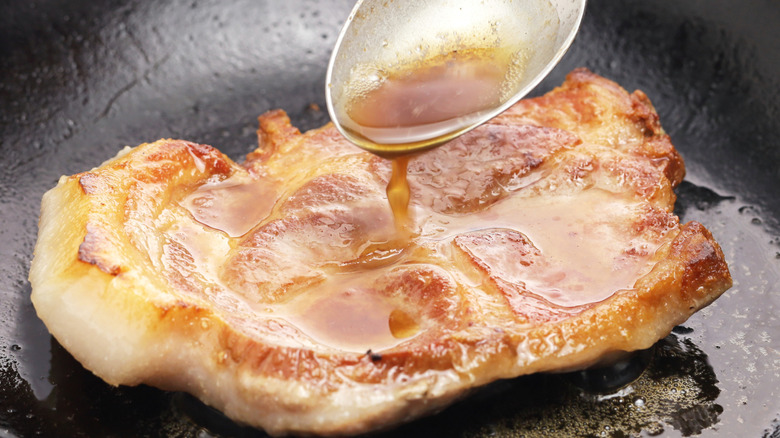
Another hard-to-replicate flavor profile is that which comes with pan-basting a nearly-cooked protein or vegetable in its own juices, herbs, and butter. Oftentimes, this slight trick to enhance flavor and even heat distribution can take a meal to the next level. Chances are that the best steakhouse cuts you've ever had have been basted or at have at the very least undergone the tried and true practice of reverse searing. On a flat top, basting is an impossibility.
Sure, you could set a dollop of butter and a few sprigs of your favorite fresh herb on top of a pork chop or a fish filet on a flat-top grill, but without the careful bath of a large spoon and a pan's rounded rim, the perfect baste is an impossibility. When you have the opportunity, it always pays to baste your meats with butter. Flat-top grills leave no opportunity on this front.
Immobility makes catering and cookouts difficult
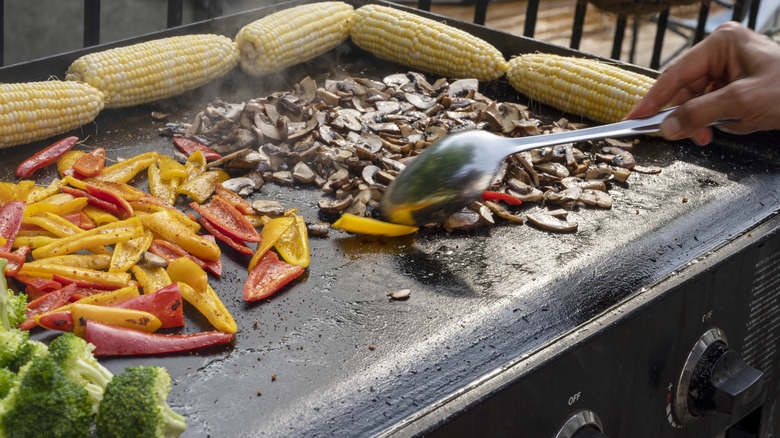
For its grand size and bulky durability, the flat-top grill is hard to miss in restaurant settings. However, these traits that are positives in commercial kitchens can make personal use difficult, especially when transportation is necessary. Unlike your average backyard kettle grill with wheels, handles, and easily removed attachments, most flat tops are meant to be stationary — even if not, they certainly require a few pairs of hands to haul around.
The majority of quality flat tops on the market are mounted more like a table than like a cart — the inline burners, grease trap, and cooking surface all rest on a set of supportive pegs. These pegs, much of the time, are only a few inches tall, since they are meant to be placed on top of a "low boy" (kitchen speak for reach-in fridge) to make for easy access to ingredients. In a number of ways, these grills are not optimized for any form of catering or travel, especially with just one person. They much prefer to stay in place.
Heavy machinery requires heavy maintenance
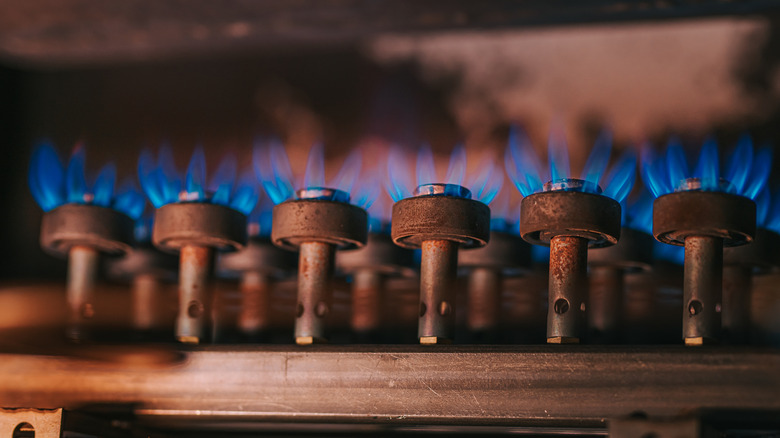
Flat-top grills are no simple piece of equipment; they operate at the will of many gas burners lighting simultaneously, and at the will of gas tanks and gas lines. Even for the highest quality appliances, checkups and tuneups are frequently necessary, and if you aren't aware of the intricacies of the flat top yourself (of which there are many), it can cost a lot to bring an expert in.
For cooks outside of the commercial setting, the best appliances are those that are easy to learn and even easier to manage in the long term. Flat-top grills can be more confusing to upkeep, difficult to move, and physically tough to clean than a regular grill. They can also draw up some obstacles for cooks looking to expand their knowledge of flavor and technique. There are many reasons to fall in love with a griddle — food versatility comes to mind right away — though, for cooks less focused on commercial efficiency and more on family cookouts and shareable flavor, the drawbacks can be plentiful.