

What To Do If You Spot Moths (Or Larvae) In Your Pantry

If you spot a moth fluttering around your pantry, do kill it on sight — but that's not enough. The two common pantry moth species, the Indian meal moth and the Mediterranean flour moth, can lay hundreds of eggs in their short lifespans. That means the one you find fluttering amongst the cereal boxes should be a signal to immediately and aggressively go on the offensive. There's no better time eradicate a moth infestation than before it spreads.
Humans have been devising ways to protect food from pests for centuries, and a modern pantry full of delicious dry goods remains an inviting place for moths to settle in and raise a family. The weird part is that the adult moth flying around isn't actually the one eating your groceries. Pantry moths do their munching as larvae, feeding their way through stored food like The Very Hungry Caterpillar until they pupate and emerge as adults, who have no mouthparts and are primarily concerned with reproduction. When you notice and smush the one flying around, you stop it from completing that directive, but you need to figure out where the offspring are feeding to get rid of them and their eggs, too.
Start inspecting everything because moths will eat most anything: flours, pasta, dried fruit, seeds, nuts, grains, beans, and even some spices and pet kibble. Scrutinize every package and container for signs of larvae including silken webbing, uncharacteristic clumping, and damaged packaging. Don't clear something just because the package seems unopened; intrepid larvae can make their way through paper, cardboard, and even plastic.
Break the cycle
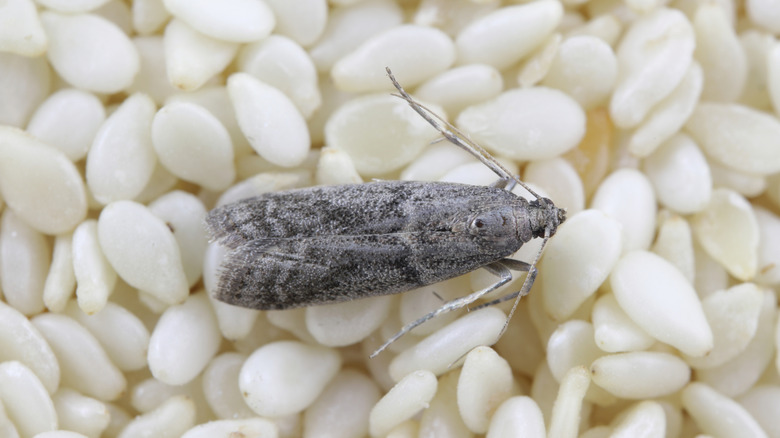
Anything visibly infested should go straight into the trash, outside. Insects are an unavoidable part of life — the FDA doesn't consider wheat flour "adulterated with insect filth" until testing finds an average of 75 or more insect fragments per 50 grams — but there's a meaningful distinction between low levels of microscopic fragments and opening your cornmeal or semolina flour to discover a massive population.
But removing the infested package only gets rid of the food source. Mature larvae can wander away from one food source to another before pupating, so start by emptying the affected shelves, then vacuum and wash the surfaces thoroughly. Pantry pests can survive on small amounts of spilled food, so starving out the infestation requires a comprehensive clean. Suspicious dry goods can be frozen for a week to kill moth eggs and larvae, while foods that pass muster should be transferred to tightly sealed glass or sturdy plastic containers.
There are some natural ways to keep bugs out of flour, and pheromone traps can help catch adult moths. Make sure to skip using mothballs and poison because you don't want that toxic stuff contaminating food prep areas. Going forward, upgrade your pantry storage to keep vulnerable dry goods in tightly sealed containers and clean up spills as they happen. The same hard offensive will deter flour beetles, weevils, roaches and other pests. In the ancient struggle against bugs, our technology has gotten fancier, but the objective is the same: Seal them out and leave no crumbs.