

Not German, Not Dutch: The Actual Origin Of The Häagen-Dazs Ice Cream Brand

Häagen-Dazs may sound European, but the familiar ice cream brand has origins much closer to home. Despite what the name suggests, the company has no ties to Germany, the Netherlands, or any other country in Europe — and the business has never tried to claim otherwise. Founded in the Bronx by Reuben and Rose Mattus, Häagen-Dazs was launched in the early 1960s after the Polish-Jewish couple wanted to produce a treat that was better than anything available on the market.
Reuben arrived in New York City as a young child after his father died in World War I. He helped his mother sell lemon ice from a horse-drawn cart before the budding enterprise evolved into an ice cream trade that served the Bronx. Years later, once he and Rose decided to create their own ice cream, Reuben was well familiar with practices businesses used to cut costs, like pumping air into ice cream recipes. Instead of looking for ways to stretch dollars, the Mattus family set out to make more decadent scoops, and as such, needed a name to reflect their growing business. Häagen-Dazs, however, doesn't mean anything in any language. Reuben made up the name from scratch, putting together a combination of letters and an umlaut that might spark some connection to Europe, specifically Denmark, even though no Danish word looks like it.
A savvy approach to product branding
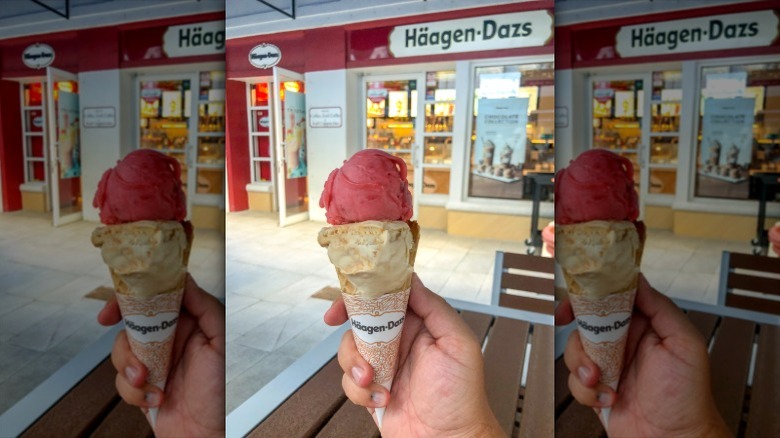
The decision to call the company after a Danish-sounding name wasn't an accident. Reuben wanted to recognize Denmark's role in rescuing Jewish refugees during World War II. He also thought that a foreign-sounding brand would help his ice cream stand out on shelves filled with competition and, thereby, justify a premium price. With the unique name, a simpler ingredient list, and a higher butterfat content than the competition, the business thrived. As Reuben perfected recipes and focused on developing Häagen-Dazs flavors, Rose got the ice cream into upscale shops around the city and focused on the business side of operations, like coming up with ways to build brand loyalty. The couple's strategy worked, and beyond opening a shop in Brooklyn, Häagen-Dazs expanded nationally and became one of the first ice cream brands marketed as a luxury product in the United States.
Now recognized as foreign branding, Reuben's naming tactic offers a prime example of how a brand can signify luxury and quality, regardless of whether the suggestion of a European origin is, in fact, true. Though the name might look like something that came from abroad, know that the next time you're dipping into a pint of Häagen-Dazs ice cream, you're actually supporting American entrepreneurship.