

Fertilize Soil With The Top Of This Vegetable You Normally Throw Away (Or Into Stock)
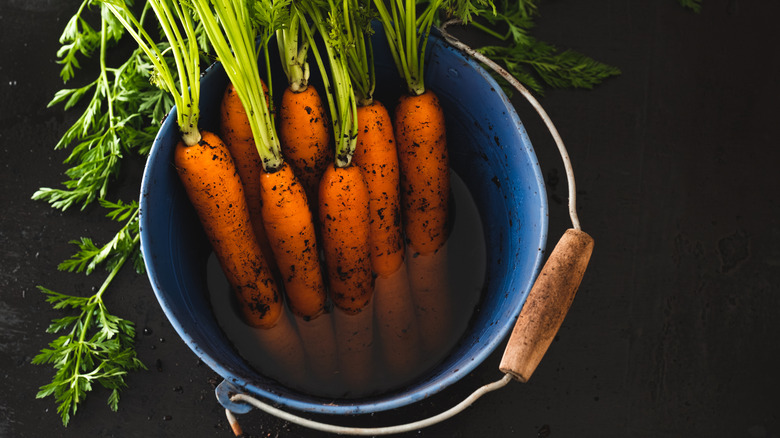
Carrots are delicious, nutritious, and versatile vegetables. If you save and compost their tops, they can help grow next year's carrots. Although we typically eat the root part of the plant, carrots sometimes come attached to a big bouquet of fragrant, feathery green leaves. Even if those have been cut off, you'll usually still trim off the stem end. Some people use those extra bits and bobs as a flavorful addition to soup stock, and while carrot greens are edible and can be turned into a pretty good pesto, if yours are headed to the trash, try diverting them back to the soil system through compost.
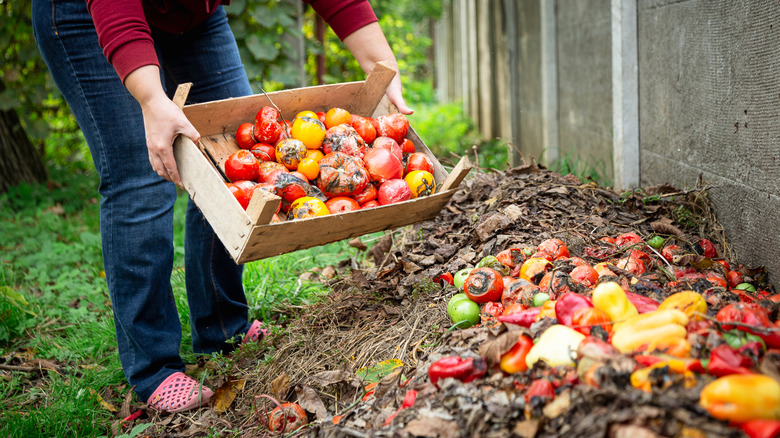
Successful compost is about feeding microbes that need both carbon and nitrogen, in a particular balance, which is why a healthy pile combines what composters call "greens" and "browns." A compost "green" is any relatively nitrogen-rich, moist organic material that helps feed the microorganisms responsible for breaking a compost pile down. All parts of the carrot actually qualify as a "green," even the orange part. This is because carrots and their tops are made up of all the same stuff that renders other fresh plant matter useful in compost: some moisture and organic matter, along with primary macronutrients like nitrogen, potassium, and phosphorus. Most vegetable scraps, including carrot tops, and yard waste, such as grass clippings, are all considered "greens."
Compost "browns" provide a lot more carbon, and include materials like dried leaves, straw, shredded paper, and cardboard. Carbon supplies microorganisms with energy, and the nitrogen is what helps them grow and reproduce. When you combine nitrogen-rich vegetable matter, like carrot tops, with carbon-rich dry plant material, along with adequate moisture and oxygen, you have created the ideal conditions for the decomposition process, i.e., compost.
It takes two to compost
Throwing carrot tops into compost isn't the same thing as applying a store-bought, conventional fertilizer to your plants. Bacteria, fungi, and other decomposers need to get to work on the scraps first, breaking organic materials down and cycling their nutrients into the finished, usable compost. Once you distribute that into your garden bed or countertop kitchen garden, it adds organic matter and slow-release nutrients, helping create soil that can better hold water and support plant life.
You can help your carrot tops along in the decomposition process by chopping the greens into smaller pieces before adding them to your compost, which creates more surface area for the decomposers to chomp on — they like small bites. Mix or bury the scraps into an existing pile, rather than leaving a wad of wet greenery sitting on top. Carrot tops can also be buried directly into the garden, provided they're chopped well and buried deep enough that you're not just leaving out a salad-y buffet for your neighborhood rabbits.
Carrot tops are a common, convenient ingredient in a larger system, and compost works because all those different scraps bring something to the pile. Eat the carrot, compost the top, and let next spring's carrot crop inherit the leftovers.