

The Flat-Top Grills That Don't Use Gas Or Electricity
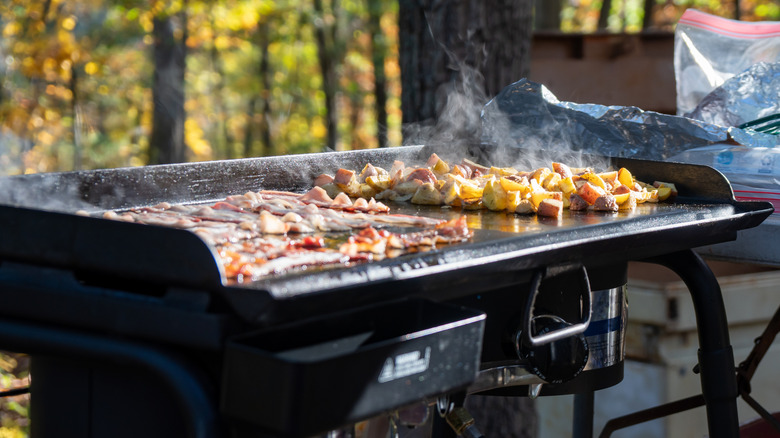
Flat-top grills have a lot of appeal to people who love to cook outside, but the standard gas options, or the portable electric ones, aren't your only option. There are also charcoal flat-top grills. In general, people like flat-top grills for two reasons: the size and where you cook. Your standard flat top is essentially a giant outdoor griddle, and often goes by that name. The large flat surface means you can cook a lot more food simultaneously than you can with pans on your stove. Cooking outside isn't just nice for the cook; it also means all the heat and smoke you produce from cooking isn't filling up your home. But even Consumer Report's highest-rated flat-top grill lose a lot of the traditional flavor associated with grilling, because the food isn't being exposed directly to flames or smoke. That's why there are charcoal flat-top grills popping up.
Admittedly if you are a purist about what makes a flat-top deserve the name, charcoal flat tops might not qualify. They still use grates, so you don't get the solid surface for searing that often makes flat-top grills appealing. But they are not just normal charcoal grills either. They are much wider and usually a bit shallower, replicating the larger surface area that makes flat tops so appealing. They also don't usually have built-in covers, although a few more expensive models do. So flat-top charcoal grills aren't for people looking to cook low and slow. They are for people who love the convenient, high-volume outdoor cooking of flat-top grills, but want more of the charred and smoky flavor people love. It's the kind of barbecue cooking you see with the traditional California style of Santa Maria barbecue grills.
Charcoal flat-top grills combine the size of gas or electric flat tops with more grilled flavor
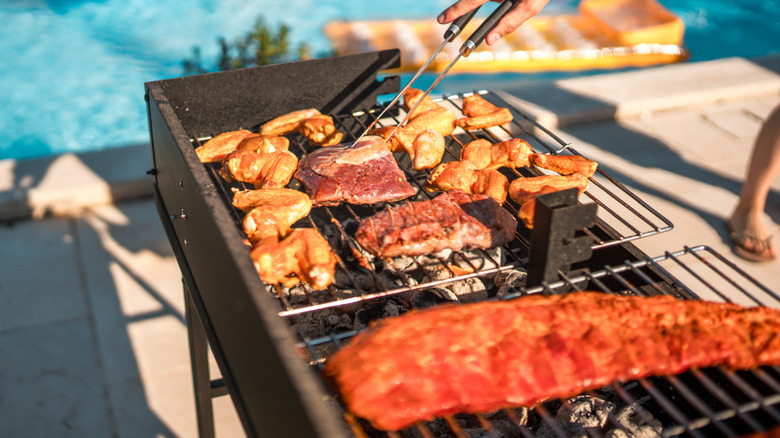
The added flavor of an open flame and smoke is the main appeal of charcoal flat tops, but not their only advantage. Charcoal is capable of reaching higher heat levels than gas flat-top grills, and especially electric flat tops, so you can get a better sear with high-heat cooking and have more versatility. Charcoal also removes the need to plug in your grill or manage a propane tank. That maintenance extends to cleaning and prep as well. Gas flat-top grills are often made with cast iron or carbon steel surfaces, which require seasoning to stay non-stick. With their sizes, that is often the equivalent of maintaining ten cast iron pans at once. Charcoal grills also need less cleaning, as the high heat burns off a lot of what gets stuck to the grates, and the tray catches grease and crumbs.
That doesn't mean a charcoal flat-top grill is right for everyone. Like standard grills, managing your coals is more challenging and hands-on than adjusting gas burners, and the ease of creating different heat zones is one of gas flat-tops' big advantages. You'll also need quite a bit more charcoal than your standard grill, while gas flat-top grills run on the same propane tanks normal ones do. And obviously electric flat-tops don't need fuel at all. Like the classic charcoal vs. wood vs. gas: what's actually best for grilling debate, by picking a charcoal grill, you are trading some ease of use and convenience for flavor. That is a trade off plenty of cooks are looking to make.