

The Bread Etiquette Rule French Diners Know That Tourists Often Miss
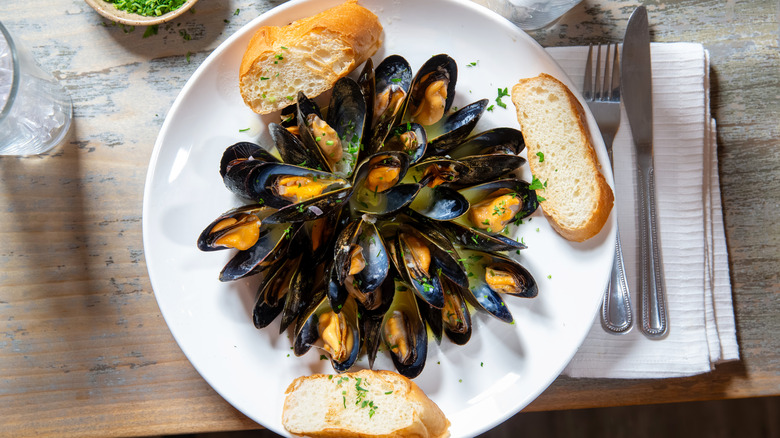
Did you know there's an international dining etiquette rule we should all be following when we're visiting France? It involves bread, and it's an unspoken rule that tourists often miss. See, in America, when we dine out, we usually get bread and butter before our main courses arrive. After all, bread, in American restaurants, serve as an appetizer or side dish. In most casual cafes and bistros across France, however, bread serves as an edible utensil.
The French would use bread as a vessel to mop or sop up sauces, like the five mother sauces of French cuisine. Much like rice in Asian cuisine, bread in French cuisine is meant to accompany main dishes. For this reason, you often won't get a plate to place your bread before your entrees arrive. You're supposed to place it directly on the table.
Then, when your main course arrives, tear off a piece of bread with your hands and use it to soak up the sauces on your plate. This is known as "saucer son assiette" in France. When there's nothing left on the plate, other than gravies or sauces, feel free to clean the dish with the bread. And then, of course, enjoy the sauced-up bread. Customarily, this is a sign of respect to the chef, showing them their food is so good that you didn't wish to waste a drop of sauce.
How you enjoy bread in France depends on the setting
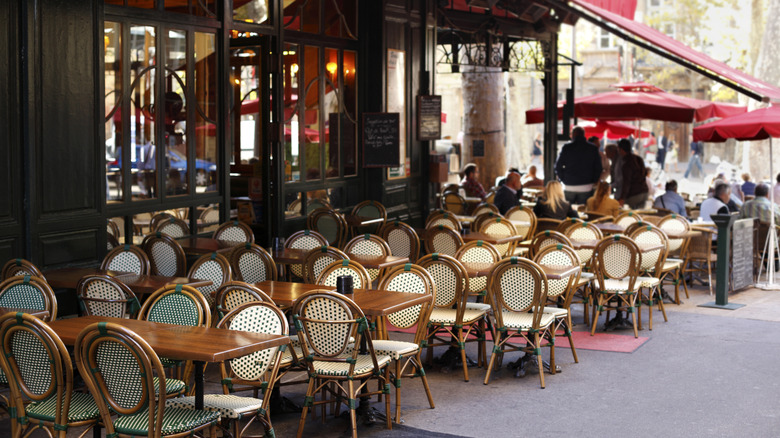
If you happen to dine in a French household, it is usually not rude to use bread to mop up all the sauces. It will also show your host that you appreciate the meal and their cooking. Of course, check in with your host or hostess and mirror how they enjoy bread during dinner.
Now, when you're at an upscale or fine dining establishment in France, the bread etiquette may be different. At these establishments, you may get bread, butter for spreading, and a bread plate. If this is the case, you may enjoy the bread before your main course, like you do in America. Spreading the butter over the bread is acceptable when you're having a fine dining experience in France. Otherwise, at casual dining experiences, butter is reserved for pastries during breakfast.
Learning a country's dining etiquette before you visit shows you respect the culture you're stepping into. Little customs like these often carry generations of tradition behind them, and taking the time to understand them can help you connect more genuinely with locals. So, be sure to use bread correctly, and additionally, when dining in France, you need to know this old-school rule for eating salad as well.