

The Cuts Of Meat You Should Never Cook On A Flat-Top Grill
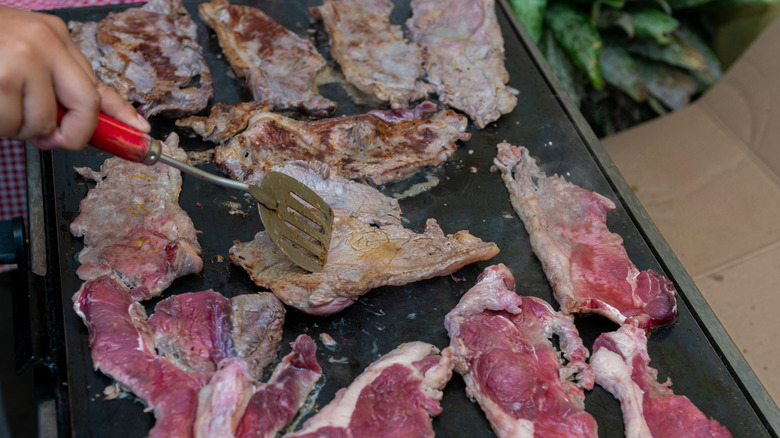
Flat-top grills are one of the most convenient cooking contraptions, answering the question, "what if a hot pan and a table had a baby?" Their popularity for grilling meats hot and fast like burger patties, fish, chicken fillets, and of course, steaks has meant that flat-top grills are embraced by many, but there are limitations to what they can achieve. Some cuts of meat, you just can't cook with only a flat-top grill, specifically, thicker cuts meant for roasts.
Whether beef, pork, lamb, or even turkey, the overall thickness and size of a cut of meat can sit just outside of the capabilities of a flat-top grill. Beef roasts like chuck or rump roast, pork cuts like butt, shoulder, and loin, and even whole turkey breast, should be fully cooked throughout, and so are a tad outside the flat-top's jurisdiction. If you're stuck on a desert island with a flat-top grill and a chuck roast, you're better off dividing it into steaks.
There are some disadvantages to grills like a Blackstone, as flat-tops cook with direct contact heat, which penetrates thicker food relatively slowly. While this makes the griddle perfect for administering a flavor-enhancing sear, it can be a problem for cooking very thick cuts of meat. Attempting to cook thicker cuts on the griddle means potentially burning the surface before internal temperatures can rise adequately. Bones in meat can also slow heat reaching some of the interior. Tough cuts, especially with lots of connective tissue and collagen need plenty of time and consistent, moderate cooking temperatures to render or break down.
Save the roast for low and slow cooking
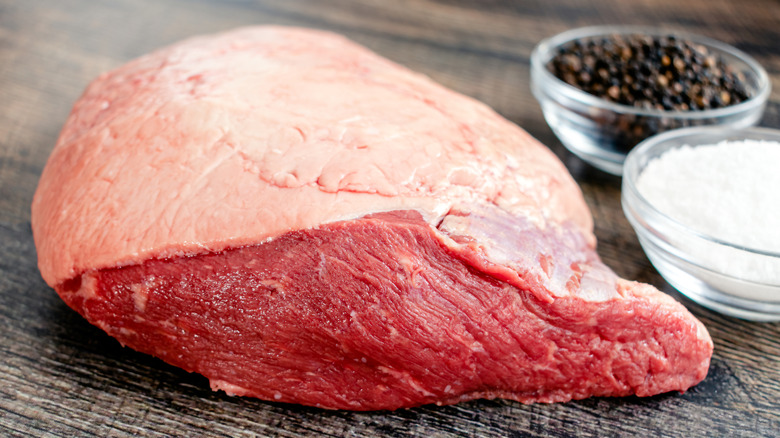
Chuck and rump roasts from the hard-working parts of the cow, tend to be tough and lean cuts of meat, so are actually perfect for roasting to break down tissues and make tender. Ribeye, top round, sirloin tip, eye of round, and bottom round cuts for roasting will also be too thick to cook well on a flat-top grill, and will likely remain tough or even completely raw inside. Pork roast cuts, like butt and shoulder, also require longer, lower, slower cooking, and more time to render their fat, tenderize the meat, and break down the connective tissue.
While pork tenderloin is a popular strip of meat for a good sear, it's not to be confused with larger pork loin roast cut, which is too big to cook through without extra time in the oven or smoker. A whole pork leg? Forget it. Lamb shoulder and rump cap also need longer, slower cooking times.
It's a popular assumption that you can't cook many of the popular BBQ cuts on a flat-top, like brisket, ribs, or a whole chicken, but these do have workarounds. Brisket's flat section can be trimmed, brined, and marinated flank steak recipe can be used. Meanwhile, a leg of lamb can be butterflied, a rack of ribs can be wrapped in foil, and spatchcocking is great for getting the juiciest barbecue chicken. While these are some real hacks, they might not deliver the best examples of those types of meat possible.