

How Long Cooked Rice Can Safely Stay In The Refrigerator
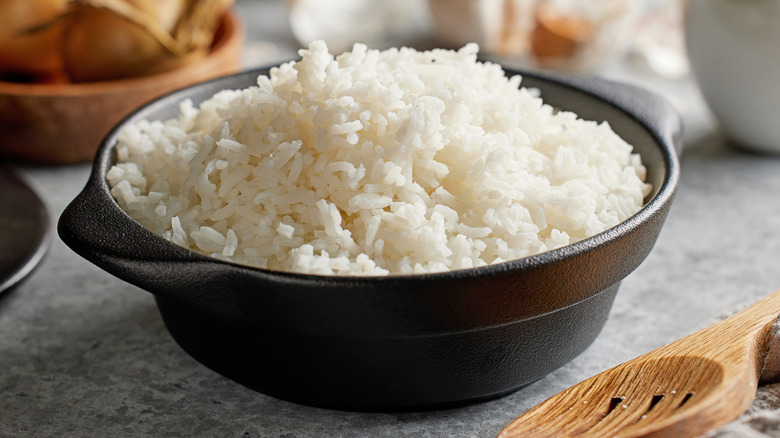
If you've spent time on social media in the last few years, you've likely seen the resurgence of a rumor that leftover rice is unsafe to eat. However, leftover foods are safe to eat when stored and reheated properly — including rice. According to the United States Department of Agriculture (USDA), leftovers that have been prepared and stored correctly are safe to eat for three to four days.
You may come across advice, like that from Hello Fresh, that suggests a longer window of time. While refrigeration significantly slows the growth of bacteria, it does not stop bacterial growth entirely, which is why leftovers cannot be stored indefinitely. Thus, the risk of dangerous bacteria isn't worth the risk of additional days in the fridge, especially when it comes to rice.
There are two types of bacteria related to food: pathogenic bacteria, which lead to food-borne illness, and spoilage bacteria, which contribute to food deterioration. Bacillus cereus is a dangerous pathogenic bacterium found in uncooked rice. Bacillus cereus survive the cooking process, as boiling water does not kill it.
This bacteria is found in all types of raw white and brown rice, and it's virtually unnoticeable because it does not affect the taste or smell. Eating freshly cooked rice immediately lessens the chance of the bacteria multiplying. However, there are signs to look out for, and precautions you can take, when it comes to storing any leftovers.
Invisible, deadly bacteria isn't worth the risk
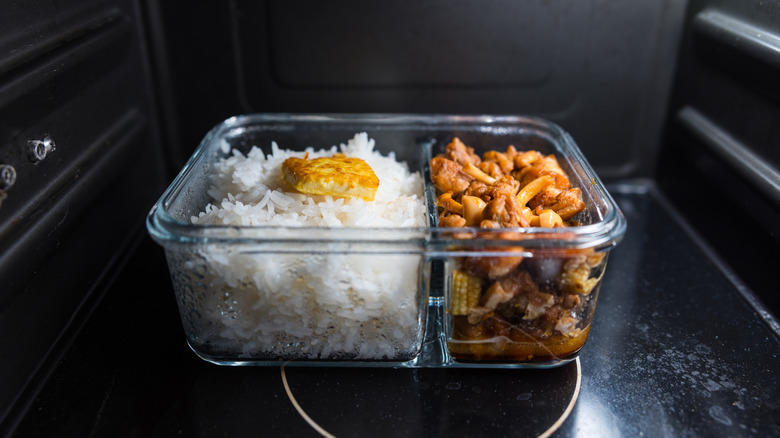
The safest way to preserve leftover rice is to cool it as quickly as possible and then transfer it to an airtight container and put it in the refrigerator, as well as avoiding other common mistakes people make when storing leftovers. Leftover rice doesn't need to go into the refrigerator when it's still steaming, however it should be moved to the refrigerator to cool completely within a one hour window. Additionally, reheated leftover rice must be brought to a temperature of 165 degrees Fahrenheit to kill off any harmful bacteria.
While it's almost impossible to tell if rice contains the bacteria with just your eyes and nose, there are some signs to keep an eye out for. If your leftover rice has any sort of smell that seems off or seems slimy in texture, toss it immediately. Rice should also only be cooled and reheated once, so if you don't finish all the reheated leftover rice in it's second go around, you should dispose of the remaining rice rather than cooling and refrigerating it a second time. It's best to not take any risks, so just toss any questionable leftovers.