

The Now-Banned Diet Soda Sweetener Everyone Was Drinking In The 60's
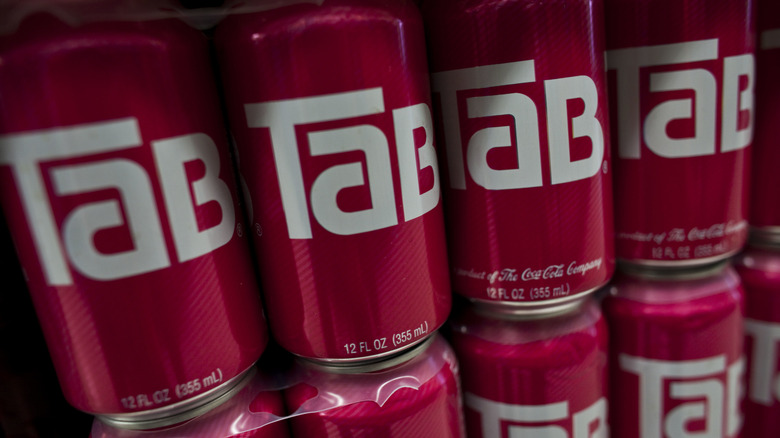
It all started with a young chemist who accidentally brushed the chemicals from his bench with the butt of his cigarette. University of Illinois graduate student Michael Sveda noticed that the taste was exceptionally sweet and tracked down the chemical (cyclohexylsulfamate), which later became known as cyclamate. That was in 1937. By the early 1960s, cyclamate had been tested and released to the marketplace in diet sodas like Coca-Cola's first diet soda, TaB, and Diet Pepsi (originally called "Patio Diet Cola").
Cyclamate had earlier been marketed in the pharmaceuticals industry and was meant to act as something of a chaser to mask the bad taste of certain antibiotics. At the same time, the food and beverage industry had a budding interest in low-cal, "diet" products. In a nod to diabetic patients, No-Cal Ginger Ale soda, using cyclamate as its sweetener, was launched in 1952. Cyclamate was a straggler to saccharin, another synthetic sweetener, invented in 1879, but cyclamate had the upper hand in that its predecessor had developed a reputation for tasting tinny. No-Cal manufacturers mixed the two at a 10-parts cyclamate, one-part saccharin ratio. In 1958, Diet Rite hit grocery stores, using the cyclamate-saccharin mix. After TaB and Diet Pepsi made their debut, 7up launched its first diet soda in the 1960s as well, but shortly after, the bottom fell out on cyclamate.
How much is too much when it comes to artificial sweeteners?
In the 1500s, a chemist by the name of Paracelsus made the point that a toxic substance is only truly toxic once it hits certain noxious concentration markers. His now relatively well-known maxim, "The dose makes the poison," became a core principle in toxicology, but does not seem to have the same sway in convincing the general public about soda safety myths they should stop believing. Cyclamate is possibly one such artificial sweetener that garnered a (possibly erroneous) federal sanction, reinforcing the government's general warning to the public about sugar substitutes.
Cyclamate was pulled from the safety list by the FDA in 1969, then banned entirely in 1970. Studies brought to light a relationship between cyclamate and cancerous tumors found in rats. Cyclamates were fed to rats in high doses, so the National Cancer Institute Advisory Committee did a nine-month investigation, concluding that current data actually had not indicated meaningful carcinogenicity in cyclamate.
Despite modern academics naming the earlier study that led to the ban on cyclamate as flawed, the FDA has not revoked its ban in the United States. Cyclamate is, however, used in foods and beverages in the European Union, New Zealand, Canada and Australia, leaving us fumbling still for crystal clear criteria on what is the safest artificial sweetener.