

5 Disadvantages Of Using A Gas Stove
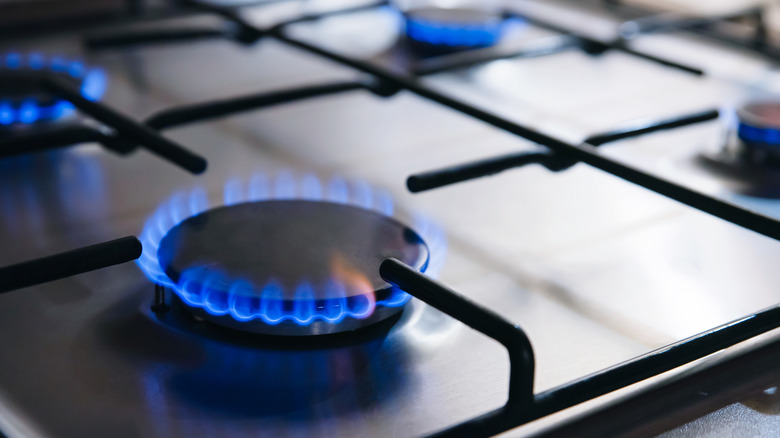
Gas stoves have long been favored among professional chefs and serious home cooking devotees, and it's pretty easy to understand why. Many chefs appreciate being able to fine-tune flame intensity to control heat levels and use just about any kind of cookware without worrying whether it's compatible with the stovetop. Gas stoves might also feel familiar and nostalgic for some, namely anyone who grew up in gas-fueled kitchens. However, gas stoves do come with some disadvantages.
Because a gas stove burns fuel directly inside your home, some legitimate concerns come into play — ones that don't really apply to typical electric kitchen appliances. These concerns include more involved cleanup and even indoor air pollution. Depending on how your home is already set up, installing a gas stove could come with more considerations than you bargained for.
Many of the drawbacks associated with gas stoves aren't absolute dealbreakers, since it's possible to compensate for them with things like proper ventilation, maintenance, and safe cooking techniques. However, if you already own a gas stove or are contemplating a switchover, it's wise to learn about their quirks and plan around them.
Gas stoves can compromise indoor air quality
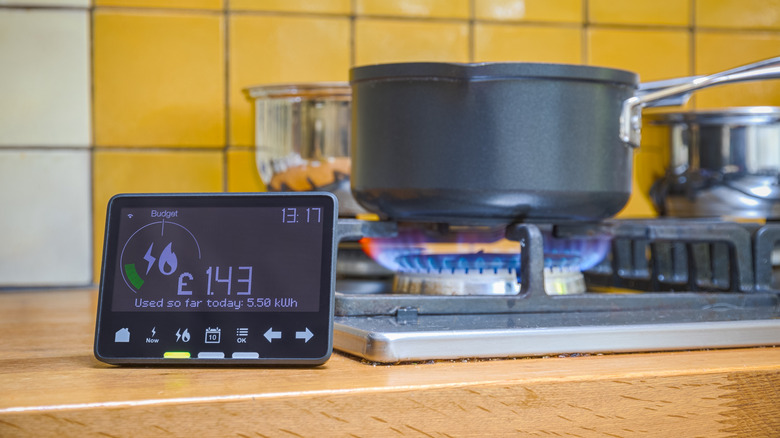
One of the biggest differences between gas and electric cooktops is what's happening when the burner is on. Gas stoves use combustion to create heat, which can volley some undesirable particles into your kitchen air. The Environmental Protection Agency (EPA) includes gas stoves on its list of indoor combustion products that release pollutants like carbon monoxide and nitrogen dioxide, as well as particulate matter that can become trapped in the lungs.
Nitrogen dioxide is a biggie when it comes to gas cooking, according to the EPA. It can irritate your eyes, nose, throat, and respiratory tract, which is dangerous for anyone with asthma or similar health problems and can potentially cause or worsen bronchial issues. Carbon monoxide inside the home isn't something to take lightly, either, so ventilation is crucial with gas stoves. Make sure to use an exhaust fan or a range hood over your gas stove — one that vents outside, of course.
These are all manageable things, but they require extra precautions that wouldn't be necessary with other types of stoves. In fact, reduced air quality caused by emissions is among the reasons why some home cooks are purposefully moving away from gas stoves.
Open flames create more safety concerns
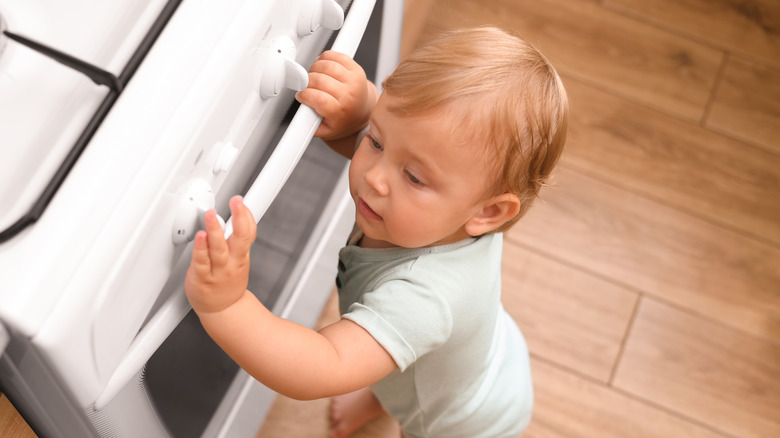
Cooking is one of the main causes of home fires and related burns in the United States, and cooking on any type of stove requires basic safety practices to avoid fires and injuries. Electric ranges aren't exempt from these problems, but gas stoves are a much bigger concern in that regard due to their open flames. It's incredibly important to keep items like towels, potholders, food packaging, loose clothing, and other flammable materials away from active gas burners. Most importantly, young children should be kept away from gas stovetops and monitored around them at all times. You can install safety locks on your gas stovetop knobs for optimal safety.
Gas stoves in kitchens come with another safety concern: methane gas leaks and the potential for explosions. Even the connections on gas stoves can leak methane, meaning dangerous leakage can happen even while a gas stove is turned off. Electric stovetops can also pose risks, of course, but open flames and gas leaks are concerns unique to gas stoves. Conversely, induction stoves leverage electromagnetism to heat cookware without getting the stovetop so hot, which is safer and thus reduces the hazards associated with cooking.
None of that's to say gas stoves are inherently unsafe, and open flames do have their place in the culinary arts — after all, they're a big contributing factor to professional chefs preferring gas stoves over electric appliances. However, because of said flames, using a gas stove does introduce greater ignition potential when you're whipping up your family's favorite stir-fries, quesadillas, and chicken dinners, so you'll need to be extra careful when using them.
Gas stovetops take extra effort to clean
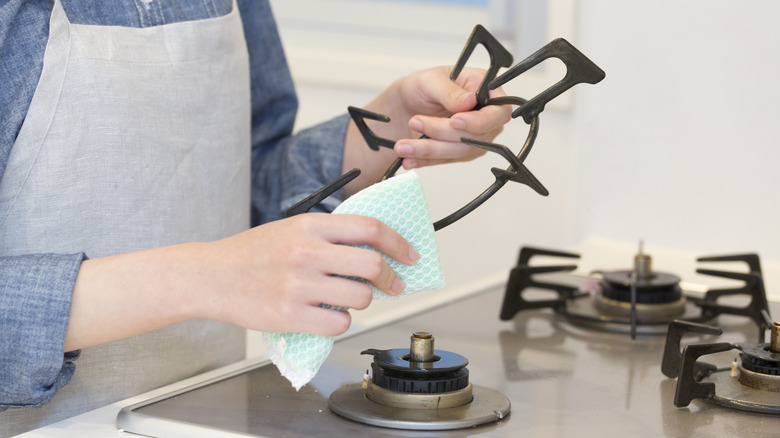
Cleaning a stovetop is nobody's favorite kitchen chore, but gas stoves can make the job even more tedious. Unlike the flat surfaces on induction stoves, traditional gas cooktops have grates, burner caps, burner heads, and various spaces wrapped around and tucked beneath the burners where grease, crumbs, sauces, and boiled-over food love to cling and hide.
Cleaning gas stoves isn't a mere wipe-and-swipe ordeal — the act involves dismantling several pieces before you even get to the cooktop itself. Depending on the stove, grates and caps may need to be washed or soaked separately, scrubbed to remove burned-on residue, thoroughly dried, and then correctly repositioned. Even burner openings and burner heads themselves, which are situated beneath the burner assembly, need occasional attention. Keeping your burner components clean isn't just for aesthetics, either; a gunky burner head can actually affect cooking performance and reduce energy efficiency.
Gas burners typically have the longest lifespans among all kitchen range styles, including electric and induction — so, for some, they could be worth the cleanup. But when compared to the sleek, smooth glass surface of an induction stovetop with no burners or grates to clean, and no under-burner area to fumble with, it may be tempting to veer away from gas stoves for the sake of everyday convenience.
Gas stovetops can be expensive to install
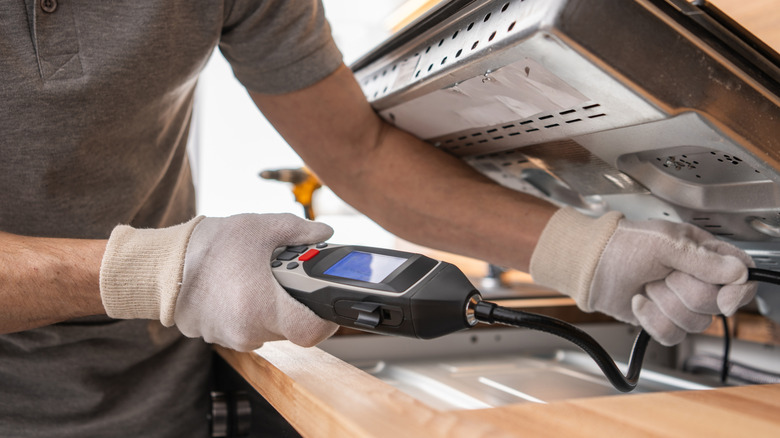
If you're replacing one gas range with another and already have the required hookups, then you're golden. In that case, installation is often relatively straightforward. But it's a different story if you're converting a kitchen that doesn't have natural gas running to the stove area. The costs of making that happen can really add up.
A gas range needs a safe fuel connection, and adding one involves a lot more than sliding a new appliance into place. Depending on the home, the project might require installing a new gas line or extending an interior gas line from other parts of the house. Plus, there could easily be fees for adding or upgrading gas service capacity, obtaining permits or inspections, and hiring a qualified professional to safely make the right kind of connection appropriate for your kitchen range. Let's not forget the critical need for good ventilation to avoid indoor pollutants.
To be fair, electric installation isn't cheap, either. But if your home already has electrical infrastructure and no natural gas hookup, choosing a gas stove can turn into a much bigger (and more expensive) ordeal than you likely imagined it would be.
Gas stoves are less energy-efficient and have environmental downsides
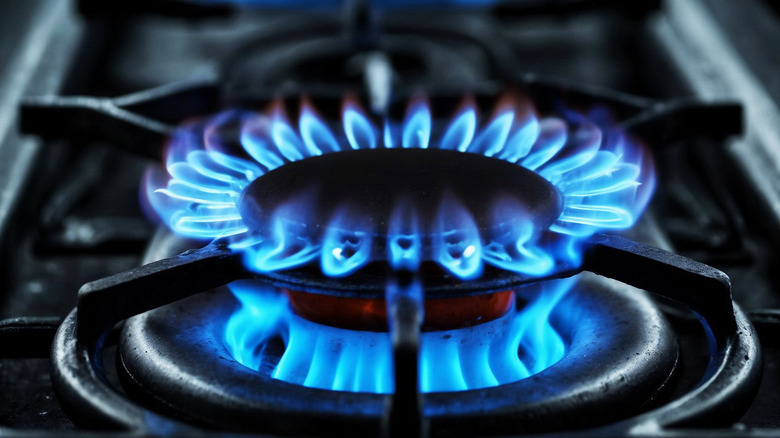
The size of the signature dancing blue flame on a gas stove makes it fairly easy to gauge how much heat you can expect from the element, but depending on the type of cookware you're using, not all of that heat really makes it into your dinner preparation. Not to mention that, when you use your gas stove when it's hot out, you'll likely need to turn up your air conditioning to better cool your heated kitchen, which isn't ideal in terms of energy efficiency.
Gas stoves also have two specific features with significant environmental impacts, according to one 2022 study led by Stanford University. The carbon dioxide they produce gets released into the atmosphere, as does the unburned methane — a greenhouse gas — that slips from them. Issues like that (and more) contribute to why gas stoves can be harmful to the environment. Induction stoves, on the other hand, are considered to have triple the energy efficiency of their gas-based counterparts, per the U.S. Department of Energy. Your own kitchen's greenhouse gas production may seem like a little drop in the massive bucket that is environmental impact, but ultimately, it all adds up in the end.