

Sausage, Eggs, Or Bacon: Which Has More Protein? (And How Much You'll Get With All 3)
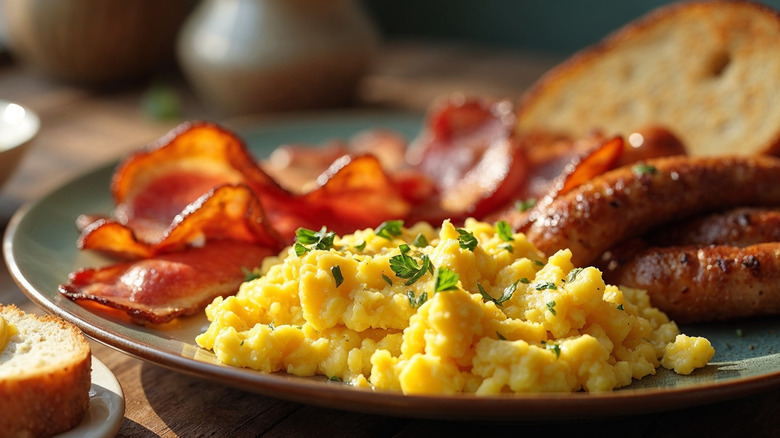
If there is a holy trinity of ingredients in a hearty protein-packed American breakfast, it's sausage, eggs, and bacon. Breakfast cereal, granola, or toast may be more convenient, but if you picture the kind of breakfast you want to sit down to before a hard day's work, a plate full of eggs and breakfast meat is what many of us dream of. While lighter breakfasts were touted as healthy alternatives to heavy meat and eggs for a while, the recent all-consuming drive for more protein suddenly has those classic options looking a lot more nutritious. And if you want the biggest protein bang for your buck, eggs are the way to go.
To fairly compare the three core hot-breakfast ingredients, we calculated how much protein each had per 100 calories. For the breakfast sausage and bacon, which often have slightly different levels of protein and other nutritional elements depending on the recipe, an average was calculated from major national brands like Jimmy Dean, Johnsonville, and Smithfield.
While all three have a solid amount of protein in each serving, your standard large egg has 8.6 grams of protein per 100 calories. For bacon with the same amount of calories you get 6.8 grams of protein, while breakfast sausage has 4.7 grams of protein per 100 calories. So eggs have 25% more protein than bacon, and (amazingly) 80% more than sausage.
Eggs beat out similar servings of bacon and sausage as the breakfast protein champion
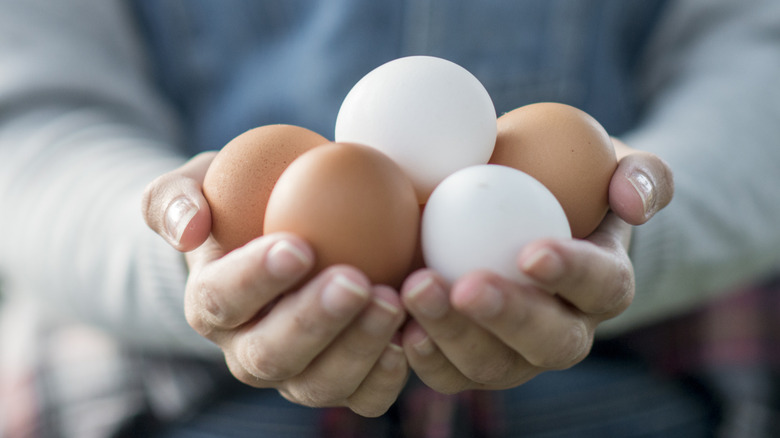
One standard American large egg contains 6 grams of protein on average, which can be up to 10% of your daily recommended protein intake, depending on your age and weight. And eggs start looking even better when you look at normal serving sizes, and other nutritional information.
For breakfast sausage, a standard serving is usually three links, while for bacon it is two slices, which are also commonly how they are served. While nutrition labels list eggs as one egg per serving for simplicity, most American breakfast meals usually default to two. At that point your eggs will be providing 12 grams of protein, double the standard serving of bacon, and 50% more than the standard for sausage.
If you're also interested in limiting the amounts of saturated fat and sodium in your breakfast, eggs have much less compared to how much protein they provide. For the same servings as above, sausage has 5.7 grams of saturated fat and 487 milligrams of sodium on average. Bacon has 2.8 grams of saturated fat, and 337 milligrams of sodium. Two eggs will have a little more saturated fat than bacon, at 3 grams, but far less sodium at 140 milligrams. While you'll probably add a little salt to your eggs to bring that number up, those are still better nutritional numbers for eggs considering the protein you're getting.
Combining breakfast meat with eggs is a protein-packed way to start the day
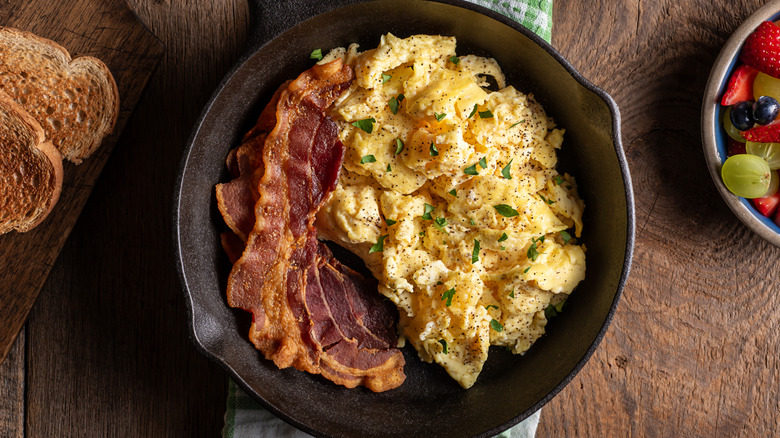
Of course in our dream breakfast we aren't just eating a few eggs — and combining them with sausages and bacone will give you a lot of the protein you need for the day. For a 2,000-calorie-a-day diet, the middle ground of ideal protein intake will be around 100 grams, but can range from 50 to more than 175 depending on your level of activity, size, and age. If you eat one serving of both sausage and bacon with two eggs, you'll be getting a very solid 27 grams of protein. And at 467 calories, that meal actually falls within a healthy breakfast size for the average adult. If you prefer a little less meat, the combo of sausage and eggs will beat out bacon and eggs, at 21 grams of protein to 18.
However, protein is not the only thing you should be thinking about at breakfast. While it's the hot macro right now, nutritional surveys have found that Americans were already getting plenty of protein. That doesn't mean some people don't need more, but building your meals around protein can lead to neglecting things like how much fiber you need, which is something most Americans don't get enough of. So while eggs and sausage are a great way to start the day, maybe add a slice or two of good whole wheat toast in there, or a side of fresh fruit, instead of opting only for the big protein hitters.