

Should You Mix Vinegar And Dish Soap To Clean Your Kitchen?
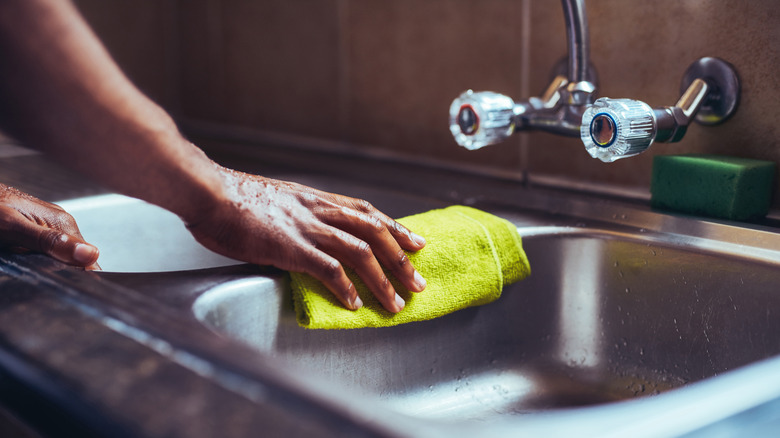
Many of us prefer DIY kitchen cleaners over store-bought solutions. They're chemical-free, cheap, and often even more effective. Vinegar is one ingredient that frequently factors into DIY cleaners — there are tons of kitchen-cleaning hacks with vinegar. And a common partner for vinegar is baking soda. But there's another potential vinegar teammate that isn't so straightforward: dish soap. Vinegar and dish soap tend to cause confusion. Are they a powerful cleaning duo? Or do they actually cancel each other out?
Vinegar and dish soap are touted as an effective cleaning solution because they each have different cleaning abilities. When paired, they're stronger and more versatile. But then there's the argument that they neutralize each other because vinegar is highly acidic and dish soap ranges from neutral to alkaline. Acidity is vinegar's cleaning superpower; it's what breaks down tough residue. Meanwhile, dish soap's alkalinity is what enables the saponification process, which turns fats into soap. Dish soap uses that ability to break down oils when cleaning. Dish soap also has surfactants that need an alkaline environment to lift those oils.
The question is, when you combine low-pH vinegar with high-pH dish soap, don't they just zero each other out, creating a solution without that powerful acidity or alkalinity? The truth is that even if they impact each other's pH reading, they do not take away enough acidity or alkalinity to be less effective. Just like how baking soda cuts through kitchen grease with ease when combined with vinegar, dish soap can assist in the same way – you just need to know how to use them together.
How to best use vinegar with dish soap
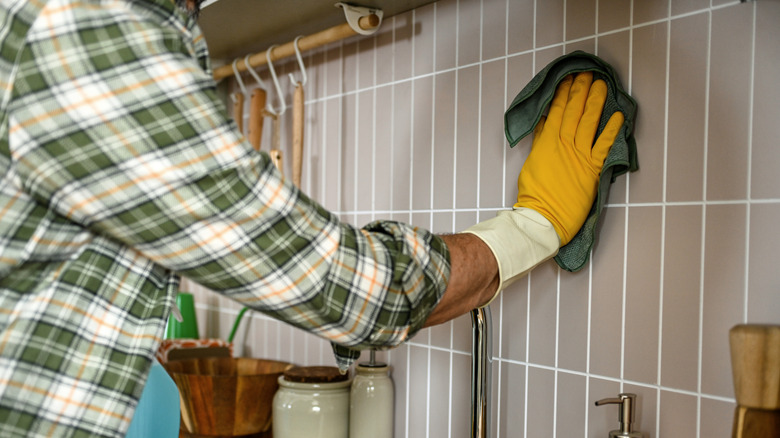
Remember that not all vinegar is best suited for kitchen cleaning. Use white distilled vinegar or cleaning vinegar, which has more acid. Not only is cleaning vinegar extra effective with more acidity, but it's especially good for mixing with dish soap since it has even more acid to stand up to dish soap's alkalinity. Also keep in mind that a little dish soap goes a long way. It's ideal to mix one cup of vinegar with one cup of warm water and just one teaspoon of dish soap. If you use too much dish soap, it can create a paste-like consistency that leaves a film — just another thing to clean up. One teaspoon is all you need to add those trusty surfactants to vinegar's acid.
Don't forget to note that you can't make this solution ahead of time. The vinegar and dish soap won't stay combined and likely won't work the next time you go to use the solution. Make it in smaller batches each time you want to clean with it. Finally, be aware of the surfaces it's safe to use this solution on. Vinegar is part of the secret to cleaning kitchen floors sans chemicals – if your floors are tile or vinyl. Combining it with dish soap also works in sinks and dishwashers, and on counters, backsplashes, and appliances that are not stainless steel. Be aware, though, that it can cause smudges on stainless steel and can damage wood, as well as natural stone surfaces and cast-iron cookware.