

Not All Vinegar Is Suited For Kitchen Cleaning — Here's The Best One To Use
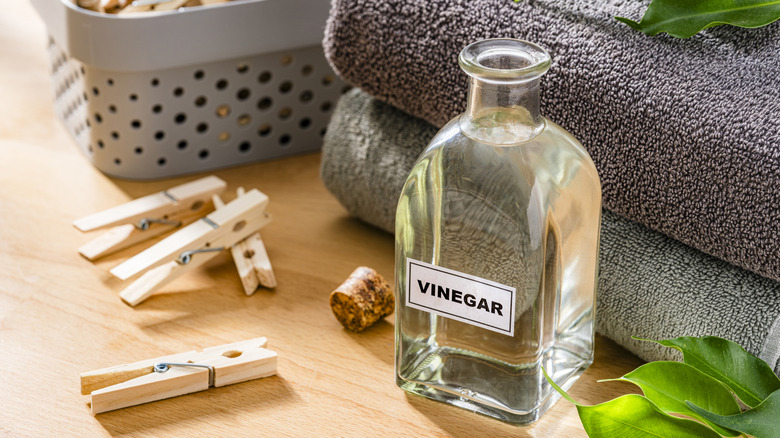
We're always in search of the most effective cleaning solution for our kitchens. Many of us are also prioritizing eco-friendlier approaches, and it doesn't hurt when the answer is more affordable, too. So, you may already know there's a powerful chemical-free way to clean your kitchen already in your pantry: vinegar. The acetic acid that defines vinegar is what gets in and removes grease and build-up. But did you know that there are different types of vinegar with varying levels of acetic acid? It's worth knowing whether you need a specific "cleaning vinegar" with more acetic acid or not, so we turned to an expert.
"Cleaning vinegar is basically regular white vinegar with a slightly higher concentration of acetic acid," investigative chemist and Chemistry Cachet owner Alexis Rochester tells Tasting Table. "Standard distilled white vinegar is typically around 5% acetic acid, while many products labeled 'cleaning vinegar' are around 6% — though concentrations vary by brand."
Is that 1% a deal-breaker? Rochester says no, explaining the difference isn't big enough to justify buying a separate product. "Regular 5% white vinegar already works well for jobs where vinegar is appropriate, especially dissolving mineral deposits, soap scum, and hard-water buildup," she explains. Importantly, regular white distilled vinegar can be used for cooking or cleaning, while specific cleaning vinegar cannot be used for food because of the increased acidity. Just remember it is only white distilled vinegar you should use for cleaning — balsamic, apple cider, sherry, these vinegars are only for culinary purposes.
Regular white distilled vinegar is a safer, effective choice
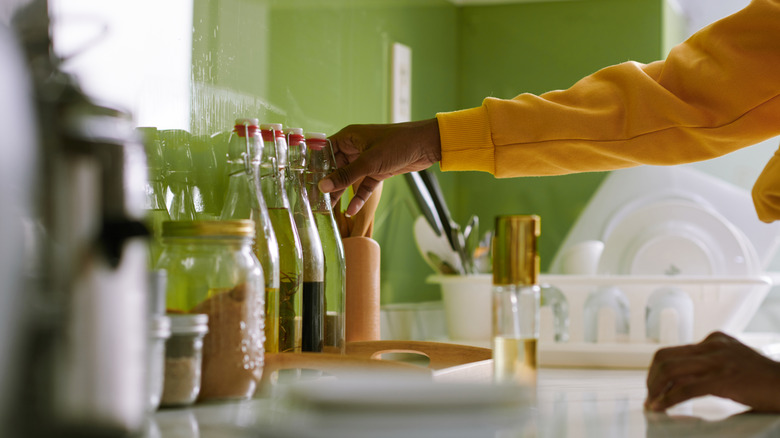
White distilled vinegar is arguably the most essential type of vinegar to have in your pantry. You likely already have it for cooking uses, so put it to work cleaning, too.
"As a chemist, I generally recommend saving your money and using regular distilled white vinegar," Rochester says. "It's inexpensive, easy to find, and versatile." Now, if you have truly heavy-duty cleaning needs, that extra 1% or 2% of acetic acid might be worth it to you. But in all but extreme cases, it might even be safer to stick to more all-purpose white distilled vinegar.
"More concentrated vinegar also means more acidity, which can increase the risk of damaging acid-sensitive surfaces," notes Rochester. There are so many genius hacks and uses for vinegar cleaning your kitchen. It's great for dishwasher and fridge interiors, vinyl floors, cooktops, sealed countertop surfaces, stainless steel or porcelain sinks, and more — a vinegar steam quickly combats oven grease, for example. But you should never utilize vinegar when cleaning counters and floors that are unsealed and/or made from natural materials, like granite, marble, hardwood, and stone, as acid can damage these surfaces. For the same reason, it's safer to use regular white vinegar to cut the risk of harm from cleaning vinegar's boosted acetic acid.
"Neither cleaning vinegar nor regular vinegar should be treated as an all-purpose cleaner or disinfectant," Rochester advises. Vinegar's germ-killing abilities aren't nearly as strong as something like a bleach solution.
It's worth noting vinegar is usually part of a DIY kitchen cleaning solution, diluted with elements like water or baking soda. Cleaning vinegar tends to be mixed with water at a 1:1 ratio, so you can achieve a similar acetic-acid strength by combining your standard white vinegar with water at a 1½:1 ratio.