

10 Different Dumplings To Try The Next Time You Order Chinese Food
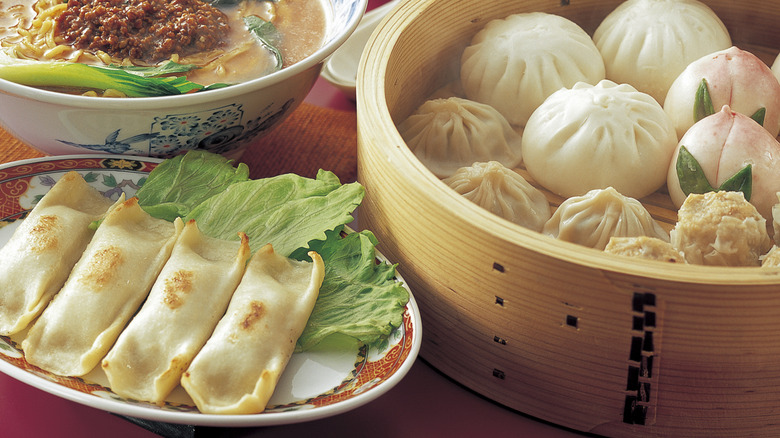
Being a nation of immigrants, America is arguably more spoiled than any other country in the world when it comes to the choice of international cuisines available to us. It truly is a beautiful (and delicious thing). It is also true that America is often guilty of flattening, simplifying, or creating common misconceptions about non-Western foods. Consider all the myths around Chinese food as an example. Luckily, once you become aware of this, you can move past it, and prepare your palate for true appreciation of the finer things. The diverse world of dumplings being one such area.
If you're heading out to order Chinese food, knowing your dumpling A-to-Zs is crucial. It demonstrates cultural appreciation and ensures maximum flavor for your upcoming meal. In order to understand a bit more about the world of dumplings, we spoke with a few experts: Kathy Fang, a James Beard-nominated cookbook author and chef and owner of House of Nanking in San Francisco; James Ho, chef de cuisine at A.O.C. in Los Angeles; and Herman Ny, owner of Xo Brasserie, in Charleston, South Carolina.
"Dumplings broadly carry symbolic weight in Chinese food culture," Ny told us. "[They] are to Chinese cuisine what ravioli is to Italian cuisine — a universal concept of dough-wrapped filling that transcends cultures. When ordering, diners should expect variety." Throughout our conversation, Fang recommended dumplings prepared in numerous ways, including steamed, boiled, and pan-fried. According to Herman Ny, "dumplings are an 'anytime' food rather than being restricted to a specific meal," so regardless of when you're placing your order, there is a dumpling out there that will satisfy.
Shu jiao
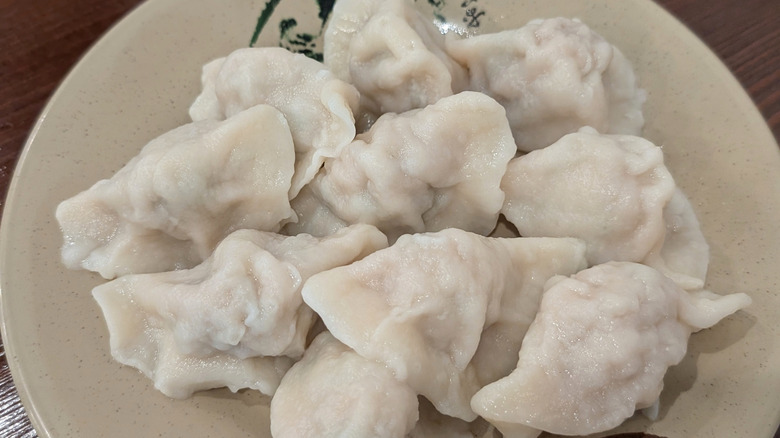
Shui jiao is a name that is specific to a type of dumpling, and it falls under the broadly representative category of jiaozi dumplings. Generally, jiaozi dumplings are made with wheat flour and water. The name of a jiaozi dumpling changes with its preparation; for instance, shu jiao dumplings are those boiled in water. Per Kathy Fang, they originate from northern China, and just about every region in that geographic area makes its own type. Although typically filled with minced pork and grated ginger, shuijiao may also be stuffed with seafood, cabbage, chives, or green onion. Another difference between shuijiaos is the thickness of the wheat wrapper.
"The style you see most often in the U.S. supermarket freezer aisle is closest to the Shandong style, thicker-skinned," said Fang. Your Chinese food order is coming from a restaurant, so look for a menu that denotes the wheat wrapper and prep. They should be soft and noshable, slightly chewy, and full of flavor.
As for how to order them, and when, Fang told Tasting Table that her family often aims to have a variety of different kinds of shuijiao on hand. This dumpling is regarded as a great family-style option, so if you're dining with a group, this will be right up your alley. In contrast to Herman Ny's suggestion that dumplings are broadly eaten anytime, Kathy Fang informed us that "shui jiao are typically eaten for lunch or dinner, not breakfast." Whatever sauce comes with them, make sure that you have some black vinegar for dipping as well.
Xiao long bao (soup dumpling)
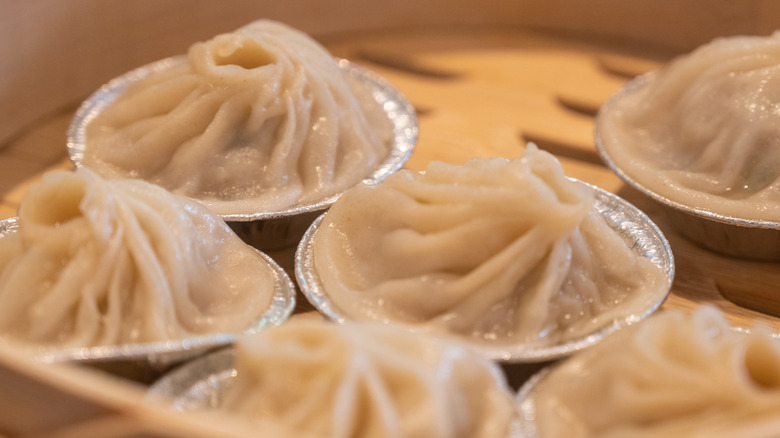
"XLB aka 'soup dumplings' are having a real moment," said Kathy Fang. Their rise in popularity has a few reasons: There is the growing, nuanced understanding of regional Chinese cuisine, first and foremost; but Taiwanese restaurant, Din Tai Fung, put them on the map for international and American diners alike. If you're uninitiated into the world XLB, allow us to explain.
Xiao long bao is a wheat-wrapped dumpling. Like many others, it is filled with minced or ground meat and aromatics. Along with the solid ingredients, the inside of the wrapper is liquified. This is where the name soup dumplings comes into play. Prior to cooking, the dumplings are filled with a gelatinized stock, or aspic. This melts as the dumplings are steamed. The result is a warming, moist, and moorish bite. "The best versions strike a careful balance between skin, filling, and soup rather than going for maximum size for show," said Kathy Fang.
Soup dumplings can be found at Chinese restaurants that specialize in Shanghai-style cuisine, where many folks believe the dumplings originated. That's not the only type of restaurant that will offer them. Other stories place the discovery of XLB in the city of Wuxi, while Fang also mentions Changzhou, so any Jiangsu-style restaurants would also do. The various origin stories are indicative of numerous versions of soup dumplings that exist.
"Shanghainese XLB, eaten there for breakfast and lunch, tends to have a more assertively seasoned filling (often with soy sauce mixed in) than the lighter, more delicate version served at Din Tai Fung, which is Taiwanese," explained Fang. As for how to order them when out for Chinese food, Fang advised two to three dumplings per person as a realistic minimum.
Har gow and shu mai (shrimp and pork/shrimp dumplings)
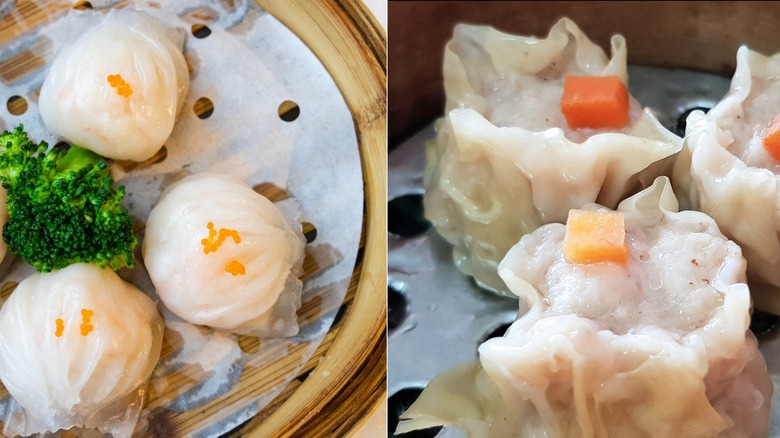
"A dim sum spread includes dozens of options," said Kathy Fang, "but har gow and shu mai are the ones I consider the anchor of the meal ... among people who take dim sum seriously, they're the benchmark: if a restaurant nails these two, the rest of the menu is likely to deliver too." Take it from Fang: these Cantonese dumplings are must-order dim sum options when going for Chinese food.
Har gow is a delicate shrimp dumpling that is sometimes called "crystal shrimp" due to the glassy appearance. The relative clarity of the wrapper as compared to other dumplings comes from the ingredients — it's a mix of tapioca flour and wheat starch. The result is a slightly soft and gummy texture, and a dumpling wrapper that is a bit stickier than the average. Inside, along with the shrimp, har gow should include a bit of bamboo shoot and ginger, and it may be seasoned with white pepper, oyster sauce, and some sesame oil as well.
Bite-sized shu mai are the other side of this dim sum duo. These dumplings contain shrimp as well, but they also have the addition of pork for a meatier bite. Shu mai filling recipes regularly include mushrooms and/or water chestnuts, too. Seasonings vary — sesame oil, soy sauce, Shaoxing cooking wine, white pepper are consistent things to see alongside aromatics and alliums. The wrapper is again made of unleavened wheat dough, but may contain egg, lye, or food coloring for a yellow effect.
"Dim sum is a breakfast-and-lunch tradition, never dinner," said Fang. "The meal is meant to be communal: small plates of three pieces per steamer, shared over tea with family or friends, though it works just as well solo."
Guo tie (pot sticker)
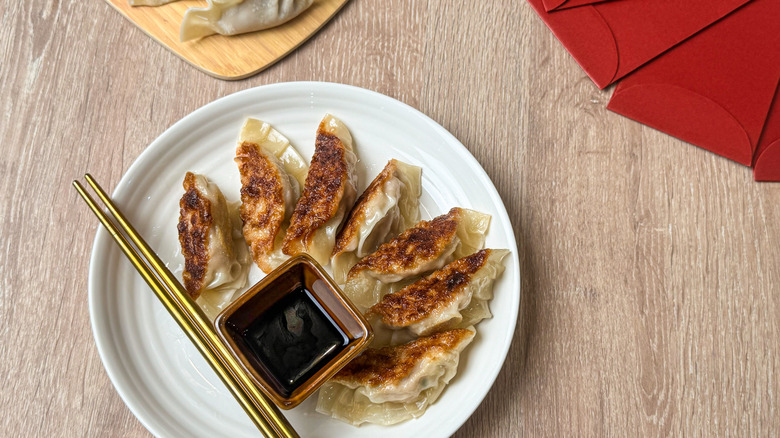
Guo tie is a very famous type of dumpling that falls under the umbrella of jiaozi. It is, essentially shujiao that is prepared differently. Rather than being steamed only, guo tie recipes call for a double treatment in which they are steamed and pan-fried until the bottom is crispy. Herman Ny called this brittle bottom a "vital contrast" between the steamed top. Kathy Fang called it her favorite dumpling, describing that eating it resembles "biting into a well-made Neapolitan pizza crust."
The name potstickers comes from a Song Dynasty legend about dumplings accidentally sticking to a hot wok and turning out delicious, explained Fang. When it comes to where and how to order them, Fang clued us in to some specifics: "[They] are a northern Chinese specialty, so for the best version, look to Shandong or dumpling-focused restaurants rather than Cantonese dim sum spots."
When it comes to the filling, guo tie may vary slightly from their steamed counterparts, as Herman Ny told Tasting Table. According to Ny, pot stickers are traditionally filled with pork, bamboo shoots, and shiitake mushrooms, which lend them copious layers of umami, salty, and fatty flavors. Other recipes also sometimes include cabbage. The wrappers are made with wheat flour.
As for what you need to know when ordering, Herman Ny said that "[guo tie] are typically served as a standalone dish and are widely enjoyed as a snack or a meal component at any time of day." Per Kathy Fang, an order typically includes a six-count. "Restaurants don't always provide a dipping sauce, so be ready to mix your own."
Sheng jian bao (Shanghai breakfast dumpling)
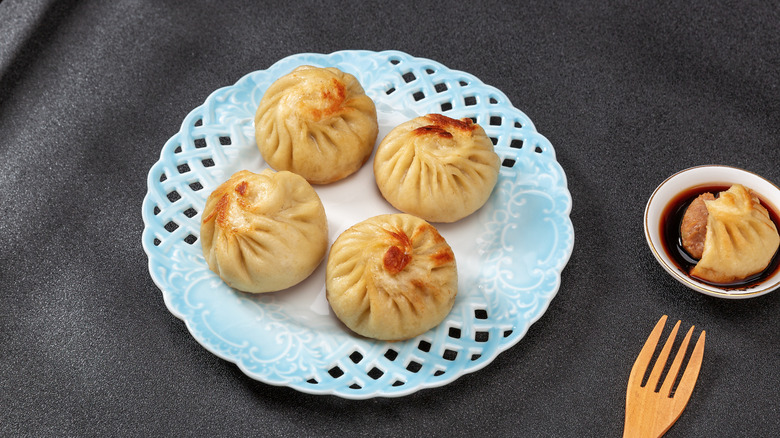
Sheng jian bao is often compared to xiao long bao, but the two juicy dumplings have some significant distinctions. The relationship is comparable to guo tie and shujiao. Xiaolongbao is known for being plush and liquidy. Sheng jian bao has some of those qualities, but it has a friable, crunchy bottom. The wrapper itself is thicker and breadier than the thin-skinned XLB, an outcome of the fact that SJB dough is yeasted. That places it between typical bao and pan dumplings.
Chef James Ho told us that, like XLB, this Shanghai dumpling is a beloved breakfast item. He also elaborated on the cooking process that makes the dumpling so special. "Typically filled with pork and an expertly prepared gelatinous pork broth, these dumplings are laid in layers on wide cast iron pans and fried until the bottoms are golden brown and crisp," said Ho. "A lid is placed over the pan during the cooking process to steam the dumplings, resulting in a dumpling with a crunchy underside but soft, thin skin on the upper half."
After you order sheng jian bao, Ho alleged that there is a specific way to eat it. You should start by piercing the dumpling skin — use a chopstick, a fork, or your teeth — and then slurp up the broth. Then, pop it in your mouth with a topping of black vinegar and/or some ginger. If you happen to be in the great Los Angeles Area, Ho had some recommendations where to get SJB: "The best is Kang Kang Food Court in Alhambra, a humble little place that's a local favorite."
Wontons
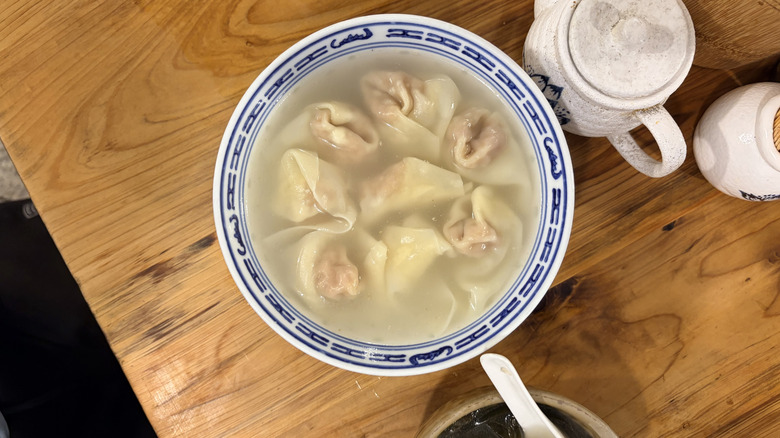
Technically, wontons fall under the classification of a dumpling. However, they aren't really categorized as jiaozi. That's because the feature trait of wonton is its significantly thinner dough. "[Wonton's] springy texture traditionally came from bamboo-pole kneading, which develops the noodle's characteristic bounce," said chef Kathy Fang.
The origins of wontons are somewhat disputed. Herman Ny cites them as a dish born in Canton, which is south China; other sources place them in the north. There are many types of Chinese restaurants that serve wontons, though their methods will vary. Ny said that "they are highly versatile and can be served alone with a dipping sauce or integrated into noodle soups." Their filling, according to the owner of Xo Brasserie, is mostly similar to other dumplings: pork, bamboo, and water chestnuts are some common choices.
Maybe the most common way to eat these dumplings is in a soup. Kathy Fang said as much: "Hong Kong-style wonton noodle soup ... the wrapper is soft and almost slippery. You'll notice this when they slide off a porcelain spoon. They're small, one-to-two-bite morsels." The chef also mentions that they're appealing because they are highly customizable.
Jiu cai bao
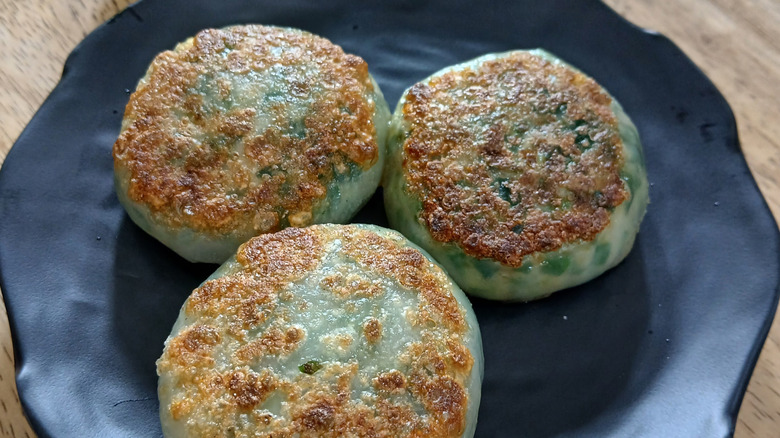
If dumplings that are dominated by pork and shrimp seem a bit too much to you, then jiu cai bao are the dim sum option you need to consider. The bright green color of these dumplings comes from the filling and the bold and generous amount of garlic chives that are stuffed inside. If you're requesting these with your next Chinese food order, be prepared for a peppery pungency. They often still include a bit of pork and shrimp, mushrooms, and other fillings, but these can be replaced by tofu for a vegetarian dish. Their garlicky nature is their most important trait.
Jiu cai jiao have a translucent wrapper that's similar to har gow. The ingredients are the same as well — wheat starch and tapioca flour make up this glass-like wrapper. However, rather than being sticky or gummy in texture, jiu cai jiao have a bite that's firm. They're steamed, then pan-fried for a blistered bite.
These dumplings have a larger form, called jiu cai he zi, known in English as Chinese chive pockets, and they resemble stuffed pancakes. Recipes vary from family to family and from restaurant to restaurant, and the dough may be thin and crispy or leavened to offer a softer and more substantial bite.
Ham sui gok
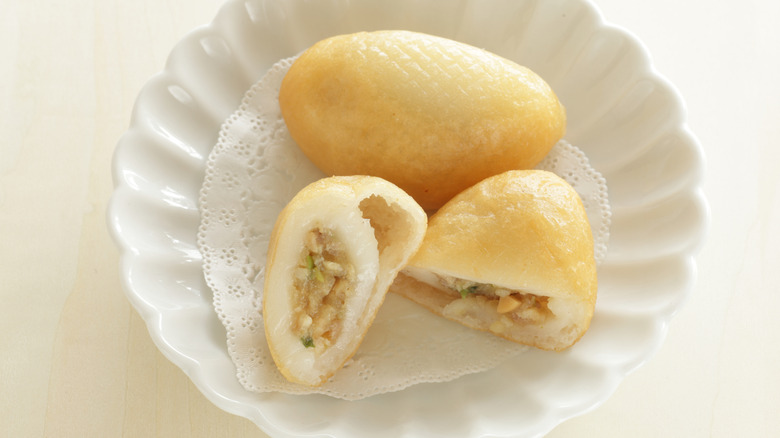
Ham sui gok is a unique dumpling to consider the next time you're ordering Chinese food. It's crispy in a way that other pan-fried dumplings can't replicate. This is because of the glutinous rice that's used to make the dough. Glutinous rice flour is mixed with wheat starch, and then it's either pan or deep fried until its bubbly texture crackles. Imagine something similar to what you feel when biting into a croquette, albeit a bit lighter and more airy. The inside of ham sui gok becomes a tender, bouncy bite, and all-in-all, it shares a great textural similarity with the Chinese pastry jian dui, or sesame balls.
It is most regularly stuffed with bits of minced pork, so the bite is intensely salty and savory in contrast to glutinous rice that imparts a bit of sweetness to the dough. In some recipes, sugar or yam may also be used to sweeten the dough. Another common ingredient to find inside is preserved radish. Anyone who enjoys some slightly funky, garden spiciness will find that this hits the mark. If you want to order ham sui gok, your best bet will be to find a Cantonese-style dim sum restaurant to try, or to look for a Chinese bakery.
Wu gok
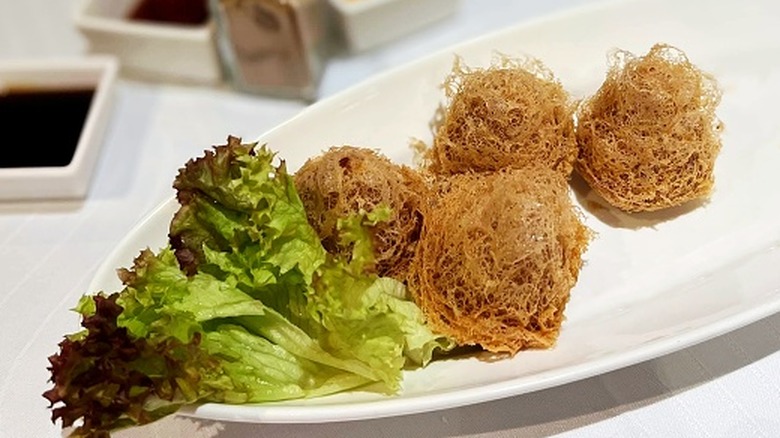
If xiao long bao is having a moment, then taro is having a decade. Although the starchy corm has been consumed by Eastern cuisines for centuries (and was also included in early Mediterranean diets), Western palates have only become hip to it in recent years. That means it's likely you may have missed one of Chinese cuisine's most unique dumplings, wu gok.
Unlike the multitude of jiaozi dumplings, wu gok does not have that well-worked, traditional dough. Rather, wu gok's wrapping is made by boiling and then mashing taro. The mashed taro is then shaped into a ball around a filling, and the whole thing is deep fried. Starch from the taro creates a leavening effect, and the result is a wild, stringy pattern that emerges, puffing up during the fry. The most basic forms of wu gok look like a golden-crusted webbed ball, but the best versions employ wheat starch for structure, or shortening for a honeycombed, lacey shape.
Inside wu gok is the standard line-up, including pork, mushrooms, shrimp, scallions, and soy sauce. When ordering this dumpling, it helps to ask if the recipe actually includes taro, as it is apparently possible to use ammonia bicarbonate to create a similar leavening effect to what the mashed root creates. As for sauce, wu gok is typically served without. But, a bit of chili wouldn't be out of place.
Tang yuan
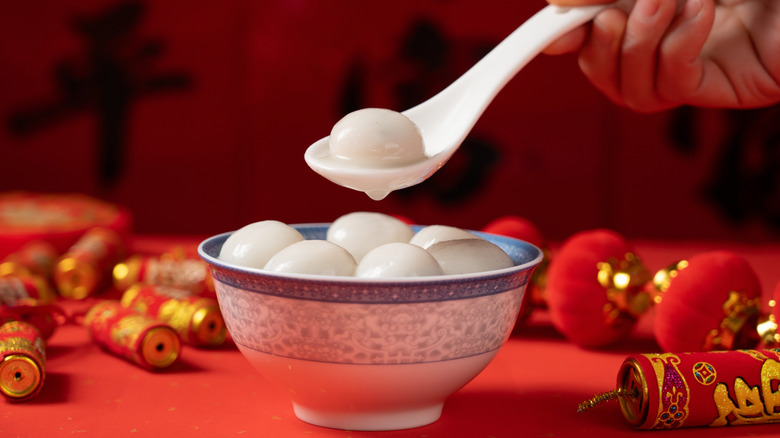
Tang yuan is often called by the name of its literal ingredients — glutinous rice balls — but it is indeed a dumpling, and one you should consider the next time you order Chinese food. (Especially if you have a sweet tooth.) Tang yuan comes from the historic city of Ningbo, where they developed as hand-rolled dumplings intended to celebrate goodwill. You'll certainly get a taste of peace and harmony when you bite into one. The glutinous rice dough has a soft, almost mochi-like texture.
The little dumplings, which may be as big as a ping-pong ball or as small as a grape, are packed with fillings like red bean paste, peanuts, or black sesame. The filling may be mixed with lard or bacon grease to complement the sweetness with a savory component. These dumplings are usually boiled, but they can also be steamed or fried. Available and consumed year-round, tang yuan is especially present around the Lunar New Year holiday. Their pearl shape even looks like a full moon. Some restaurants serve tang yuan in a type of soup with sweet ginger broth. Regardless, the texture you're looking for is slightly tacky and chewy.