

Myth Vs Fact: 8 Things Diners Need To Stop Believing About Chinese Food
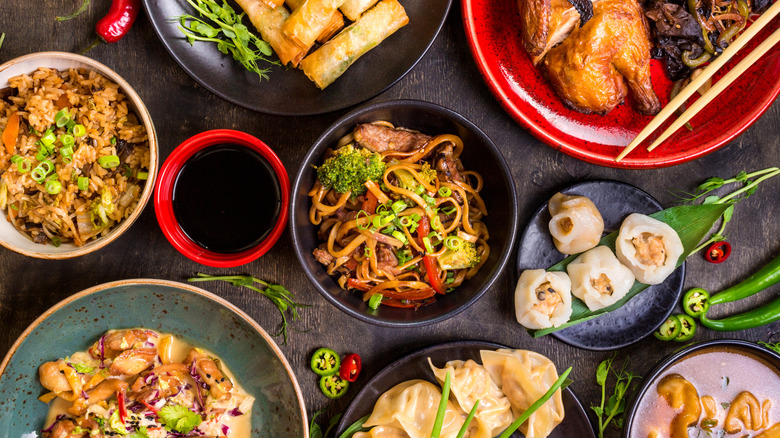
I recently visited China and, while on my journey, one thing became abundantly clear — there are myths about Chinese food that are categorically false. I've been a food writer for decades, but I was naive about Chinese cuisine. The beauty of the country's food (and the people making it) was apparent, and each dining experience was unique.
Perhaps these tall tales about Chinese food originated from Americanized Chinese restaurants that aimed to please the American palate. Let's face it, all international cuisine changes when it's tweaked for a different consumer. Thankfully, there are plenty of noteworthy Chinese restaurants in this country that deliver the same tastes, textures, and culinary experiences as their counterparts in China. Since a trip from the U.S. to China can run up to 24 hours long, it's nice to know there are amazing Chinese restaurants in every state.
Obviously, I didn't become an expert on Chinese cuisine after one trip, so to debunk the myths, I reached out to some renowned Chinese chefs. I garnered tremendous insight from Kathy Fang, chef, author, and owner of House of Nanking in San Francisco; James Ho, chef de cuisine at A.O.C. in Los Angeles; and Andy Lau, executive chef at Ginger at MGM National Harbor in Oxon Hill, Maryland. With these experts at hand and a recent trip to China under my belt, I compiled plenty of evidence that the following popular Chinese food myths need to be discredited.
Chinese food is overly greasy
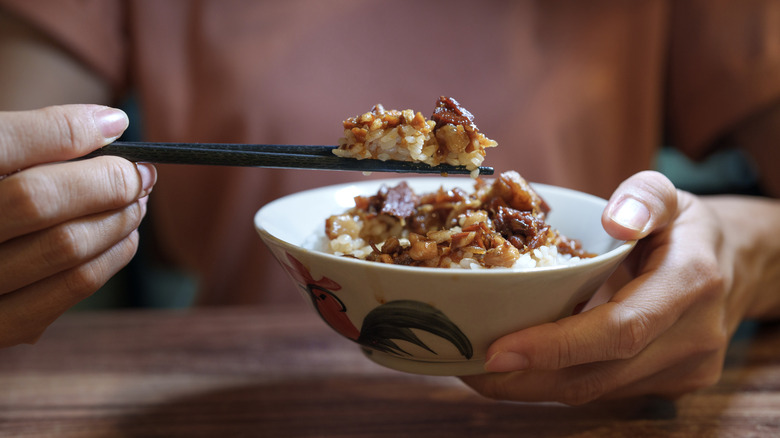
I'll admit, there are plenty of Chinese menu items that incorporate loads of oil, and I had my fair share in China. But there's a reason for that, and chef James Ho explains: "There are Chinese dishes that employ the use of generous amounts of oil and extreme heat, which are necessary to extract flavor from aromatics, caramelize sugars, and combust aerosolized oil droplets into smoke during wok cooking." That said, he adds, "Among Cantonese chefs, a sign of proper technique and mastery of wok cooking is achieving a perfectly smoky, piping hot plate of food that doesn't leave any oily residue behind; a plate of overly greasy food might be a result of improper technique or even negligence."
Chef Kathy Fang agrees and states, "Authentic regional cuisines use a wide range of cooking methods, and a well-composed meal balances it all: something fried, something cold, something poached, something steamed, something braised." She also suggests that some of the overtly oily dishes might be the fault of the American palate. She explains, "I think the misconception that all Chinese food is greasy comes from the fact that when Chinese immigrants first came to the U.S., they had to adapt their cuisine to Western palates; Westerners gravitate toward fried, sweet, more approachable foods."
While in China, I experienced many oil-infused dishes. However, I also enjoyed plenty of steamed and poached foods, and a wide array of light, broth-based soups.
Chinese restaurant dishes aren't always authentic
"What does authentic even mean?" asks chef Kathy Fang. She explains, "The word authenticity gets applied to Chinese restaurants more than almost any other cuisine, usually with a negative edge, a way of implying a restaurant isn't real Chinese food." She continues, "Does a dish have to be passed down for centuries, unchanged?" She adds, "Or does it stop being authentic the moment a non-Chinese person enjoys it?" And, chef Fang asserts that the biggest query is this: "If a restaurant doesn't have a lot of Chinese customers, does that make it inauthentic?" These are all great points, and especially true when dining in a Chinese restaurant in America (versus China).
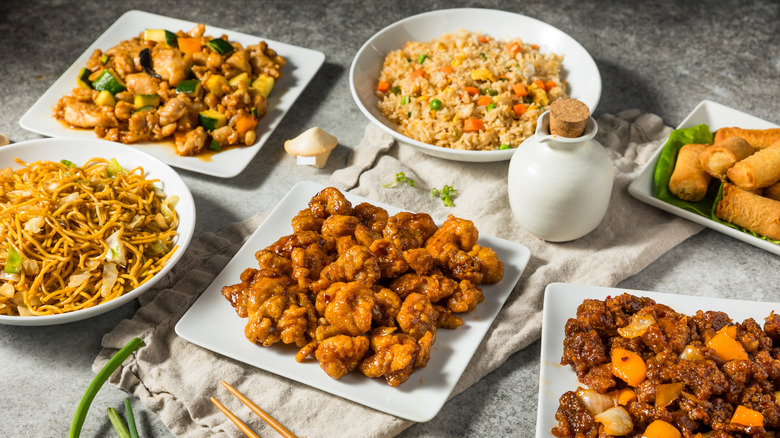
Chef Andy Lau agrees and adds, "Chinese American cuisine has grown over generations as Chinese chefs adapted traditional recipes to local ingredients and tastes." That explains why popular dishes like General Tso's chicken and chop suey aren't inherently Chinese, but, as chef Lau puts it, "They are part of a unique Chinese-American tradition and authentic in their own right."
When dining in China, I found most dishes utilized local ingredients (including lots of fresh produce) and a copious amount of organ meats, something you don't often see on American menus. In the U.S., it's clear that Chinese chefs incorporate local ingredients and generate dishes that are an approachable mix of Chinese and American.
There's MSG in everything
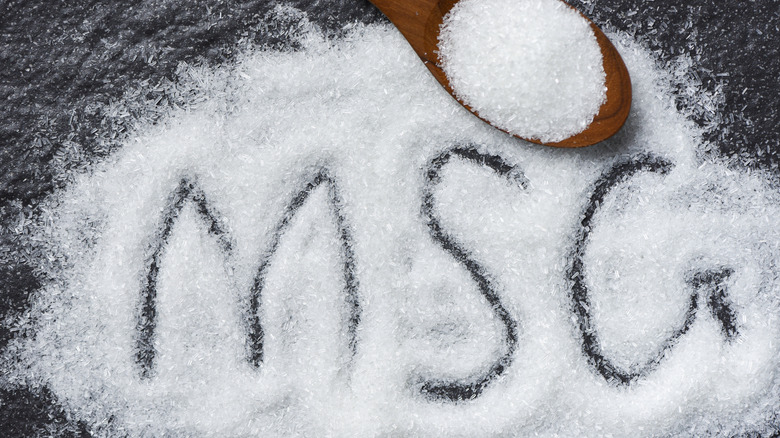
First, let's discuss what MSG actually is. Despite the chemical-sounding name, MSG (monosodium glutamate) is a naturally occurring compound made from glutamic acid, a common amino acid, and sodium salt. MSG occurs naturally in our body, as well as in many foods, like tomatoes and aged cheeses. MSG is also used as a flavor enhancer — it doesn't have its own taste, but it elevates the nuances of whatever it's added to, which is why you'll frequently find MSG in soups, condiments, fast food, snacks, and other processed foods. Chef Kathy Fang elaborates, "There is MSG in a lot of things, including plenty of foods the general American public eats every day that have nothing to do with Chinese food."
While some folks identify as sensitive to MSG, the FDA considers MSG "generally recognized as safe" (GRAS). No studies have successfully documented a significant, consistent, adverse reaction to it.
Plus, MSG has been incorporated into various global cuisines for centuries. Now that we have gained a deeper awareness of what it is and what it does to enhance the flavor of food, some of the fear has dissipated. In fact, there are multiple ways to use MSG at home to enrich and heighten the flavor of a variety of dishes. Chef Fang adds, "The old stigma is finally starting to fade, and people are recognizing MSG as a legitimate, even wonderful, kitchen staple."
All Chinese food is spicy
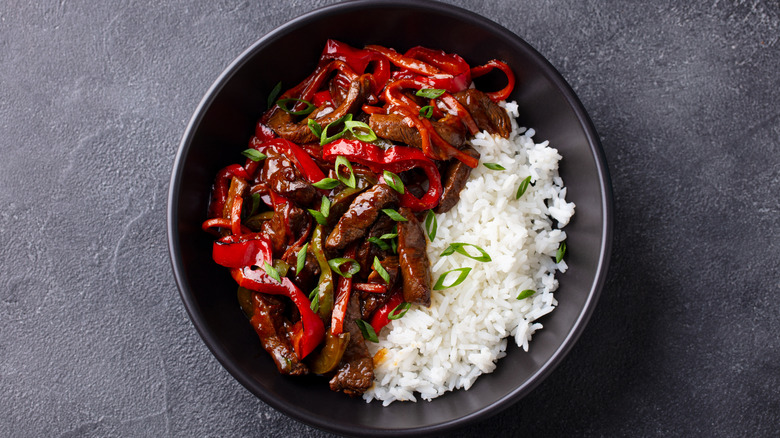
According to chef Kathy Fang, Chinese cuisine is grouped into eight major regional traditions, and only two of those — Sichuan and Hunan — are known for spiciness. Both of those cuisines are widely available in the U.S., so it's easy to see why people think all Chinese food is spicy. But those are just two regions. Chef Fang clarifies, "Cantonese cuisine, which has a huge presence in the U.S. and is famous worldwide for dim sum, is one of the lightest of the eight regions, built around seafood and natural flavors."
Chef James Ho agrees and adds, "The use of chiles in Chinese cuisine varies widely, and the cuisine of Hunan province is legendarily spicy and considered the spiciest of all Chinese regions." He states that, in Hunan, it's normal to see dozens (if not hundreds) of dried, chopped red chiles floating in a brothy hot pot or tossed with vegetables in a wok.
In contrast, chef Ho states that Guangdong, the province directly south of Hunan, doesn't feature chiles nearly as prominently. He expounds, "Spicy condiments can be found on the side but are not usually directly incorporated into dishes, and they never quite reach the mind-numbing heat found in Sichuan or Hunan dishes."
I was lucky to experience this contrast in China. I enjoyed plenty of dim sum and other mild dishes made with vegetables, dried fruit, noodles, and light broths.
Chinese cuisine is all the same
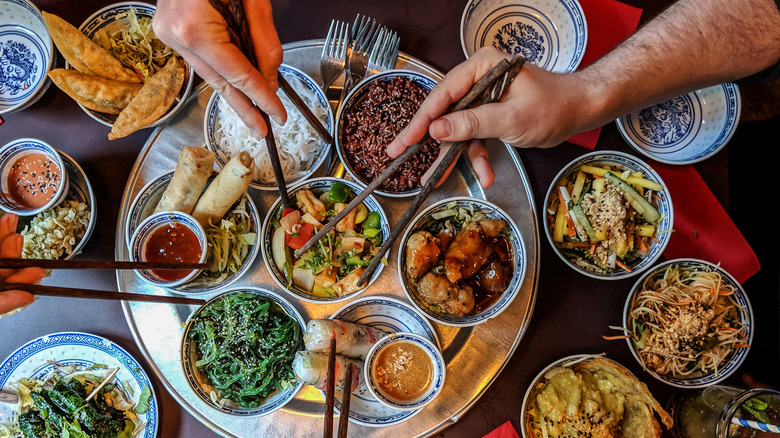
This is another myth that deserves debunking. Just because your neighborhood Chinese restaurant offers one type of Chinese food doesn't mean that's the only variety there is. Chef Kathy Fang explains, "[China has] 1.4 billion people, thousands of years of culinary history, 34 provinces and provincial-level regions, 56 ethnic groups, and nearly every ecosystem on Earth — deserts, coastlines, mountains, and river deltas — all cooking completely differently."
Chef Fang mentions that China is recognized as having eight regional cuisines, including Sichuan, Cantonese, Shandong, Jiangsu, Zhejiang, Fujian, Hunan, and Anhui. Flavors from these regions range from bold and fiery to delicate and light, with plenty of variations in between. Chef Fang emphasizes, "Most people in America have only tasted a diluted version of about half of those cuisines, and the other half barely exists outside China." She adds, "Saying 'Chinese food' is one thing is like saying 'European food' is one thing."
Chef Ho adds, "The variation in the ingredients, techniques, traditions and flavor profiles between regions in China spans such a massive spectrum that people have spent entire lifetimes documenting and studying them." Chef Lau agrees and adds, "Chinese cuisine is rich and diverse, with each region offering its own unique flavors and cooking styles."
Every dish comes with rice
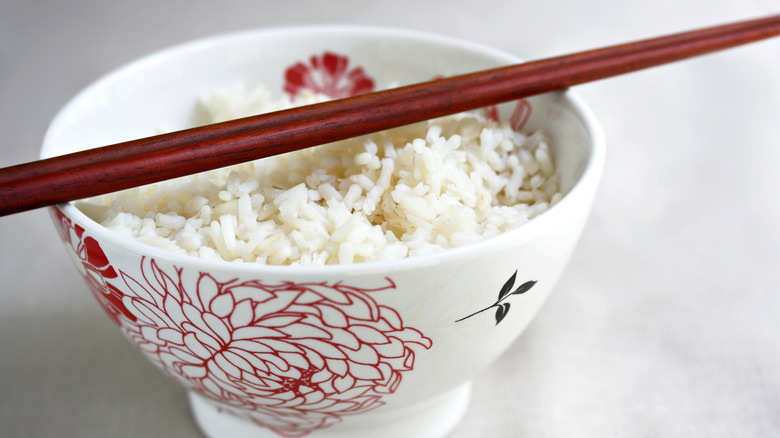
Based on my own experience in China, this myth is flat-out false. In fact, I would suggest that most dishes I ordered did not come with rice, and I experienced that all over the country. Chef Kathy Fang explains, "If you build a meal with a Chinese person, you'll notice it's made up of different courses, including a soup, a vegetable dish, two or three protein-based dishes, and a starch to finish." She adds that the starch might be steamed or fried rice, but it can also be noodles, buns, dumplings, or steamed root vegetables.
While in China, I found rice noodles were the main starchy dish in my meals. I also enjoyed steamed buns, as well as steamed sweet potatoes, yams, and taro root. In fact, while in Shanghai, I enjoyed steamed sweet potatoes, yam dumplings, and vegetable-filled dim sum every morning for breakfast. Rice was often offered for breakfast, but most locals were gravitating towards the broth-based, noodle soups and seafood dishes (yes, for breakfast).
Rice is certainly available in Chinese restaurants in China, and chef Fang states that it's a "comfort staple" in the country. But it's not offered at every meal.
Chinese food is fried and heavy
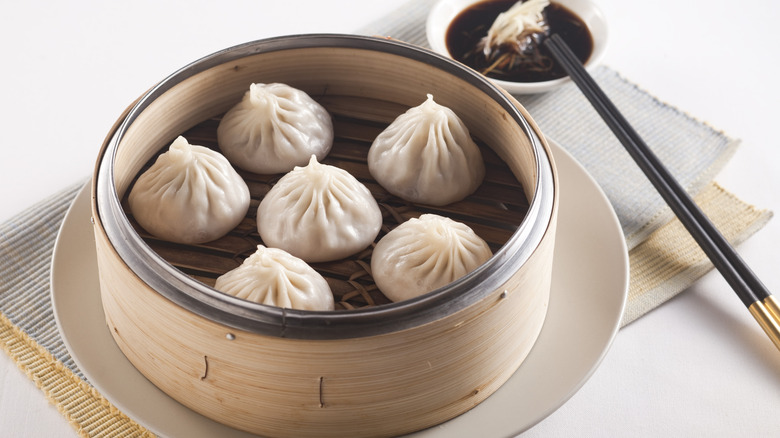
This harkens back to the myth about Chinese food being greasy. As stated, not all Chinese food is oily, fried, or weighty. In fact, chef Kathy Fang explains, "Steamed and braised dishes actually make up probably 90% of Chinese home cooking." She adds, "We're also one of the few cuisines that doesn't use butter or dairy, which are some of the most fattening ingredients out there." She states that a properly wok-tossed dish should contain very little oil. If the dish is prepared correctly, the protein and vegetables should have a light sheen of oil, and there should be no oil pooling on the plate.
Chef Andy Lau reiterates, "While some popular dishes are fried, Chinese cuisine includes many healthy cooking methods, such as steaming, stir-frying, braising, and poaching."
Chef Fang states that the fried-food myth stems from American customers often ordering a meal consisting entirely of fried food. She suggests diners add variety to their spread by ordering something fried, something steamed, and something wok-tossed.
While in China, I found it easy to order dishes that were light and healthy, not fried and heavy. I dined with my son every night, and we ordered a variety of dishes that pleased both our palates (he tried everything under the sun).
Fortune cookies are a Chinese staple
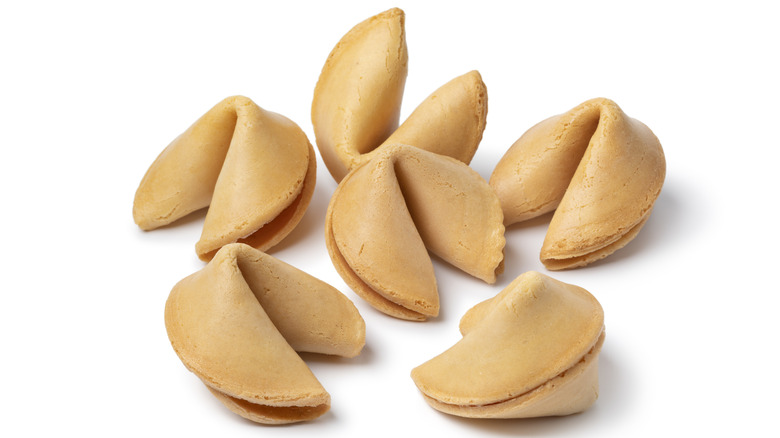
I spent three weeks in China and didn't encounter one fortune cookie. Turns out, fortune cookies were not invented in China, so they're not a Chinese staple at all. They're actually more of a Chinese-American sweet treat. Chef Kathy Fang declares, "You won't find fortune cookies at the end of a meal in China; they're largely unknown there and not part of any tradition."
That makes sense considering the fortune cookie was invented in Japan. Turns out, the fortune cookie has roots in Kyoto and found its way to America by way of immigrants in the early 1900s. Seems the sesame, miso-based cookie with a note was served in Japanese tea gardens in San Francisco.
So how did fortune cookies end up in Chinese restaurants? There are varying reports, but the most compelling one is that, once in the U.S., Japanese immigrants chose to open Chinese restaurants when they realized Americans weren't enamored with raw fish. Bring on the chop suey, chow mein, and egg foo young (these American-inspired dishes became exceedingly popular during this time). And since Americans predictably expect dessert after a meal, the fortune cookie was often delivered with the check.