

How A Pinch Of One Overlooked Pantry Herb Makes Tomato Sauce 10X More Flavorful
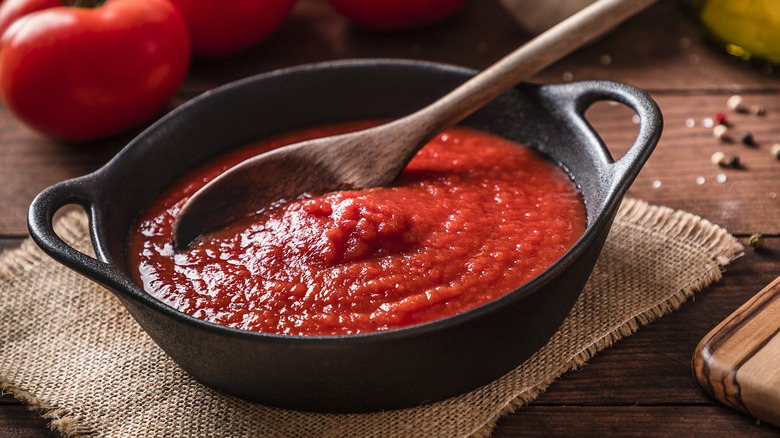
Many home cooks have a favorite tomato sauce recipe that they refuse to mess with, but you don't have to overhaul your go-to formula to improve upon it. Instead, use tiny additions that upgrade your sauce without radically changing it. For one idea, try adding a pinch of an underrated herb — marjoram — to make any tomato sauce 10 times more flavorful.
With a distinctly sweet, lightly floral flavor combined with subtle pepper and citrus notes, marjoram is a mild herb that deserves a place in your spice blends and sauces. It's related to oregano, a very common herb in tomato sauce recipes, so you can imagine that marjoram works equally well in your marinara, pizza sauces, ragùs, and so on. However, marjoram tastes more delicate than its more popular cousin, so it's less likely to overwhelm the flavors of your favorite recipe. Marjoram's warm, aromatic qualities also add complexity for a restaurant-quality flavor profile.
Marjoram and oregano can be swapped in recipes easily, but you should cook the former for less time, or else its flavor may fade. This makes marjoram suited for our quick tomato sauce recipe, but for longer-cooking sauces, add it five to 10 minutes before the sauce finishes simmering. You can push it to 15 to 30 minutes if you don't mind the herb's flavor being less pronounced. Many recipes use 4 teaspoons to 2 tablespoons of marjoram for around 3 cups of sauce — start out small and add more if you want a stronger taste.
More ways to use marjoram for the most flavorful tomato sauces
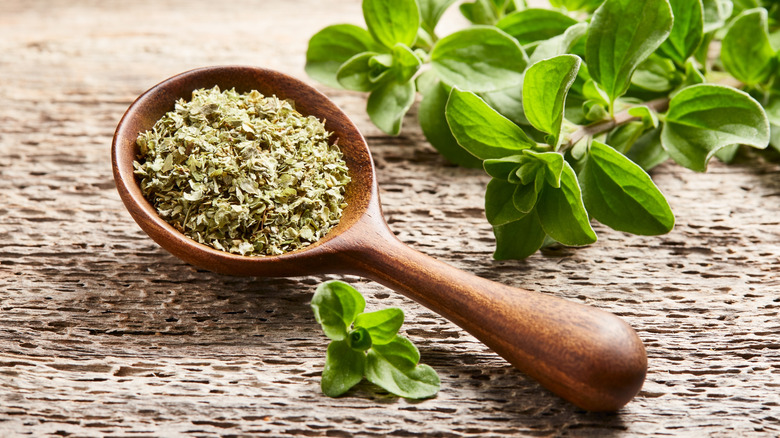
In addition to pairing well with tomatoes, marjoram also plays perfectly with garlic, onions, thyme, rosemary, and of course, oregano. Incidentally, these ingredients can all make jarred tomato sauce taste homemade on those nights when a from-scratch sauce isn't viable. Adding herbs in general is the best way to level up store-bought tomato sauce and make it your own, so you should keep marjoram around for both homemade sauces and the jarred stuff.
While marjoram will be delicious in any tomato sauce, its presence is more obvious in lighter preparations like classic marinara or even homemade tomato passata. For an even more vibrant and refreshing sauce, try adding a little lemon and/or vinegar alongside the marjoram, as both acidic ingredients pair well with the herb. Lemon will bring out more of marjoram's citrusy notes. Fennel also makes an intriguing partner for marjoram, whether you add the spice right into your saucepot or serve the finished sauce with Italian sausage, which almost always includes fennel seeds.
Besides meaty recipes like lasagna or ragù, marjoram works wonderfully with dishes involving mushrooms and legumes. It would be a fabulous addition to Instant Pot mushroom bolognese or other vegan bolognese recipes made with lentils or chickpeas. No matter what kind of sauce you use it in, you'll soon be convinced that marjoram should be a star of your kitchen, not left languishing in the back of your pantry.