

How To Boil Corn So Every Kernel Stays Juicy
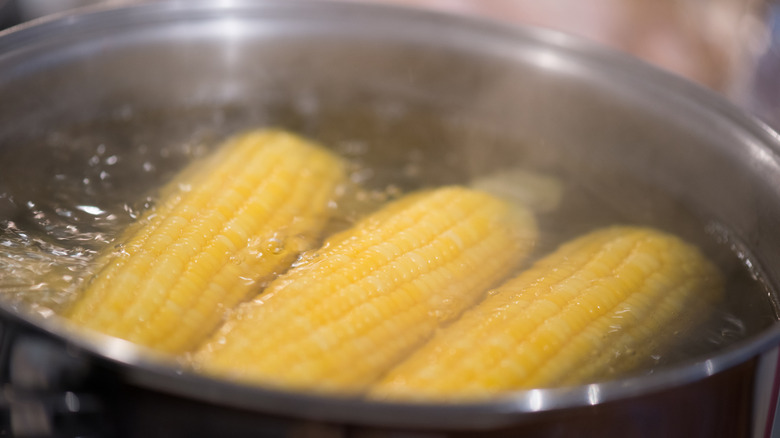
There's nothing that screams summer like biting into a sweet, tender corn on the cob smothered in butter and salt. And while corn takes well to grilling and roasting, boiling is the tried-and-true method that will render the plumpest, juiciest kernels if you know how to do it correctly. You might think it's just a matter of bringing water to a boil and throwing in the corn to bubble for five minutes or so, but to keep every kernel juicy, the best way to boil corn is by starting it in cold water.
The process is simple: Add your corn to a pot of cold water and bring everything to approximately 180 degrees Fahrenheit (just under the true boiling point of 212 degrees), then turn off the heat, cover the pot, and let it sit for 10 to 25 minutes. If you do bring the cold water to a boil, the heat can be turned off after about one minute. Boiling corn on the cob for too long shrivels the kernels and depletes moisture, resulting in a tough or chewy pulp. Starting with cold water translates to gradual heat that cooks each kernel evenly and at the same time. Over-boiling corn also draws out the sweet flavor along with vitamins and minerals. A slow heating method that creeps toward a boil for a mere second or two before turning off the heat is the gentle cooking method corn needs to develop its natural sugars.
More tips for cooking fresh corn in water
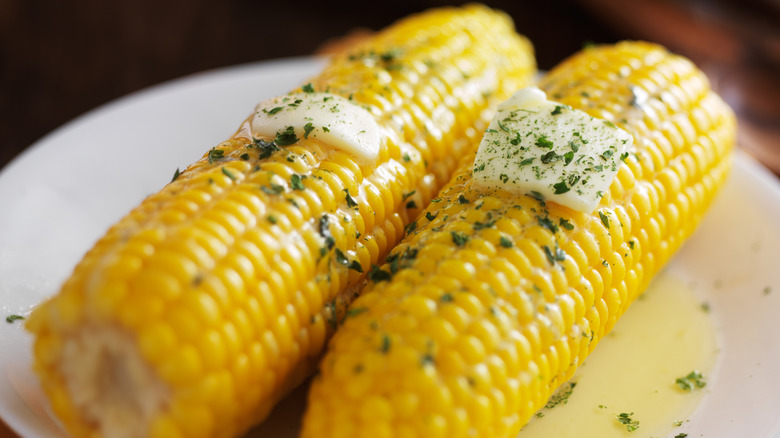
Leaving the husks on fresh corn keeps the ears moist over the grill or in the oven, but boiling typically requires you to shuck them before adding them to the pot. Water may draw nutrients out of the corn, but it also infiltrates the kernels as they cook. So, you can introduce more flavors to corn by seasoning the water. The two ingredients you should add to the water for next-level corn on the cob are lemon juice and sugar. Sugar enhances corn's sweetness, while the acidity of lemon juice brings balance and brightens its yellow color. Whatever you do, don't ruin your corn by boiling it with salt. Saltwater may be a necessity for cooking pasta, but it actually causes corn kernels to become tough.
More flavoring tips that'll enhance the earthy sweetness of corn happen once you've pulled the cobs out of the pot. Smothering corn on the cob in a compound butter with garlic and herbs would be a delicious upgrade, for example. You can also give corn on the cob the elote treatment by rolling it in mayonnaise, followed by cotija or parmesan cheese, a dusting of Tajín, and a squeeze of lime juice. Cut the corn off the cob and add it to black bean salsa or a fresh salad with romaine, avocado, green onions, feta, and creamy, tangy buttermilk ranch dressing.