

Should You Stop Eating Fresh Produce During A Foodborne Illness Outbreak?
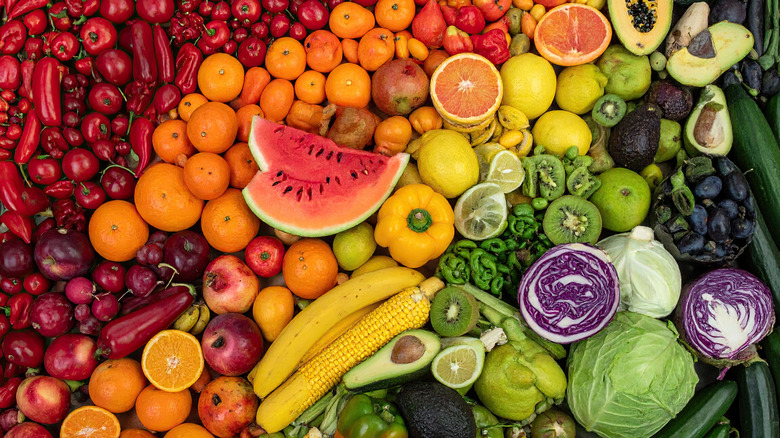
If you are prone to kneejerk reactions based on headline-grabbing numbers, the temptation to stop eating fresh produce during a foodborne illness will be high. For example, a Centers for Disease Control and Prevention (CDC) study found that 46% of all foodborne illnesses were caused by fresh produce, based on U.S. outbreak data from 1998 to 2008. Meanwhile, a University of Ohio study said lettuce and leafy greens accounted for nearly 10% of all foodborne illnesses. However, despite these numbers, one eminent food expert says that cutting out fresh produce can do more harm than good.
Certified food scientist Kantha Shelke, PhD, founder of research firm Corvus Blue LLC, and a senior lecturer on food safety regulations for Johns Hopkins University, warns against cutting out fresh fruits and vegetables from your diet. "I would caution against any recommendations to avoid all fresh produce as a category during an outbreak," says Shelke. "By avoiding produce, one is swapping what is often a small, time-limited, traceable risk for a large and potentially long-lasting habit. Low fruit and vegetable intake is among the best-documented dietary contributors to cardiovascular disease and cancer, and can contribute to constipation and other digestion irregularity."
This is extremely important to note, given that America is navigating a massive Cyclospora outbreak in 2026 — the third-biggest in its history according to the U.S. Public Interest Research Group. Even in a situation like this, Shelke says the best approach is to stay informed. "Outbreak investigations typically identify a specific item or class of produce from a specific grower or lot and are often region-specific. Case in point: The 2026 Cyclospora investigation points to iceberg lettuce from one Mexican supplier, and the Salmonella investigation points to jalapeño peppers from one importer. It would be wise to follow the recall and be cautious about those suppliers."
Safety precautions you should take during an outbreak
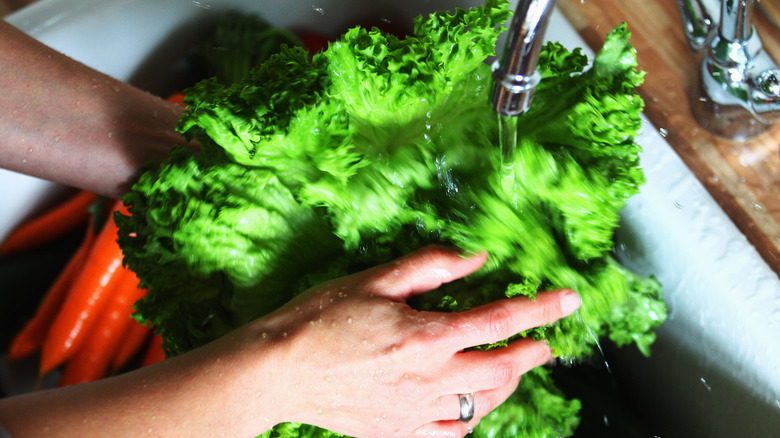
While staying on top of the news cycle is important, and not falling for common myths even more so, there is a long list of safety measures you can employ in your kitchen during an outbreak, to reduce any chance of infection. The most effective step is to not consume your produce raw. "Whenever possible, add a cooking step. Heating works reliably against nearly every pathogen, including Cyclospora, which is not deterred by chemical sanitizers. If a food can be cooked without messing it up, cooking is the safest approach," says Shelke.
Washing produce thoroughly is non-negotiable, and during an outbreak, be extra mindful about the process. "Washing and scrubbing under running water with a produce brush helps, but does not guarantee removal. Washing with soap may seem better but does not guarantee removal, and can introduce other hazards," Shelke warns.
Adding baking soda to the water is a popular method, but does not work. Instead, Shelke suggests reaching for vinegar. "Submerge (not soak) the produce in a mixture of three parts water to one part white vinegar for a few minutes, swish well to dislodge the sticky parasites, and rinse under cold running water to thoroughly remove the dislodged parasites," she says. She also states that adding soap, detergent, bleach, or commercial produce washes, were best avoided. "They are not approved for food, can be absorbed by porous produce, can remain in the produce even with running water rinses, and the residues can cause more damage than good, especially in vulnerable people."
Special care for vulnerable members of your family
Preparing food for someone who is pregnant, old, or immunocompromised, demands targeted caution and mindful food preparation practices, according to Shelke. "Adjust to the vulnerability of who's eating. For pregnant, older than 65, immunocompromised, or young children, it is reasonable to skip raw sprouts, unpasteurized products, and pre-cut greens until the source and type of produce are identified."
Given how common outbreaks of foodborne illnesses are — the CDC is part of 17 to 36 investigations each week — Shelke suggests adopting a list of best practices into your everyday kitchen routines. "The fundamentals apply every day, whether outbreak or not. Washing reduces risk but does not eliminate it. Layering good food preparation practices such as washing hands, cleaning surfaces, separating items and utensils, prompt refrigeration, and heating where possible work synergistically to do more together than any single step does alone," she says.
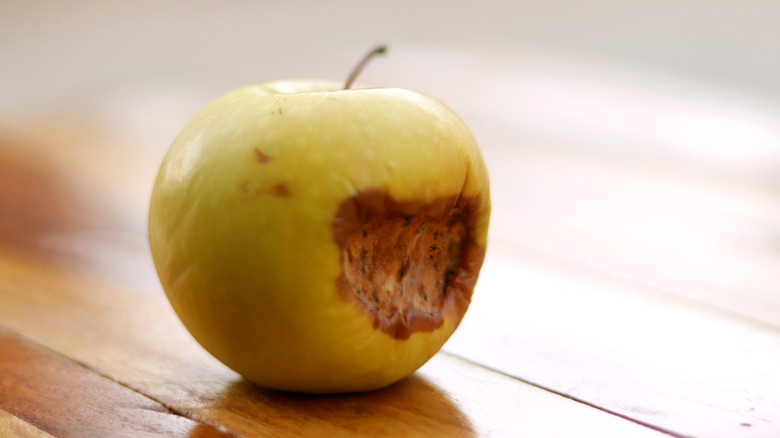
Among the specific steps to follow are washing your hands with soap and water for 20 seconds before and after handling produce, cutting away the bruised and damaged areas of fruits and vegetables since that's where pathogens concentrate, and drying produce with a clean cloth or paper towel after washing. Finally, how you store fresh produce is important at every step. "Keep produce separate from raw meat, poultry, and seafood — in the shopping cart, in bags, in the refrigerator, and on the cutting board — to reduce cross contamination," says Shelke.