

What Happens When You Leave Your Stove On Without A Flame
We may receive a commission on purchases made from links.
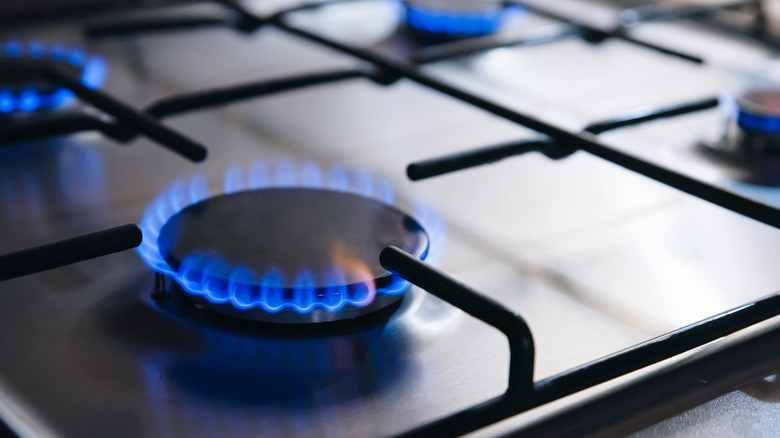
Despite the widespread popularity of electric stoves, millions of American households still use gas ranges. They do allow for greater temperature control, which is why professionals often prefer gas stoves over electric ones. The downside, however, is the risk of a gas leak, which can happen due to a malfunction or because you accidentally left your stove on without a flame.
To operate a gas stove, the gas must be opened and ignited. When it doesn't get ignited, the gas escapes into the air. Because it's invisible and odorless, it would be impossible to spot a leak naturally — that's why manufacturers add a noticeable scent to its tanks as a safety precaution. That way, if a gas leak occurs, you can smell it. Another way that you might notice the gas is on is by hearing a faint hissing sound.
Once you realize you forgot to turn off the gas on your stove, the next steps depend on whether or not you can smell the gas. If you can't smell it, the amount that has escaped into your kitchen is minimal, so open all the windows and ventilate the room very well. If you can't smell the gas (or have your ability to smell impaired in any way), immediately leave your home and call 911 — the gas leak has potentially now become a life-or-death situation.
If you can smell the gas, call 911 immediately
Smelling gas is the telltale sign that your oven has a gas leak and that a larger amount of gas has accumulated in your space. Ventilating the house and turning off the stove should no longer be your priority — that's a job for the professionals. The longer you stay, the more gas you could be exposing yourself to, so you should leave immediately. Pay attention to health symptoms, such as nausea, headache, dizziness, fatigue, the struggle to breathe, and irritation in your eyes and throat.
While you and the other residents are evacuating the home or building, take extra care not to use any electricity or anything that could cause a spark. The gas is highly flammable, and in the worst-case scenario, a small spark could ignite it and cause an explosion. Light switches, phone chargers, electric appliances — all of that can create a deadly spark. It's absolutely not worth risking your home and your life, no matter how much you want to unplug that TV.
Once you're safely outside the house, call 911. Most gas companies have a 24-hour emergency line, which you can contact, but definitely call the emergency line first. The professionals will then assess the situation, ventilate your home, and let you know when it's safe to return; the whole process can last several hours.
Invest in a gas detector and a carbon monoxide alarm to protect your home
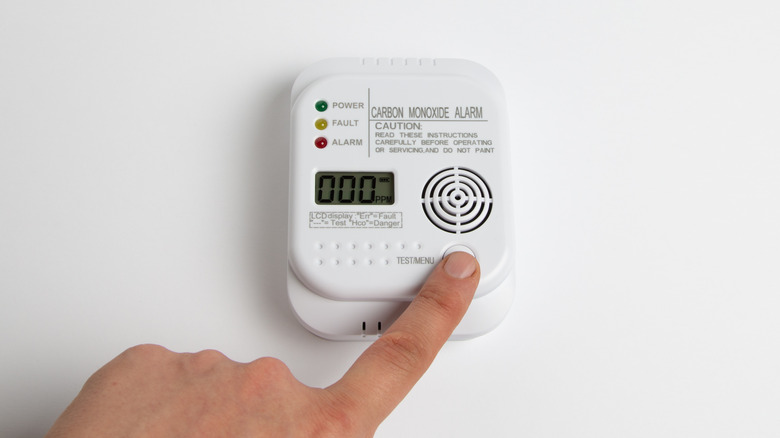
Gas stoves can be very safe, but they do call for some additional precautions. To protect your home, it's worth investing in two specific devices: a carbon monoxide alarm and a gas detector. A gas detector is the safety device every home with a gas stove should have. It detects the presence of natural gas and alerts you, protecting you from having to rely entirely on smell. However, these detectors can't alert you to carbon monoxide — that's why the second alarm is needed.
When natural gas is only partially burned (a process called incomplete combustion), it can create carbon monoxide, which is deadly. This usually happens due to improper ventilation, stove malfunction, or poorly maintained burners. Unlike natural gas, there is no way to detect carbon monoxide other than with an alarm. You might notice symptoms such as headaches, dizziness, weakness, confusion, fatigue, shortness of breath, muscle pain, flushed face, and impaired vision.
While you can definitely opt for two separate alarms, it might be easier to get a combo detector. The Kidde Carbon Monoxide Detector, Propane, Natural, Methane, & Explosive Gas Alarm from Amazon performs both functions at once, detecting and alerting you to the presence of natural gas and carbon monoxide.