

Does Expensive Bourbon Always Taste Better?
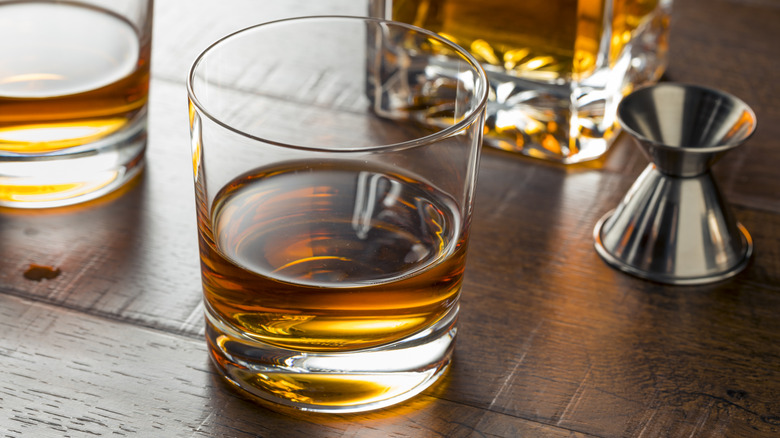
What separates the bourbons on the bottom shelf at the liquor store from the bottles kept behind the counter? Less than you might think, actually. From splurge-worthy beloved bourbons to budget-friendly bottles that still taste expensive, the most important measuring factor is your personal palate. Today's expert tip comes from Chris Blatner, creator of the whiskey page @urbanbourbonist on Instagram. Blatner sat down with Tasting Table to cue discerning imbibers into the bourbon myths you need to stop believing — and, according to the spirits aficionado, a high price tag doesn't always guarantee a tastier bourbon.
"Price and quality aren't directly connected in bourbon," Blatner tells us. "Price can reflect age, scarcity, limited production, packaging, brand prestige, or simply demand. None of those will guarantee that you'll enjoy what's inside the bottle." Cost is not necessarily indicative of the pleasure factor — which, after all, varies from one person to the next. Bourbons labeled as "high rye," for instance, have more rye in the mash bill and offer a spicier taste, while "wheated" bourbons (with more wheat in the mash bill) arrive rounder and creamier. Any bourbon drinker is as likely to prefer one style to the other — criteria which the price tag does not encompass. "I've tasted inexpensive bourbons that beat out bottles costing several times as much," says Blatner. "Taste is subjective, so there's no price point where bourbon automatically becomes 'better.'"
The price tag only tells part of a bourbon's story
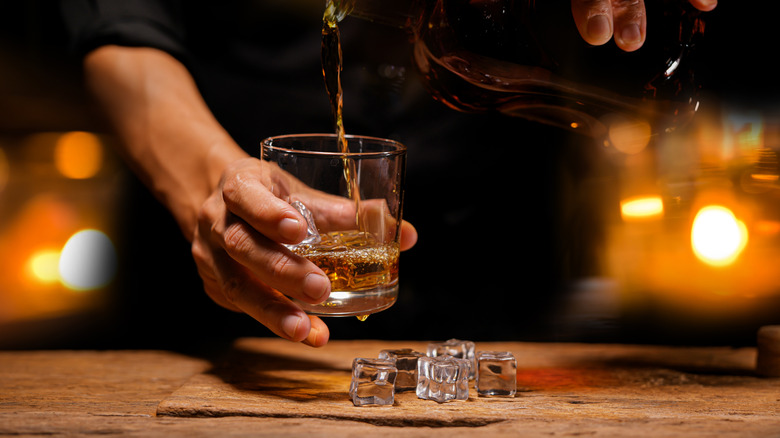
On a fundamental level, bourbon is a type of whiskey made in America from a corn-dominant mash bill, aged in new charred-oak barrels for at least two years, and bottled between 40% and 75% ABV. Beyond this baseline qualification, the bourbon spirits subcategory diverges into a kaleidoscope of different classifications — many of which deal with aging. Chris Blatner notes that bourbons that have been aged for longer often carry the most expensive price tags on liquor store shelves because they cost more for a distillery to produce. Moreover, prolonged aging typically comes with breakage: "A distillery has tied up that inventory for many years while losing whiskey to evaporation, and not every barrel will remain good enough to bottle after extended aging. That combination makes genuinely old bourbon relatively scarce." Such is the case with cult favorite bourbons like the ultra-rare, infamously pricey Pappy Van Winkle.
Even though these bottles tend to cost more than younger offerings, a sipper who prefers sweeter, rounder, caramel and brown sugar notes from their sipping bourbon would be less likely to choose a pricier aged bottle. Extensive aging isn't always a good thing, either. "Too much barrel influence can make bourbon taste dry, tannic, bitter, and overwhelmingly woody," Blatner explains. On the whole, price alone is an inefficient, unreliable metric for gauging personal appeal.
According to Blatner, some spirits experts use value judgements like "better" as a sort of nondescript umbrella to refer to specific characteristics in a bourbon's profile. "When someone describes an expensive bourbon as tasting 'better,' they may be talking about greater complexity, depth, mouthfeel, or even just the novelty of an older whiskey," he says. "But age and price are never guarantees of balance or quality."