

The Ideal Temperature For Reheating Leftover Food Safely
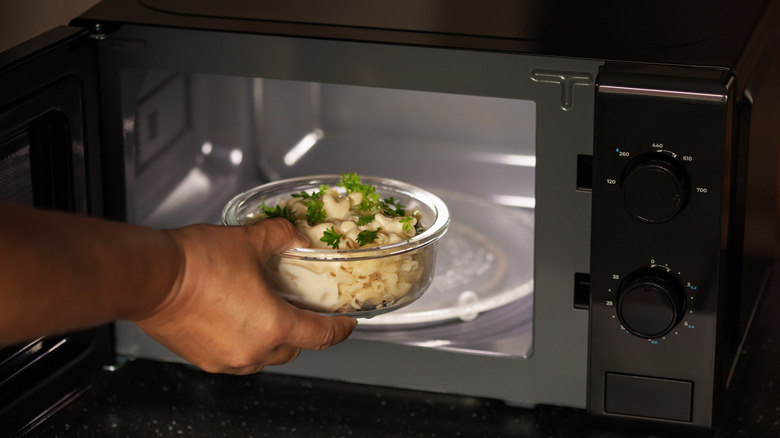
Whether you're prepping meals for the week or just made too many meatballs, having a fridge full of leftovers can make your next meal a breeze. In fact, some of our favorite recipes actually originated as ways to transform leftovers into a new dish. When bringing those leftovers back to life, though, it's important to think about more than just flavor. Properly storing and reheating your leftovers is more important than taste, so we checked in with certified food scientist Kantha Shelke, PhD — founder of research firm Corvus Blue LLC and a senior lecturer on food safety regulations for Johns Hopkins University — to make sure we're reheating our leftovers safely.
"The minimum temperature that leftovers should be reheated to is 165 [degrees Fahrenheit] (74 degrees Celsius)," she says. She recommends using a thermometer — like a meat or instant read thermometer — to check the internal temperature of the food. "Ensure the thermometer is inserted all the way to the center, because the outside can be steaming while the middle can still be cold."
Why is getting your leftovers hot so important? "Bacteria multiply when food cools, and even during refrigeration," explains Shelke. "The reason 165 [degrees Fahrenheit] has been selected as a single, albeit conservative, benchmark is because that temperature kills microbes reliably (and one need not worry about tracking time-and-temperature combinations)." Microbe-free food sounds good to us!
Tips for reheating leftovers
Reheating your leftovers correctly is all about killing potential bacteria so you can safely and confidently enjoy your meal. According to Kantha Shelke of Corvus Blue LLC, there are actually some foods that don't have to follow the reheating rules.
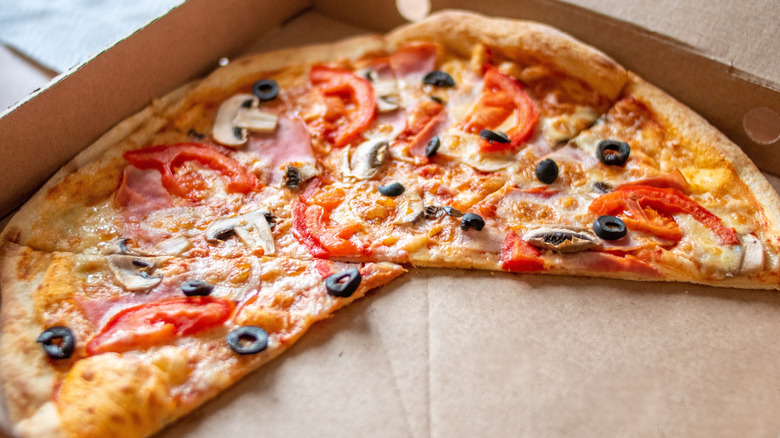
"The exceptions to that 'heat to 165 [degrees Fahrenheit] (74 [degrees Celsius])' rule include cold cooked leftovers that are often eaten cold, such as pizza, roast chicken, or pasta salad. If properly refrigerated, these are safe as-is and may be consumed safely within [24 to 48] hours of refrigeration." So if you're the kind of person who is snacking on leftover pizza straight from the fridge, you've got nothing to worry about as long as the pizza is less than two days old. On the other end of the spectrum, there's no need to reheat foods to a higher temperature. "Cooking foods higher than 165 [degrees Fahrenheit] can dry them out or toughen them," Shelke says.
The microwave is definitely the most common reheating tool, and there's a right way to use it. Shelke recommends stirring or rotating the food, and letting it stand for at least two minutes so that the heat distributes evenly.
But before you pop those leftovers in the microwave, make sure your food has been stored properly. "Reheating is of little use if the food has been sitting out too long," Shelke explains. "Reheating also cannot destroy toxins produced by pathogenic bacteria, and that is why it is important to cool leftovers quickly and refrigerate within two hours."