

What's The Actual Difference Between Chick-Fil-A And McDonald's Chicken?
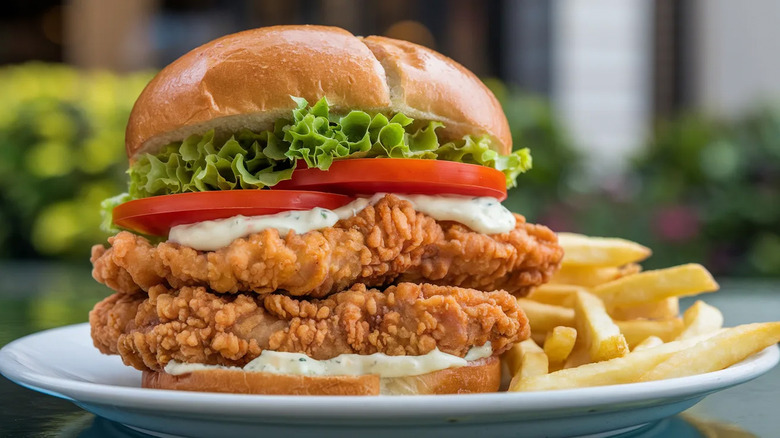
McDonald's and Chick-fil-A both built their menus around chicken. Fans of either will tell you the two taste nothing alike — whichever they claim makes the best chicken sandwich will be described as crispier and juicier than the other. Turns out it's not just bias talking; the chicken from the two chains really is different, and more than most people realize.
Chick-fil-A's Chicken Sandwich is built around a cut of boneless, skinless chicken breast with rib meat. McDonald's McCrispy? Also a chicken breast fillet with rib meat. However, Chick-fil-A's recipe uses pasteurized nonfat dry milk, pasteurized egg, and MSG in the egg-milk wash. Add the peanut oil for frying — itself faintly nutty — and you've got the source of Chick-fil-A's richer, denser bite.
McDonald's McCrispy, on the other hand, leans on baking soda to puff the coating and a canola-corn-soybean oil blend for frying instead. That combo points to a crust that'll likely taste lighter, airier, and more neutral in flavor than Chick-fil-A's. With such different preparation styles, it's no wonder the two taste different, despite starting from the same cut.
Apart from preparation, other differences point to a difference in the quality of the chicken the two chains use. The grade and where the it comes from are two key factors that set the chicken from McDonald's and Chick-fil-A apart.
There's no USDA grade for either chain's chicken
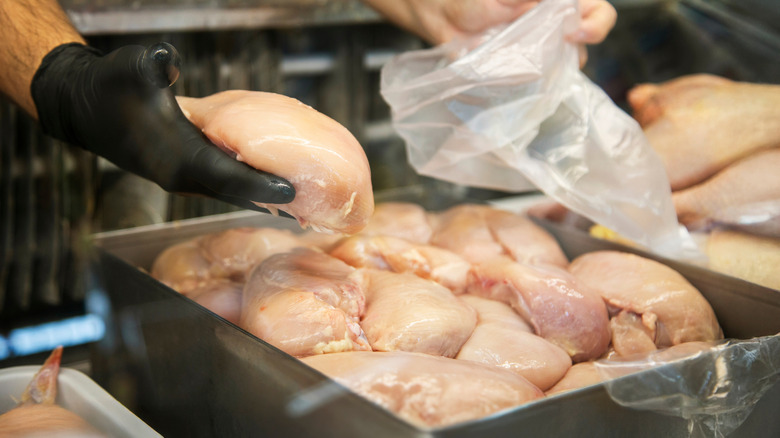
A USDA quality grade doesn't exist for either McDonald's or Chick-fil-A's chicken. Grading through USDA's Agricultural Marketing Service is voluntary and fee-based, and it measures cosmetic carcass defects — bruising, torn skin, missing feathers — not flavor, tenderness, or nutrition. Since a USDA grade does little for a fast-food chain beyond the price tag, it's no surprise neither one bothers to pay for it. That's separate from inspection, though, which is mandatory to operate legally.
Rather than a grade, whether either chain uses whole muscle or formed chicken can be looked at to distinguish quality. Whole muscle is meat as it naturally comes off the bird intact. Formed, on the other hand, takes minced-up chicken meat and presses it together. To be clear, formed chicken is safe to eat, but has a much different, more luncheon-meat-style bite than whole-muscle meat — whether it's good or not is up to you.
Both Chick-fil-A and McDonald's use whole, unformed fillets for their chicken sandwiches, but Chick-fil-A has a leg up by using breast meat with no fillers, artificial preservatives, or steroids. Even Chick-fil-A's chicken nuggets — which McDonald's makes from ground chicken reconstituted from three different cuts — are made from whole, sliced-up chicken breasts, according to a Redditor who reportedly visited its plant.
Where the chicken comes from

Chick-fil-A makes a promise without much of a paper trail: all its chickens are "raised and harvested" on farms across the U.S., though the chain has never named a specific farm, supplier, or processing plant. McDonald's hands over the receipt, pointing straight to Keystone Foods — now part of Tyson Foods — which supplies more than 300 million pounds of chicken to the chain annually and, by McDonald's own account, helped invent Chicken McNuggets in the 1980s.
On how the chicken is raised, both McDonald's and Chick-fil-A publish clear-cut animal welfare policies. Notably, McDonald's has been using broiler chicken raised without antibiotics important to human health since 2016. Chickens raised without antibiotics important to human health are still treated with antibiotics; it's just that they're only used to prevent disease under the supervision of a veterinarian and not to promote growth.
In 2024, Chick-fil-A quietly dropped its "No Antibiotics Ever" chicken label for a "No Antibiotics Important to Human Medicine" standard instead — bringing it in line with where McDonald's had already been for eight years. None of this affects the taste of your chicken the way the cut or prep does, but if sourcing and transparency matter to you, the gap between the two chains is real.