

Bartenders Tell These 8 White Lies Constantly
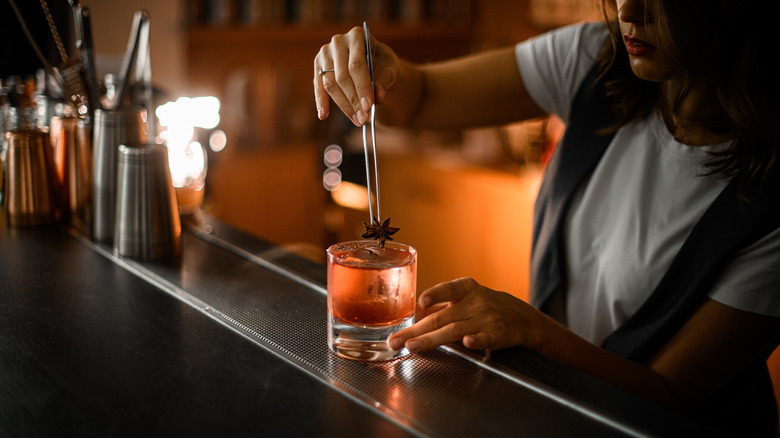
Whether you like going to fancy cocktail bars where mixologists use the most niche ingredients or you prefer a dive with blaring music and plastic pitchers of cheap beer, one thing is for sure: Your bartender can make or break the bar experience for you. They're there to provide you with timely service, prepare a drink you enjoy, and sometimes even be a sounding board for whatever's going on in your life. But in the course of providing that service, bartenders can occasionally tell a white lie or two that you may just take for granted.
Generally, these white lies aren't about anything egregious — they're just standard industry fibs that bartenders employ either when they're busy and rushed, or they're trying to guarantee you a better time at the bar. We talked to Justin Morales, author of "Serving Life: Behind Bars, Kitchens, and Hospitality" and "You Are the Standard: A Restaurant Leader's Leadership Blueprint;" Ludwig Rudnicki, bartender at The Exchange in Warsaw (via bar owner Phil Forbes); Alex Tremayne, bartender at Trevor's in Scottsdale, Arizona; Skylar Daley, a moonlighting bartender at an Elk's Lodge in NJ; and Erika Ellis, an occasional private event bartender in NYC, to learn about the most common white lies they tell patrons and why. Learning about these white lies can help you better recognize them when they occur — and it might just help you to become your bartender's favorite kind of customer.
Sorry, the blender is broken
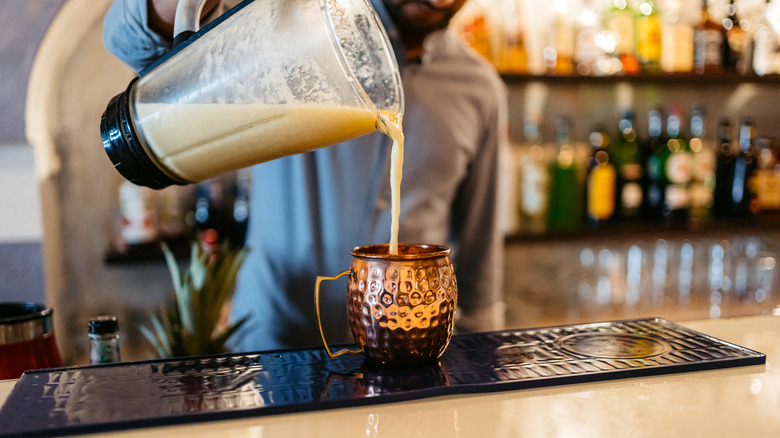
When you're at a bar, you need to understand how to read the room. When the bar isn't that busy, go ahead and order the most intricate drink on the menu. But when the bar is absolutely packed, you have to be aware that it's a huge inconvenience to your bartender to order a drink that's going to involve a lot of steps to make. Blended drinks often fall into that category. This is why Justin Morales, hospitality professional and author of "Serving Life: Behind Bars, Kitchens, and Hospitality" and "You Are the Standard: A Restaurant Leader's Leadership Blueprint," says that sometimes, he tells guests that the blender is broken when it's actually not.
"Sometimes the blender is perfectly fine," he says. "The truth is, the bar is absolutely buried, the dining room is packed, and firing up a blender for one frozen drink can disrupt the entire flow of service, not to mention introducing that wonderful chainsaw-like sound into an otherwise nice dinner." When you see your bartender basically running back and forth behind the bar to get people their drinks, you can pretty much guarantee that they're not going to want to make you a frozen cocktail.
"When a bartender says the blender is broken, occasionally what they really mean is: We are so deep in the weeds right now that this frozen margarita might be the thing that kills us," explains Morales. This doesn't just apply to blended beverages, though — there are other drinks you should avoid ordering at a busy bar.
No problem, I can make that
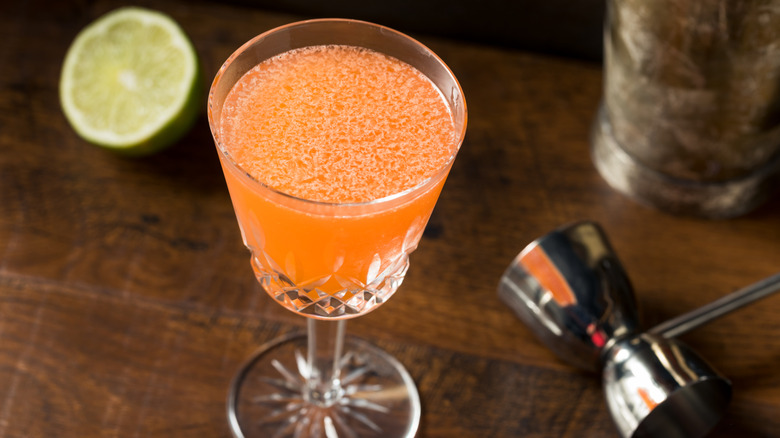
If you're ordering straight off of a bar or restaurant's cocktail menu, you can be pretty sure the bartender knows what they're doing when they make your drink. But sometimes, you might want a cocktail that doesn't actually appear on the menu. Something simple like a martini may be pretty straightforward, but when you start getting into more esoteric drinks, the bartender might not know exactly what you're asking for. This is why Alex Tremayne, bartender at Trevor's in Scottsdale, Arizona, says that bartenders will sometimes say, "no problem, I can make that," even when they don't know what the drink you ordered actually is.
"Translation: I have absolutely no idea what you just ordered," says Alex. Apparently, this doesn't happen often at Trevor's, since the cocktail program is solid enough that most patrons just decide to order straight from the menu. But apparently, it happens enough that this is sometimes a necessary response. "Every once in a while, someone confidently requests a deep-cut cocktail last seen in a hotel bar in 1974. That's when I casually turn around, ask my Meta glasses what on earth you're talking about, and turn back around like the recipe was passed down through my family for generations. You get your cocktail. I maintain my dignity. Everybody wins."
Pro tip: If the bartender looks confused when you ask for a particular drink, you can always tell them what's in it. Don't assume that every bartender knows what your favorite niche drink entails.
You don't look like a tourist
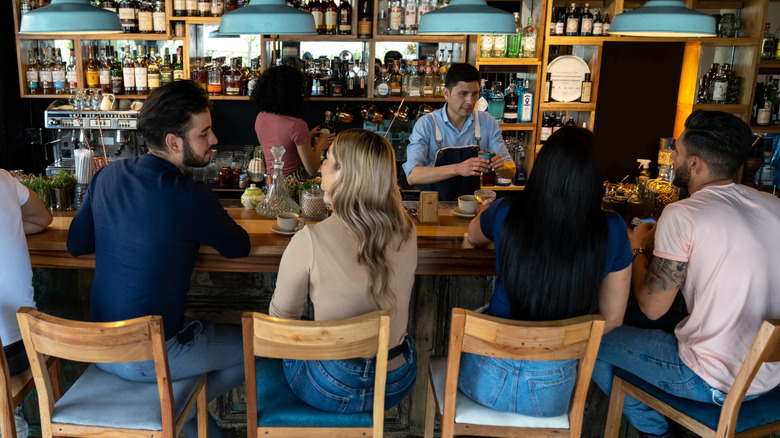
This isn't a white lie you're likely to hear at any old random bar in the middle of a suburban town in Ohio. But if you're at a bar in a typical tourist city or area, your bartender may very well tell you that you look like a local if you tell them you're a tourist. This can be a nice gesture, but if you ever hear it from your bartender, you should be skeptical of whether they're actually telling you the truth or they're just trying to make you feel good during your trip.
Phil Forbes, the owner of The Exchange in Warsaw where bartender Ludwig Rudnicki works, says that Rudnicki claims that this is a common lie told to tourists. Their reaction? "A small pause while they work out what gave them away, then they stand up a bit straighter," says Forbes. "It makes them self-conscious and confident at the same time, which is a strange combination to watch, and it turns into a conversation about how long they're in Warsaw and what they've done so far." If you've ever gone to a bar in a foreign city, you know that talking to the bartender can be one of the most rewarding parts of the entire trip anyway.
"That conversation is the whole point," explains Forbes per Rudnicki. "Once someone thinks of themselves as slightly more local than the group at the next table, they've built a rapport with our business via the bartender."
We're out of mint
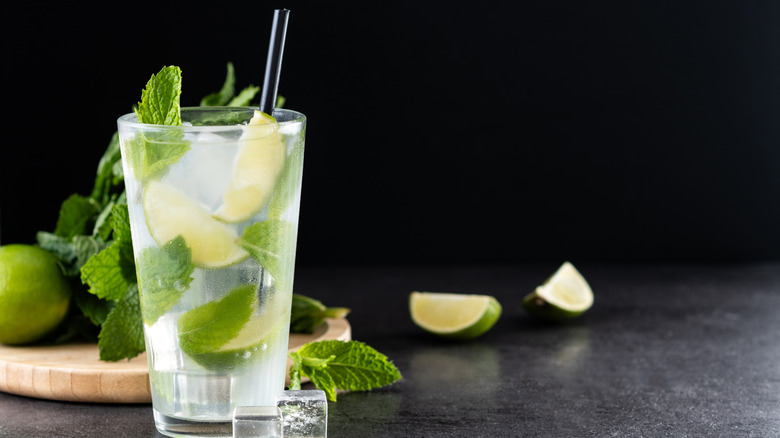
If there's one sort-of true stereotype about bartenders you should know, it's that many of them hate making mojitos. It's a pain to make, and it can take a lot of time, which isn't ideal when the bar is busy (just like with blended drinks). Mint is one of the main ingredients in a mojito cocktail recipe, which is why bartender Skylar Daley says that sometimes, bartenders will lie about the fact that they don't have any mint on hand when they want to get out of making the drink.
"In the back of our building, our chef has a mini garden where he grows herbs and peppers," explains Daley. This is when the bartender might tell you that they're out of mint, even though it's quite a prolific plant that many bars will essentially never run out of. "It's not because we don't want to [make the drink], but losing someone for even five minutes can throw our bar into disarray. Besides, I can make just as delicious drinks without mint," Daley says.
Sure, I'll do a shot with you
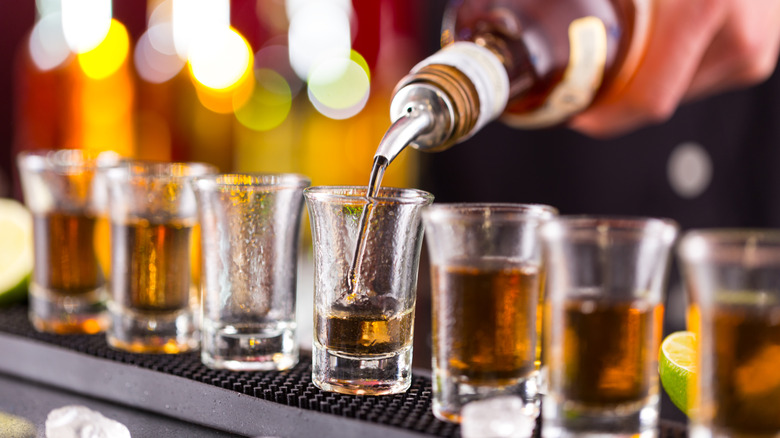
There are times when you sit down at the bar, start talking to your bartender, and really start vibing with them. This is part of the magic of going to a good bar where the bartenders enjoy interacting with customers. If you get to talking long enough, you might even want to buy your bartender a shot to take with you. This is a nice gesture, and there are times when the bartender may take you up on the offer. But even if they agree to take a shot with you, they may actually be lying about what's in their glass, explains Justin Morales.
"Sometimes that 'vodka' in the bartender's shot glass is water, and sometimes the 'tequila' is juice or something else nonalcoholic," he explains. "Guests love buying bartenders shots, especially when everyone is having a great time, and some guests will insist until the cows come home." Although Morales says that a lot of bartenders actually would like to take a shot with their patrons, it's often not that appropriate for them to do so. So, he says, "You still raise the glass, toast the guest, and share the experience, but you're also remembering that you're at work and responsible for everyone sitting at that bar." Appeasing those kinds of guests with a little white lie ensures that everyone stays happy — and that the bartender stays sober enough to take care of the other customers sitting there.
The ref's been a disgrace
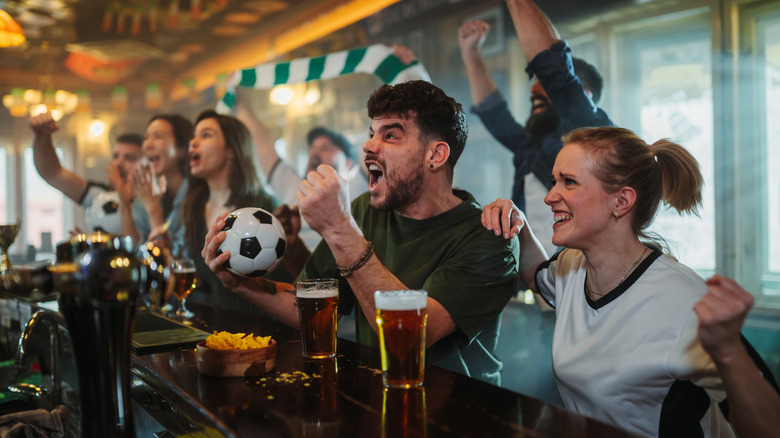
This is a white lie you might hear if you're someone who frequents sports bars. You're there to watch the game, but the bartender is there to do their job, and there's a good chance that they don't have a lot of time to watch the screen, even if they're fans of the sport themselves. This is why Phil Forbes says that bartender Rudnicki often tells patrons that "the ref's been a disgrace," especially when it comes to soccer games.
"Ludwig says this to anyone standing at the bar in the kit of whichever team is on the screen, usually without checking the score, and without having watched a minute of it," says Forbes. At this point, Rudnicki claims, the customers will essentially always agree with the statement, and this can launch them into a tirade about the specifics of the game. Not only does this help build a relationship between the bartender and the customer, but it also gets people off of their phones. This isn't just a nice gesture, either — "people who are talking stay for another," says Forbes.
I'll hook you up with a stronger pour
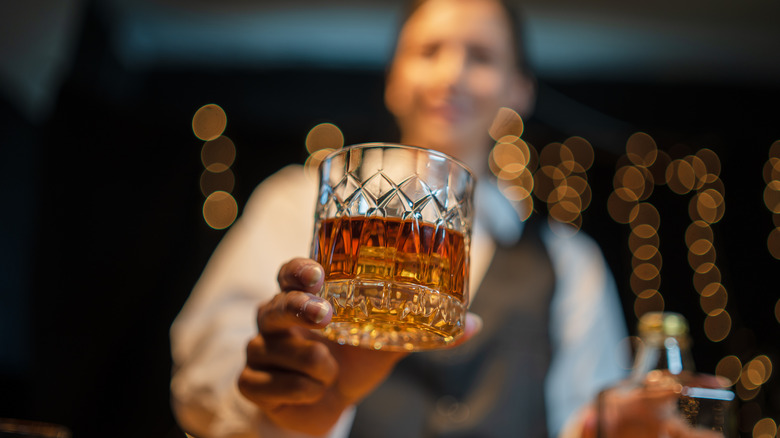
Have you ever gone to a bar, built a rapport with the bartender, and then sneakily asked if you could get a little extra liquor in your drink? It's apparently not an uncommon request, according to bartender Erika Ellis, even though we think you shouldn't ask your bartender to make you a "strong" drink. However, bartenders are at their job, and there may be times when they're actually not able to accommodate such a request. This is when a simple white lie can come in handy for them. "I worked at a bar where every pour had to be measured with a jigger, so we were pretty strict about serving exactly one ounce in a standard cocktail," she says. She'd learned that a four-second pour with a speed pourer equaled one ounce of liquor.
"Whenever a guy tried to flirt while I was making his drink and asked me to 'hook him up' with a stronger pour, I had a little trick," explained Ellis. "I'd pour into the jigger for three seconds, then pour that into his glass while using the fourth second to pour directly into the drink. I'd give him a wink and be like, 'I gotchu.'" This makes the customer happy, while also allowing the bartender to follow the rules of their job. According to Ellis, it's a harmless trick that makes everyone happy, which can't be a bad thing at a bar, right? "Nothing wrong with a white lie where everybody wins," she says.
I didn't hear a thing
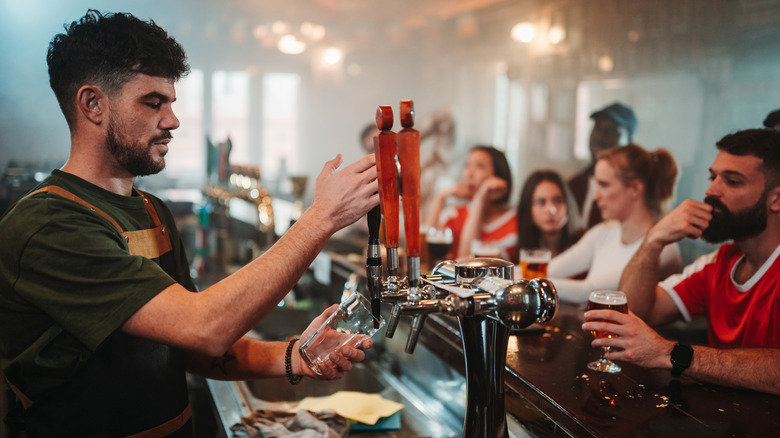
According to Justin Morales, this is the most important lie of them all. "Bartenders hear everything," he says. After all, you're literally sitting directly in front of them, having conversations that they can almost certainly overhear if the bar isn't absolutely blaring loud music. "First dates, breakups, business deals, arguments, family drama, gossip, people saying things they probably shouldn't be saying in public, we hear an unbelievable amount from the other side of the bar," explains Morales.
"But a good bartender develops selective hearing. Unless something involves someone's safety or requires us to intervene, your conversation isn't our business. So yes, we heard you. No, we didn't hear anything. That's part of the job," he adds. Of course, a good bartender is going to mind their own business. But this lie also reveals that you probably shouldn't be sharing super-sensitive information at a quiet bar if you actually want to keep it private. You never know when you may be seated with a bartender that doesn't exactly display the same level of discretion as Morales does.