

Avoid Putting This Type Of Cookware On Electric Stovetops At All Costs
We may receive a commission on purchases made from links.
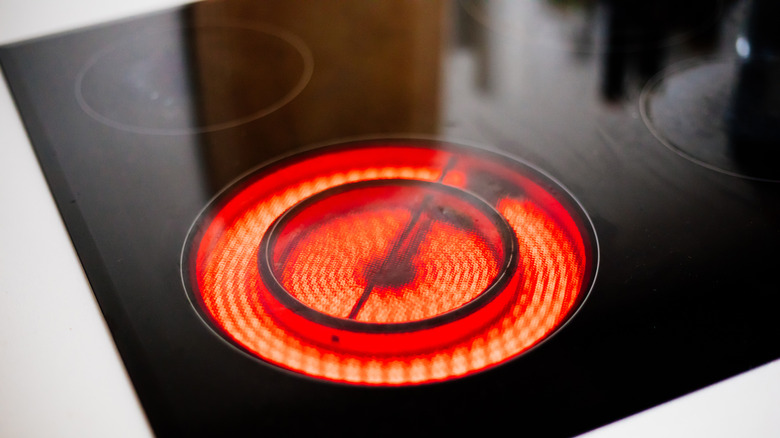
That lovely, vintage earthenware pot you just thrifted may have multiple uses, but it's best to avoid cooking with it on an electric stovetop. Though retro pottery and old-school recipes are a fun pairing, not all clay cookware is created equal. We discussed the topic with Bobby Hicks, author of the book "Retro Recipes: Vintage Dishes with a Twist," who recommends keeping this type of cookware far from electric stovetops.
"Clay and other pottery cookware are by design not meant for a stovetop," Hicks advises. The type of pottery and clay (ceramic) cookware that's incompatible with electric stovetops falls into three categories: earthenware, stoneware, porcelain. Earthenware is fired at the lowest temperatures and is less heat tolerant and more porous. Stoneware is fired at higher temperatures and the clay then becomes a stronger ceramic, allowing for exposure to higher heat. Porcelain is the strongest of the materials, and is virtually non-porous; but even higher-end porcelain bakeware needs to be carefully vetted before you subject it to high heat. None of these, as Hicks points out, should be used on an electric stovetop — or even worse — a gas cooktop with an open flame.
Instead Hicks explains, "They work best cooking in an oven, absorbing the heat. They don't work the same way on a burner. It's just the wrong tool for the job!" Applying direct heat to this type of cookware will also likely cause thermal shock, a phenomenon that occurs when a material is subjected to a sudden shift in temperature. Just as applying direct heat is hands-down the worst thing you can do to your Pyrex, clay-based cookware should be reserved for the oven.
Leave all pottery, ceramic, and stoneware for the oven
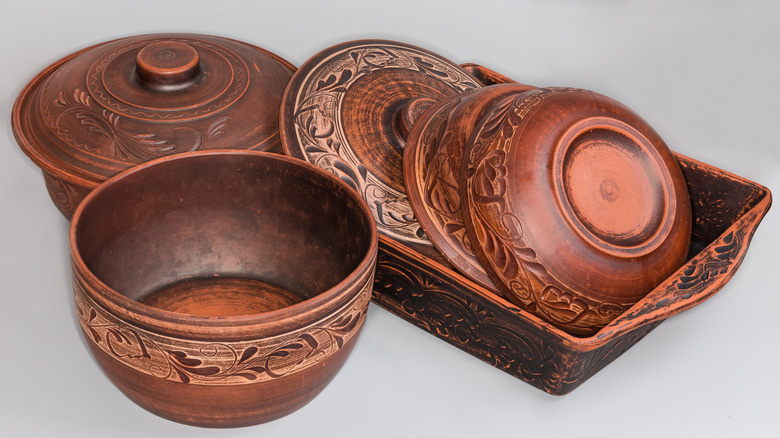
Just because cooking with pottery or stoneware on an electric stovetop is a no-no, it doesn't mean you need to give up on using these pieces as kitchenware. In general, it's a good idea to avoid applying any heat to clay-based vessels that you haven't purchased to be used specifically as cookware. These are great to use strictly as charming and stylish servingware, and if the pottery has been vitrified (fired at a high temperature), it may be safe to use in the microwave or on a very low oven setting.
So, in addition to your expensive ceramic bakeware set, what other types of cookware should you avoid using directly on an electric stovetop? Stoneware and uncoated cast iron should also be avoided. Like ceramic bakeware, these materials are subject to uneven cooking and are likely to scratch an electric glass stovetop. Hicks also says there are better, more compatible types of cookware to use with an electric stovetop. "Stainless steel, carbon steel, cast iron, or even cast iron with an enamel coating are what I prefer to cook everything with," he shares. Stainless steel is safe for direct-heat applications, and it's highly recommended for use on an electric stovetop at any setting. If you're a fan of cast iron, you already know that it conducts heat beautifully and evenly — but be careful. Since it heats quickly and becomes excessively hot, it can actually be hard on your stove's cooking elements. Cast iron that's coated with enamel handles those high temperatures much better, so save your grandma's old pans for other applications.
If you want to purchase clay cookware that won't be damaged on the stovetop, there are some options. Ceramic-coated aluminum cookware (like this Bakken 17-Piece Set) is stovetop friendly, as is ceramic-coated stainless steel.