

How Much Space Should Be Between Your Oven And The Wall? Here's The Minimum
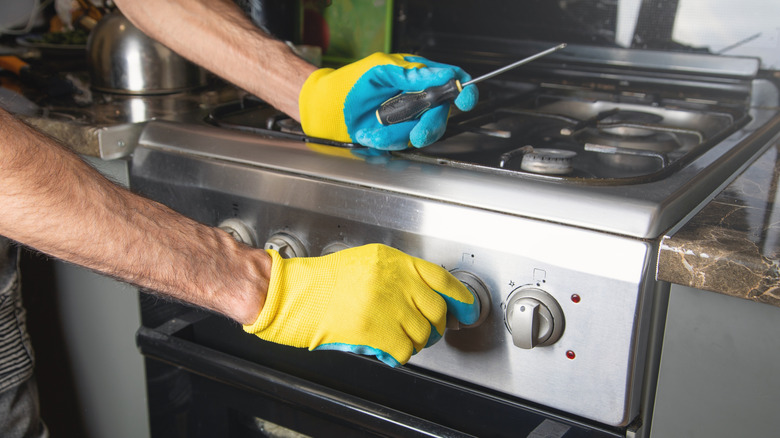
One of the most commonly overlooked concerns when setting up a new kitchen appliance is its clearance requirements. From refrigerators to air fryers to stoves, appliances need a certain amount of unobstructed air flow or space around all sides. This means that they should be placed a minimum distance away from walls, ceilings, cabinets, and other appliances and furniture. This rule is especially critical for ovens and stoves since they generate a considerable amount of heat.
In fact, one crucial step to take before installing new appliances in your kitchen is to measure the space carefully. The next thing to do when buying a new oven or relocating an existing one is to read the appliance manual. It will tell you how much ventilation space or clearance should be between your oven and the cabinets, back and side walls, and other objects. Each brand may have different parameters depending on its fuel source, size, and configuration. However, the general consensus regarding the standard minimum wall clearance is 6 inches between the back of the appliance and wall for gas and electric ovens.
If you have a backguard or tile heat shield installed behind the oven, the appliance can sit flush against it. Additionally, it's important to leave 1 to 2 inches on each side of a gas or electric oven, or at least 6 inches of side clearance between walls or surfaces that are not heat-resistant for appliances sitting above the countertop height. A minimum of 30 inches of space between the stovetop and an overhead cabinet is also recommended, as well as a 13-inch distance from an over-the-range microwave.
Poor ventilation can lead to safety issues and shorter appliance lifespan
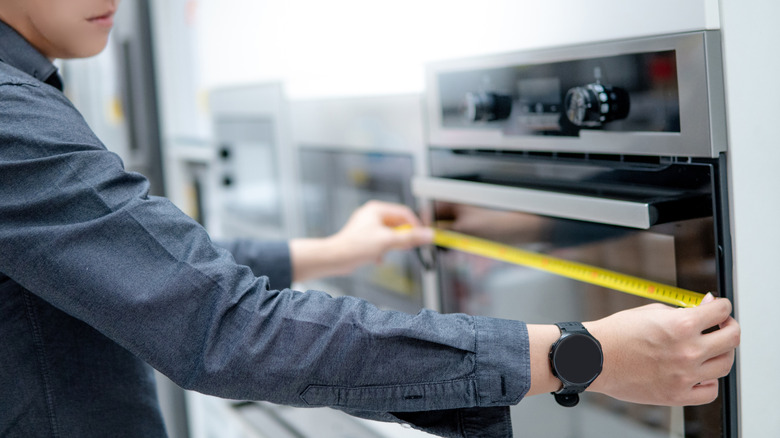
Following your oven manual's recommendations for oven clearance could make your kitchen appliance last longer. Ensuring proper spacing and airflow can help prevent fires and other safety issues, minimize cleaning and upkeep, and extend the lifespan of the appliance. When a heat-generating appliance is too close to walls, cabinets, or other cooking appliances, there isn't enough room for steam and heat to dissipate. Thus, the appliance can overheat and release dangerous fumes and gases, increasing the risk of health and safety hazards.
Poor ventilation can also cause grease and smoke to build up in tight spaces like walls and cabinets. It may even transfer to other surfaces, leading to heat damage or even a fire. Plus, without adequate airflow, your oven may experience more wear and tear. Grease, dust, and dirt will accumulate on coils, electronic components, and other important parts. This makes your oven harder to clean and shortens its lifespan.
Lack of airflow around all sides also affects the oven's performance, causing it to cook or bake food too quickly or not cool off fast enough. If you are facing space constraints in a small kitchen and are concerned you don't have enough space for your oven, however, proper ventilation may matter more than stove placement. A contractor can integrate a custom ventilation system that directs heat, exhaust, smoke, and odors outside of the kitchen to prevent fires and mitigate the risk of damage.