

The Type Of Pot You'll Regret Using For Stovetop Popcorn
We may receive a commission on purchases made from links.
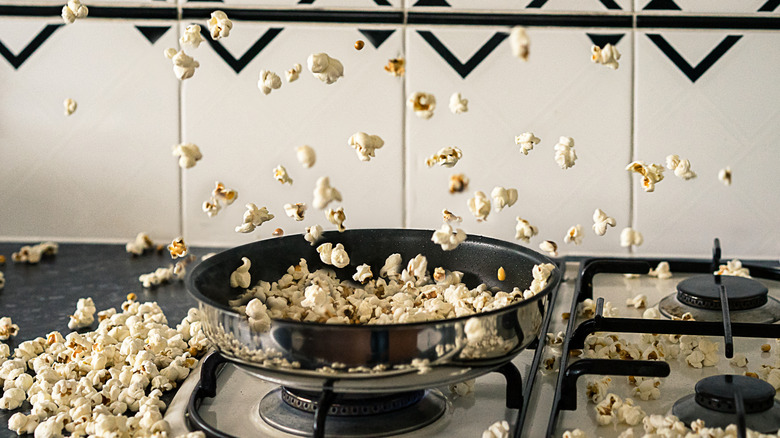
Microwave popcorn may be convenient, but once you start putting together that favorite movie snack on the stove, you'll never go back. Not only is it better textured, but it's much easier to customize, since most microwave popcorn typically comes pre-seasoned. Before adding flavor though, it's important to cook the popcorn correctly — and choosing the correct pot is step one. Fortunately, Bobby Hicks, author of "Retro Recipes," shares his recommendation for the best and the worst pots for stovetop popcorn.
Cooking stovetop popcorn in an enamel-coated Dutch oven is a popular choice. It offers great heat retention and its sturdiness keeps the kernels nice and secure. However, Hicks does not recommend using a Dutch oven. "You can absolutely cook popcorn in an enamel-coated Dutch oven, but it's not recommended because popcorn requires a lot of heat to cause the reaction of popping," he explains. "Dutch ovens are best used with medium to lower heats, which is why they're wonderful for braising."
With high heat, however, Hicks notes that enamel crazing, discoloration, and range damage is possible. "Popcorn requires a lot of agitation and moving a heavy pot could crack a glass top very easily," he adds. So, to keep your Dutch oven (and your stove) in the best condition possible, it's a good idea to save it for other delicious Dutch oven recipes where movement isn't necessary, such as beef stew and sourdough bread.
Use this pan instead for the best stovetop popcorn results
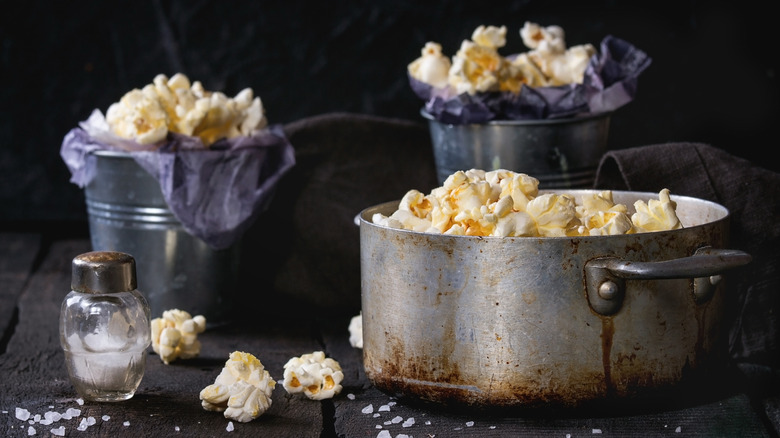
Rather than a Dutch oven, Hicks recommends using an aluminum pot with a heavy bottom for the best popcorn. "An aluminum pot with a heavy bottom is commonly seen because they are very lightweight and can handle higher heat," he notes, "but stainless and carbon steel would also be excellent options." Aluminum pots — like this Faberware Classic Series Stainless Steel Stockpot — provide quick heat transfer. Since they're lighter than a Dutch oven, it's much easier to shake over the stove.
Once you've acquired the proper pan, you're one step closer to achieving the perfect batch of popcorn, whether you're enjoying it with your lunch or as a at-home movie night snack. However, just because you have the right pan doesn't mean you can just throw popcorn in it and call it a day. There are a few things to keep in mind to ensure that your batch doesn't come out completely burnt — or worse, undercooked.
To avoid burning a batch of popcorn, use the proper heat. You should never set your heat higher than medium-high — otherwise, you're on track to burn your kernels. Additionally, avoid overfilling the pan with popcorn kernels. It's generally recommended to cover the bottom of the pan in a single layer. If you add more than that, you're likely to end up with both unpopped kernels and an overflowing pot. Once you get the right pan and uncover the best popcorn-popping techniques, you'll find yourself with the most delicious bowl possible.