

Whatever Happened To The Classic American Diner? Here's What Took Its Place
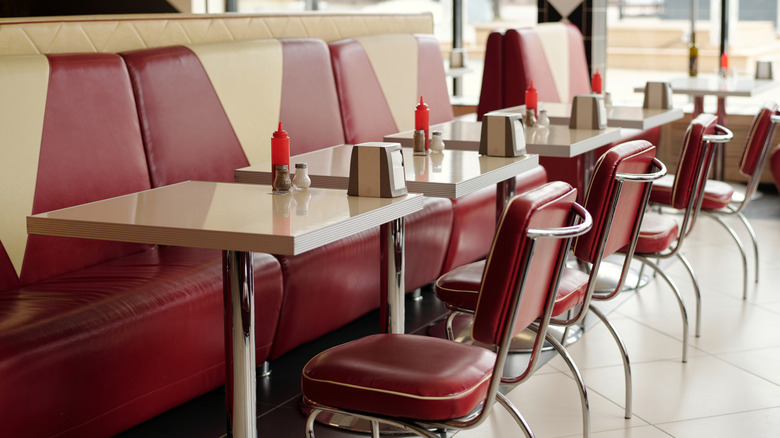
Diners used to be an inescapable part of the American landscape. For those who can remember back to the '60s and '70s (or just know your food history), you may have wondered where they disappeared to. The classic American diner is certainly still around, albeit stronger in some regions than others, but it's not the ubiquitous staple it used to be. From a peak of around 6,000 nationwide in the '50s, the number of diners fell to close to 2,500 around the turn of the century. While numbers since are hard to track, many more have certainly closed since.
For instance, in New Jersey, which is often considered the "diner capitol" of the country, there are somewhere around 450 diners — which is still a decrease from its peak. Unfortunately, while there is still a place for diners, American's love of convenience and taste for affordable food has been chipping away at the establishments' place in the culture, even going back to the '60s. There's some irony in that too, since it's those factors that caused diners to become popular in the first place.
The American diner grew out of lunch wagons that began popping up in the 1800s as a place where working class people could grab a quick and affordable meal. These lunch carts provided coffee and sandwiches, and their convenience began attracting a wide range of customers. By the 1920s, the counters and barstools had moved inside to help improve the businesses' social appeal, but their fundamental attraction was the same: Simple, affordable, and convenient American food.
Fast food and drive-thrus ate into diners appeal
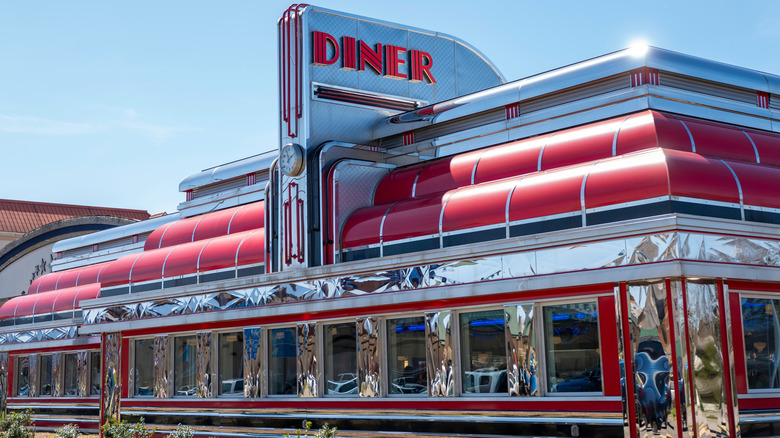
Diners remained popular through both the Great Depression and World War II, becoming a place where families could gather for a decent, inexpensive meal. As such, speed was also part of the appeal, and the rise of fast food was a huge blow. Burger stands had certainly existed before the war — White Castle has been around since 1921 — but the '40s and beyond became the era of McDonald's and the drive-thru. Fast food appealed not just to working folks but also replaced diners as a major source of food for travelers at a time when they were a large part of their clientele.
The rise of chain restaurants didn't help either. While diners had worked to become more appealing to women and children, they retained an element of seediness associated with their working-class roots and male dominated clientele. This carried into the modern era, with popular films like "Easy Rider" and "Pulp Fiction" depicting them as places where tough guys (or even criminals) would gather.
Fast food chains, on the other hand, offered more reliable products, not to mention a cleaner, family-friendly image. Thus, these joints eclipsed diners as go-to places for affordable sit-down meals. Diners still retained some popularity, however, as their retro appeal led to a revival in the '70s. Many diners were taken over by a new group of immigrant owners, much like the first wave of Greek diner owners decades earlier, who updated menus to appeal to changing working-class demographics.
Rising food and labor costs have made diners harder to maintain
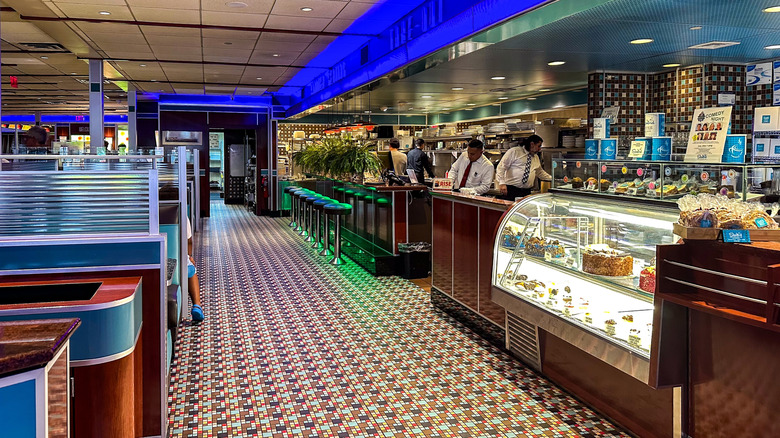
While thousands of diners have survived to this day, the years following the COVID-19 pandemic have been tough for many sit-down restaurants, especially value-oriented places like diners. According to the National Restaurant Association, the average cost of running a restaurant has increased 36% since 2019. Between having to increase the price of normally cheap meals and staffing costs, the diner business model is a lot less appealing and harder to maintain.
Additionally, modern diners are being squeezed by the competition, from increasingly diverse restaurant options to more convenient choices found on food delivery apps. We see this in the decline of 24-hour diners nationwide. Establishments like that require a lot of workers (including those willing to work overnight), which is harder to come by these days. Customers have also changed, as folks are eating out less and haven't been going out so late either. In New York City, once a haven for 24-hour diners, it's estimated that 13% closed between 2020 and 2024 (via New York Times).
With business being that tough, new diners are far and few between. Many non-chain diners are family businesses, with future generations less interested in taking over. Since many are also located in high-traffic areas already appealing to developers, the temptation to cash-out and sell is high. That said, diners have not died off completely — they have a history of adapting to the times, even in the wake of drive-thru-based fast food. With such an enduring appeal as an American icon, you shouldn't count them out just yet.