

White Castle Has Changed So Much Since 1921 — Here's How
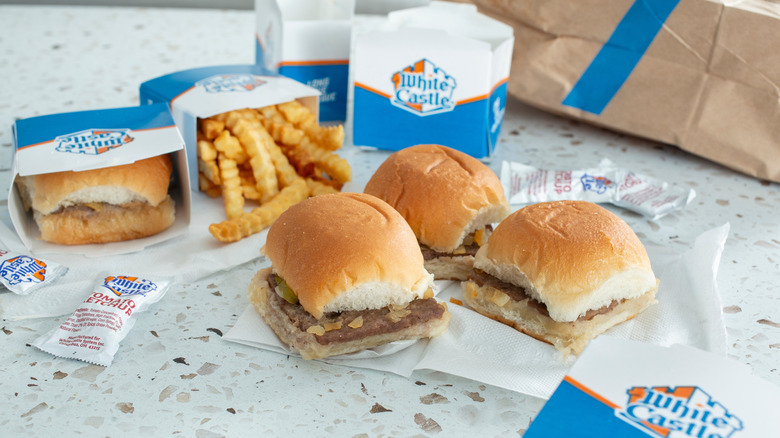
The true pioneers of an industry don't always end up as the biggest names down the road, so some may not realize that White Castle basically invented fast food. While it is still a nationally known chain, White Castle was completely eclipsed by competitors like McDonald's, which now has almost 14,000 U.S. locations to White Castle's approximately 350 restaurants. But even though McDonald's perfected the fast food formula, White Castle was the influential restaurant chain that originated many of the concepts that define the industry. The brand has changed quite a bit in the last 105 years, but the seeds of this fast food staple have been there from the beginning.
The first White Castle was founded in Wichita, Kansas in 1921 by Billy Ingram and Walter Anderson, evolving from an earlier burger stand started by Anderson in 1916. It was at that stand that Anderson has created the most enduring thing about White Castle — the chain's famous "slider" burgers. The thin patties, cooked with onions, were a real innovation, as before then hamburgers had mostly been thicker, almost like meatballs, and the thin form made White Castle sliders easy to cook quickly.
At the time Anderson sold them for the still shocking price of only five cents apiece, which is the equivalent of around $1 today. The burgers were small even for the time, and Anderson encouraged folks to "buy 'em by the sack." The cheap, easy-to-eat sliders became a hit among Wichita factory workers. But White Castle would never have become what it is today without another innovation: modern branding.
The earliest White Castles were tiny buildings that emphasized cleanliness and efficiency
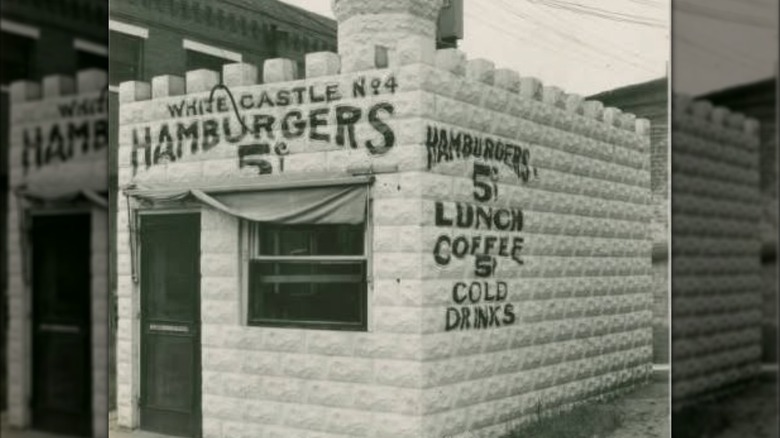
It was Anderson's partnership with Ingram that actually created White Castle. The two had met years earlier but joined up to open the newly branded White Castle using Anderson's burgers. The new concept was conceived as a response to hamburgers' bad reputation at the time. This was an era where the shadow of Upton Sinclair's classic muckraking novel "The Jungle," still loomed large. The investigation into the unsanitary conditions in meat processing plants had made many Americans concerned about the safety of ground meat.
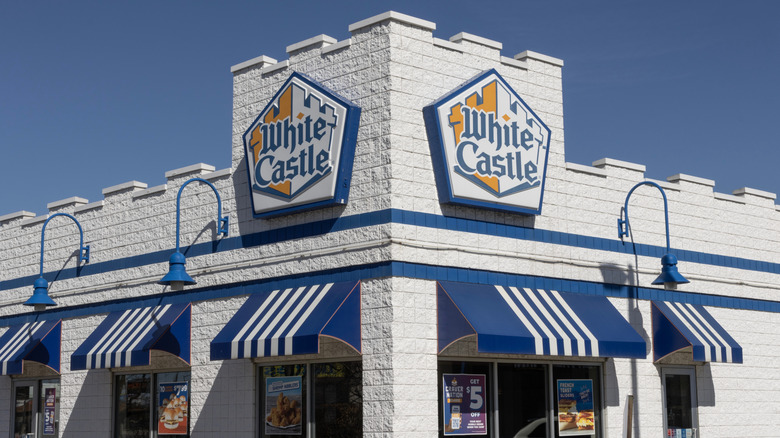
The name and concept of "White Castle" was created to alleviate those concerns. Not just the name, but even the look of the restaurant (inspired by the historic Chicago Water Tower) was made to convey a sense of cleanliness and transparency. Open-concept kitchens allowed customers to watch as fresh ground beef was used by the cooks. The buildings were made of white porcelain steel, which was sleek and easy to clean. Employees were held to high grooming standards, which extended far beyond their clean, white uniforms — a far cry from the fast food world of today.
That branding has carried through to today, but the stores themselves have changed quite a bit. The original Wichita restaurant was a tiny booth, with only five stools and a counter. Nowadays, you can enjoy a meal at White Castle with a large group the same way you would at any other chain restaurant. Less than a decade later, White Castle debuted another fast food first: carry-out. In 1927, in a time before the fast food drive-thru, it sold sliders in its famous "sacks," allowing hungry customers to eat on the go.
White Castle's menu has evolved from its simple beginnings
Things like branding and takeout have become so standard, it's hard to imagine a fast food world without them. So, what might stand out most compared to the White Castle of today is how small the menu once was. When White Castle first opened, there were only four items on the menu — including drinks. You could get the original slider with onions (no cheeseburger yet), a coffee or Coke to drink, and an apple pie. No fries either. In fact, it wasn't until the '50s that the menu first expanded to include fries and cheeseburgers, as well as different sizes for drinks.
Today, White Castle offers everything from chicken and fish sliders to onion rings, mozzarella sticks, and Fish Nibblers. In many respects, White Castle has evolved to become more like the chains that supplanted it, although it's always held to its signature sliders. But there's one other thing that the original White Castles had that is different from today — a critical component missing from its food: White Castle sliders only had its signature slider holes added in 1954. This was done to make them even easier and faster to cook and has remained a signature of White Castle ever since.
White Castle ended up being so successful that it spawned several imitators, with names like Royal Castle, White Tower, and White Palace. One White Castle copycat, Krystal, which opened in 1932, has continued to survive as a regional chain to this day. By 1961, the chain had sold a billion sliders at a point when McDonald's was still an upstart, reminding us that, despite all the changes, there was a time when everything White Castle did was revolutionary.