

The 'Poor Man's Apple' Is Cheaper, Tropical, And Higher In Fiber (And You're Probably Passing It Up At The Grocery Store)
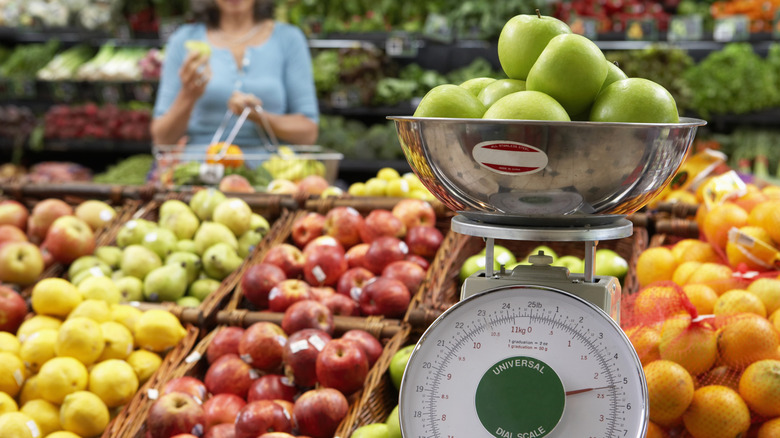
At any given grocery store, you'll find dozens of apple varieties at a diverse range of price points. But guava is the "poor man's apple;" an often cheaper, tropical fruit with more fiber than its more expensive and larger counterpart. Of course, guavas aren't apples, but they are sweet, flavorful, and provide a wealth of beneficial nutrients that apples don't.
Native to South and Central America, guavas are oval fruits with a green exterior and a pink, creamy pulp riddled with crunchy edible seeds. They taste mildly sweet with a floral aroma and a slight musky, tangy acidity. While they may have South American origins, India supplies most of the world's guava. Consequently, an imported tropical fruit will have a higher price tag than domestic crops like apples. But at around $2.50 to $3.50 per pound, they're certainly not the most expensive fruits. In fact, many premium varieties of apples like Honeycrisp and Cosmic crisp cost as much as guava per pound.
More importantly, guavas beat apples on many nutritional points, starting with a lower glycemic index; guavas may have sugar content similar to an apple, but it has over twice the dietary fiber. Guava has much higher levels of vitamin C, vitamin A, antioxidants, and potassium than apples. Furthermore, certain cultures claim that guava leaves contain medicinal properties that help with stomach conditions, pain, diabetes and wound healing.
How to pick, eat, and store guava
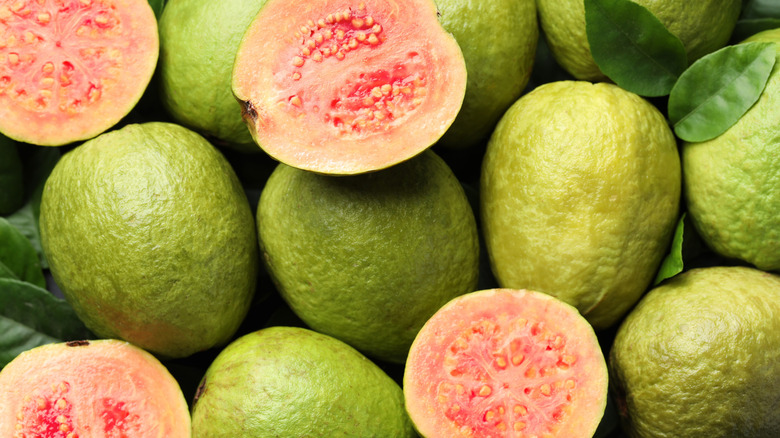
If you've never tried guava, its health benefits and unique taste are qualities you should no long pass up. The best way to ensure you pick the ripest, sweetest guava are through certain sensorial signs, starting with aroma. You should be able to smell guava's muskiness from a distance, and the skin should have a light green or yellow hue with no visible blemishes. As for tactile cues, look for a firm feel with a slight give. If you're buying multiple guava to last you the week, you can look for firmer, darker green fruit as they will ripen quickly over the span of a few days, especially if you let them sit out on the counter or next to ripening bananas. The best way to store guavas is by placing them in a sealable bag or container and into the fridge. They'll keep in the freezer for up to a year. Thaw them slowly in the fridge overnight for the best taste and texture.
As for how to eat guava, you can enjoy them in their entirety — seeds, peel, and flesh. Like most fruit preparation, you'll want to rinse them of any dirt or debris. Cut off the top and bottom stems and eat them with the rind whole or cut into slices. If you'd rather not eat the skin, you can cut the guava in half and scoop the flesh out with a spoon.