

Forget Marble And Granite: This Eco-Friendly Alternative Spares Your Wallet While Looking Chic
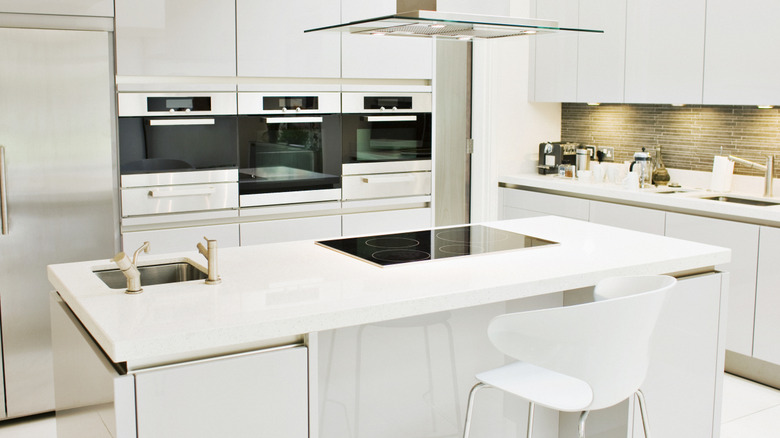
Deciding on the best countertop for your kitchen during a renovation is a huge decision. Unlike cabinets, which can be painted, you're stuck with the countertop you select (unless you have endless funds to replace it). But there are multiple kitchen countertop materials, including granite, marble, tile, wood, and glass, so how do you pick the perfect countertop material for your kitchen? What you choose depends on your priorities; it's got to be the right blend of attractive, affordable, and durable, not to mention eco-friendly. If sustainability is what you're after, skip the marble or granite and go with porcelain countertops instead.
Porcelain is essentially a mixture of clay and minerals that have been baked at extremely high temperatures. It's made of natural materials that are much easier to come by and therefore more eco-friendly and affordable than marble and granite, which have to be mined directly from the earth. The manufacturing process for porcelain is also quite energy-efficient and environmentally friendly as porcelain doesn't emit VOCs (volatile organic compounds). Porcelain is also recyclable, so there's the possibility of having a countertop made with methods that prioritize sustainability.
Additionally, you may have heard of porcelain in the context of fancy but fragile dishware, but when used to form countertops, the ceramic material is actually highly durable and stain and scratch resistant. Its durability doubles as a planet-friendly perk; because porcelain is so resistant to wear and tear, you won't have to replace your countertops as often as you might with ones made from a more fragile or less durable material.
The pros and cons of porcelain countertops
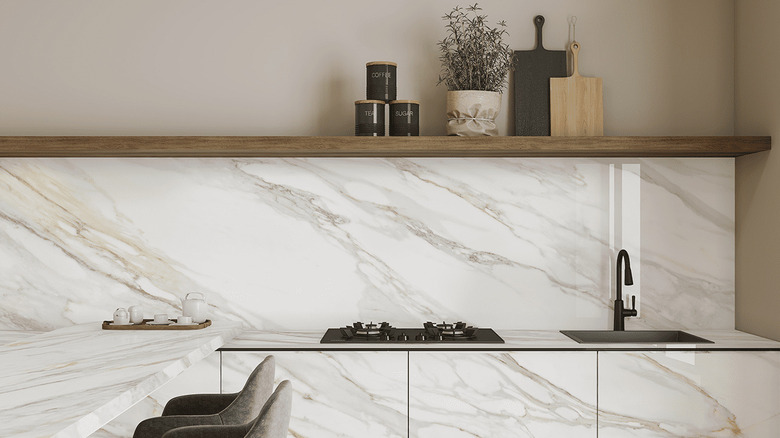
Like with any countertop material, there are pros and cons to opting for porcelain. On the plus side, because porcelain is fired at such high temperatures, it's also very accommodating to heat; you can set down a pot of just-cooked food and it won't damage the surface of the counter. The high-temperature firing also means that porcelain is nonporous, making it super easy to clean. You don't have to worry about bacteria or dirt getting trapped under its surface. Aesthetically, porcelain is pretty much totally customizable. You may have to pay more depending on the intricacy of the design, but because porcelain can be finished and glazed, it comes in all sorts of colors and patterns, and the most sophisticated designs can easily mimic marble or granite.
On the downside, while porcelain itself is extremely durable, it should be noted that porcelain slabs are often on the thinner side. This is a plus if you're doing the installation yourself or like the look for your sleek and modern kitchen, but it can also make your porcelain countertop prone to chipping if something hits it hard. It's also difficult to round off, so you generally have to like the look of sharp corners if you opt for porcelain. However, for many, the pros outweigh the cons when it comes to porcelain, so it might be time to say goodbye to granite and quartz.