

15 Traditional Danish Foods Everyone Needs To Try At Least Once
As my Danish last name should indicate, I grew up eating all kinds of foods from Denmark. As an adult, I prefer my sandwich open-faced; I always have at least three kinds of pickles in my fridge; strawberries are a lifestyle when they're in season; and I have special Danish cooking equipment in my kitchen. To say I have many favorite traditional Danish foods is an understatement.
From nutty rye bread to cured salmon to dill-packed salads, Danish cuisine is built on ingredients from Denmark, or that have historically been part of the country's trading networks. Spices such as cardamom and cinnamon find their way into desserts and breakfasts alike, nodding to the Viking Age and its imports. Meanwhile, holiday traditions evoke memories of myths, folklore, and leaving out bowls of porridge for spirits for many Danes. Like any foodway, the Danish one is woven with identity, place, and ecology, making for a sensorial and literal taste of the nation's culture. If you try these Danish foods, you'll have a picture of important pieces of Denmark and its people.
So, if you're unsure of what to try in Denmark or what traditional Danish foods are best if you're new to the cuisine, read on. While there are endlessly good dishes out there, I'm sharing the best bites across meal genres, spanning snacks, breakfasts, lunches, dinners, and desserts for an overview of the cuisine.
Æbleskiver
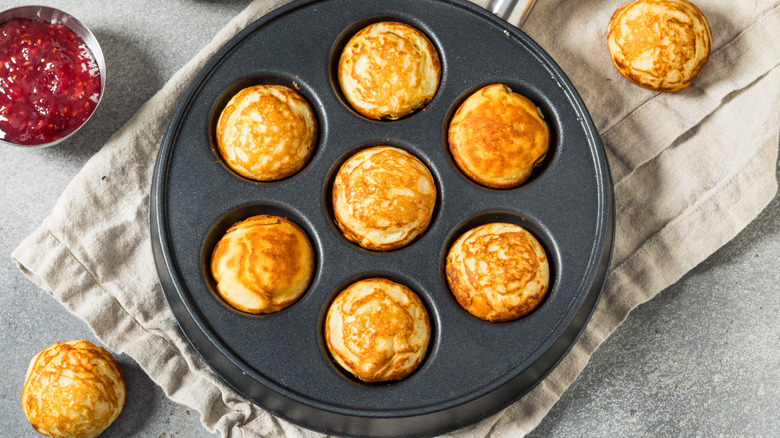
This is by far the most nostalgic Danish food for me, and I know I'm not alone. Æbleskiver is basically a pancake ball, and you can fill them with different fruit. I grew up eating cranberry ones for Christmas and on my birthday morning, but, as the name will indicate, they were originally made with apples ("Æble" means apple). It's one of the tastiest foods if you love breakfast, and it is super versatile thanks to its customizable nature. Try it with blueberries for something ultra-sweet, diced stone fruit when they're in season, or plain if you just can't be bothered.
These require a special pan with divots to pour the batter into (I inherited my family's, so that's what I use). And there's an art to flipping them, which involves the use of a skewer or specific turner. It's a Danish rite of passage to master this process, and I've taught my partner so well that he does it much better than me now. It's among the best Scandinavian dishes to try if you're curious about Danish culture, festive traditions, or want to eat something that requires Danish equipment.
Agurksalat
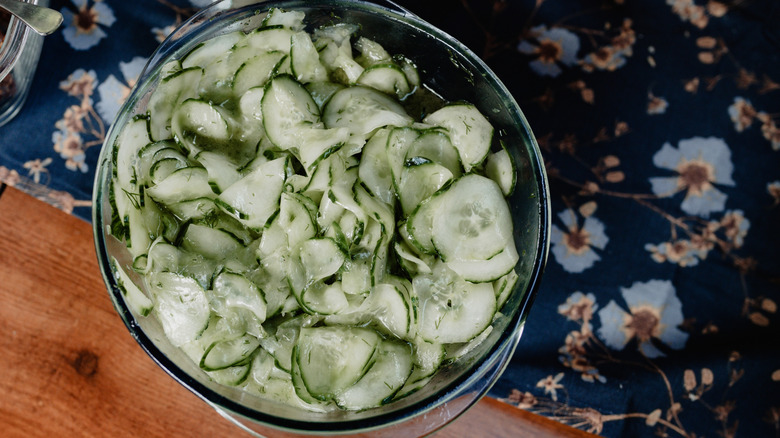
I grew up eating this crisp cucumber salad, and it's still a staple in my home as an adult. Whenever I serve it to those who aren't Danish, they're shocked by just how sharp and herbaceous Agurksalat is compared to other similar dishes. Packed with dill, it's the perfect accompaniment to just about any entree. With seafood, it keeps the theme light and salty. With heavier meats or starches, it brings levity and balance. On its own, it's just a really refreshing bite.
Recipes for it are very simple, with the typical pickling spices like salt, pepper, and sugar included on top of the aforementioned herb and, obviously, vinegar. But if you don't like dill, you can find versions of Agurksalat without it, or you can replace the herb with a more familiar one (like parsley, which shows up in Norwegian versions) — the important thing is that the pickling is strong, and the cucumbers are thinly sliced into round medallions.
Gravad Laks
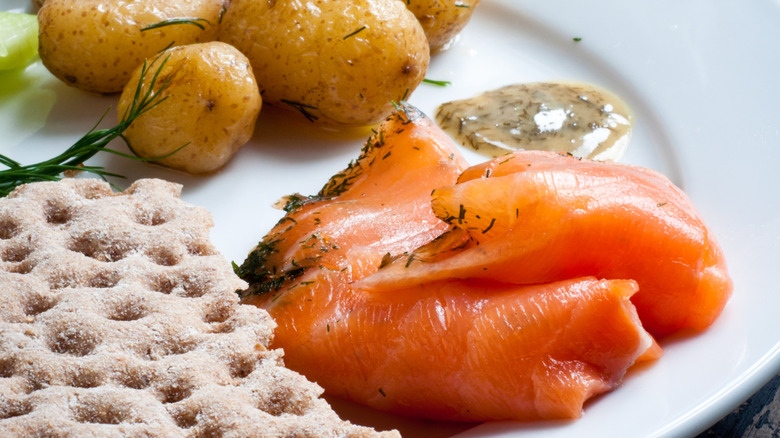
It's nearly impossible to discuss the best Nordic foods without mentioning salmon and, specifically, lox. The Danish version, which is typically referred to as Gravad Laks, is extremely bright thanks to it being coated with loads of dill or pine. Its earthy, herby, and vegetal profile combines with the maritime flavors of the seafood for a uniquely balanced bite. It's great for any season, making it just as delicious with heavier winter meals as it is with summer-friendly cold plates.
The name of this Danish food hints at how it was traditionally prepared, with "gravad" referring to "grave" (in other words, it's buried) and "laks" meaning salmon. However, no burial is necessary today. Like most cured seafood and lox from other Nordic countries, such as Norwegian Gravlax, Gravad Laks is rubbed with salt, sugar, and spices (as well as the aforementioned greenery) before being refrigerated so it can develop for a few days. Eat it plain, with mustard sauce, or atop open-faced sandwiches for a Danish savory plate.
Gule Ærter
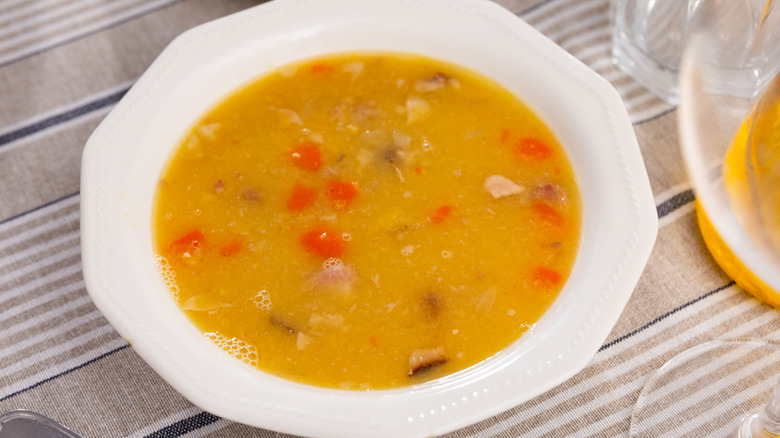
If you're ever in the Nordics, you'll find pea soups across home dinner tables and restaurant menus. It's heart-warming, simple, and versatile. While green peas dominate Finnish versions, the other Nordic countries, including Denmark, make use of yellow peas for their soups. Gule Ærter is no exception.
This dish is, essentially, a more fragrant version of American split pea soup thanks to the use of dill. Made with dried yellow peas, herbs, and plenty of classic vegetables (think carrots, leeks, and onions), Gule Ærter can also feature some sort of pork or meat — if you're pescatarian, smoked salmon can be a fantastic addition when added right on top. Many serve theirs with hearty rye slices for dunking, as well as pickles on the side and a drizzle of mustard, but if that sounds too tangy, I suggest sticking to the bread. It's a stick-to-your-ribs meal that makes for an epic winter dinner.
Hveder
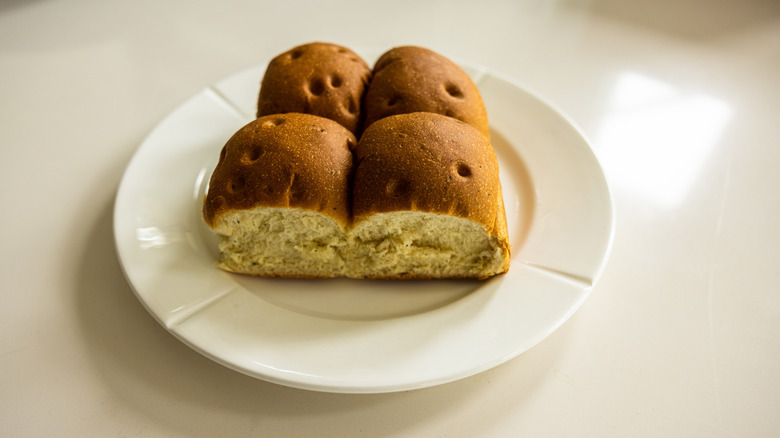
I've yet to meet a Scandinavian bread that I don't love, but Hveder is something special. These Danish wheat buns are extremely fluffy and buttery, with a light warmth granted by the use of a signature spice: cardamom. This nutty spice is a unique ingredient for homemade lattes and a favorite addition to Nordic coffees.
These rolls are historically feasted upon on the eve of Great Prayer Day, an occasion that is observed on the fourth Friday after Easter. In fact, this has been a tradition for hundreds of years. In 1686, a bishop's stance that prohibited Danes from working on the holiday meant that locals had to get bread the night before when bakeries were still open (and warm it up on the actual holiday). These toasty buns are still beloved and served hot with butter, but they're also great with strawberry rhubarb jam or dragged through meatball drippings.
Jorbærtærte
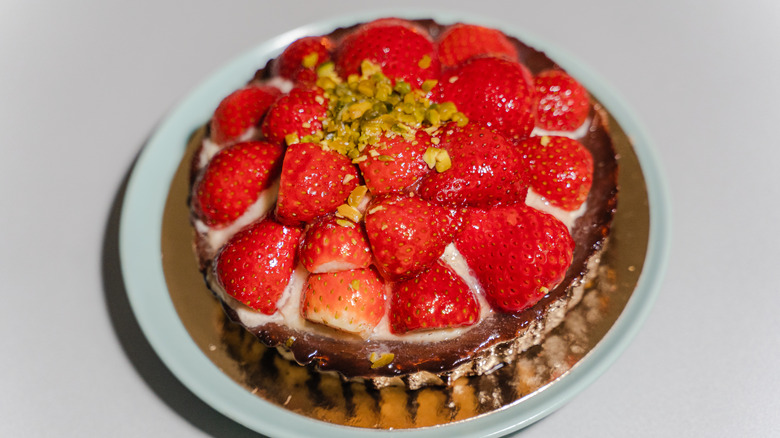
As someone who lives for fresh fruit and bright flavors, this is my absolute favorite Danish dessert, by far. Jorbærtærte is a strawberry tart that solves the issue I have with others that are known as such — rather than a focus on crust, small portions of sliced fruit, and stickiness, Danish strawberry tart is piled high with whole berries, has a light crust, and a fluffy custard that grants a cooling effect to the sweetness and tartness of the dish. It's everything a fruit tart should be.
Strawberries are treasured across the Nordics, and with a short season in which to enjoy them, they're not taken for granted. Thanks to the extensive time it takes for northern strawberries to ripen, they are extra sweet, and when you bite into them, they're a beautifully deep red. There's nothing more Danish than munching on them on a simple summer day of wild swims and foraging, but when made into a tart, the strawberries are on another level.
Kold Kartoffelsalat
True to my Nordic roots, I'm not picky when it comes to Scandinavian potato dishes. However, I'm often disappointed with American potato salad — it's usually pretty mushy, bland, and just screaming for some sort of kick that isn't there (would it hurt to put some vinegar or spice in there?). I don't have that issue with Danish potato salad.
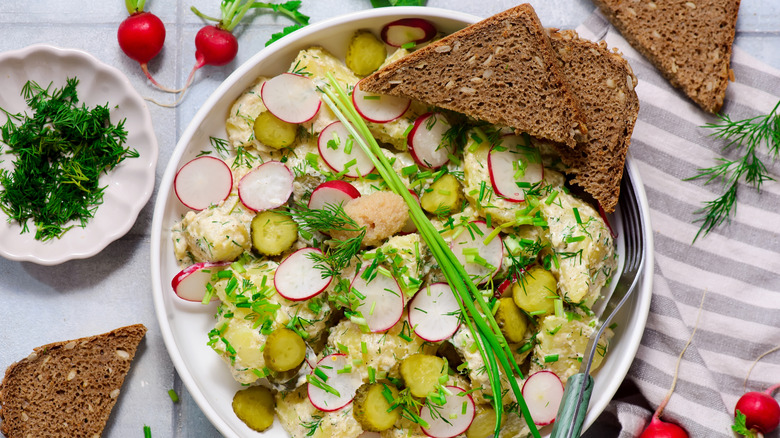
Kold Kartoffelsalat, or cold potato salad, is a summertime staple for Danes. Because it's generally made with sour cream and similar dairy equivalents (like yogurt) instead of just mellow mayonnaise, it's got that tang that potato salad so desperately needs — some recipes will include cream with vinegar instead of sour cream, but that ends up tasting virtually the same, in my opinion, with that cool yet piquant taste.
Outside of dairy products and potatoes, Kold Kartoffelsalat often has asparagus, different kinds of onions, herbs, and radishes (and peas, when they're in season). This makes for a crunch and freshness that elevates the boiled potatoes well. Even simple recipes have that profile, and, as most will advise, you'll want to add chives for extra greenery. Many serve this with Frikadeller or other meat entrees, but similar to American potato salad, you'll find this at many a Dane's picnic.
Lagkage
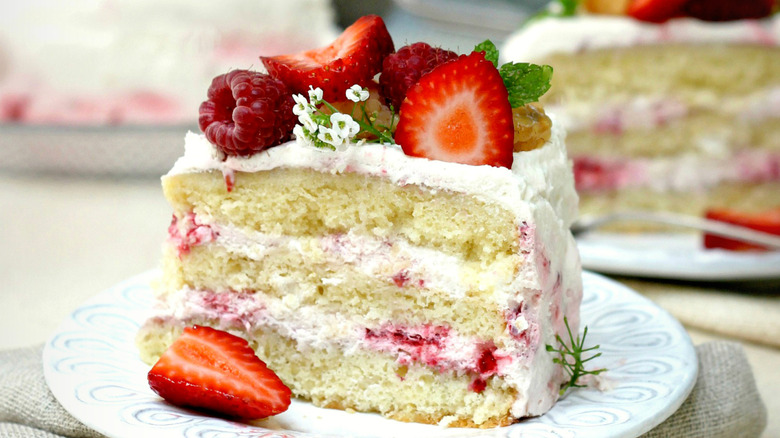
A lot of Scandinavian countries have layered cakes. There's Prinsesstårta, the classic Swedish Princess Cake. Then there's the sponge, meringue, and custard-layered Kvæfjordkake, one of the best Norwegian desserts to know about. But the Danish offering is special.
Held together by slatherings of jam, studded with summery fruit like blueberries or strawberries, and featuring pillowy layers of sponge cake, Lagkage is somehow light and decadent at once. It's generally a celebratory dessert, served for birthdays, gatherings, or holidays. Between the berries, the vanilla dessert within, the glue that is jam, and the cream covering it all, it's a lovely dance of bright and rich flavors that could appeal to just about anyone.
There are so many amazing Danish desserts, and the Nordics are always expertly churning out fantastic cakes spanning traditional and contemporary recipes. But this is an important treat to try if you're curious about celebrations in Denmark, love fruity flavors, want a taste of Danish dairy, or have a hankering for a lovely Scandinavian layered cake, but want something that leans brighter.
Risengrød
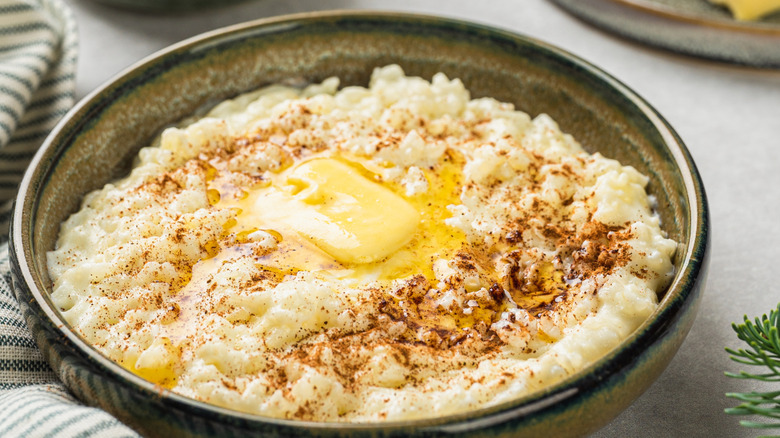
Risengrød is such a delicious taste of Danish food history, Christmas traditions, and folklore. While everyday porridges were made with the typical grain base prior to the importation of rice, the new version caught on quickly hundreds of years ago as a festive dish to serve guests. Paired with butter, whole milk, sugar, and cinnamon, this porridge's flavors are both classically Scandinavian and Christmas-appropriate.
Aside from being left out for human guests, bowls of Risengrød were also offered to Nisse, or mythical spirits believed to watch over households — other Nordic countries share this folklore, with the beings called Nisse in Norway as well, Tonttu in Finland, and Tomte in Sweden. They're shown with a long white beard, farm-friendly attire, and a cone hat that's often red. Despite this whimsical appearance, each Nisse has quite the temper, so Danes traditionally leave out a bowl of Risengrød on Christmas Eve as a sort of appeasement for the one who inhabits their property.
Rødkål
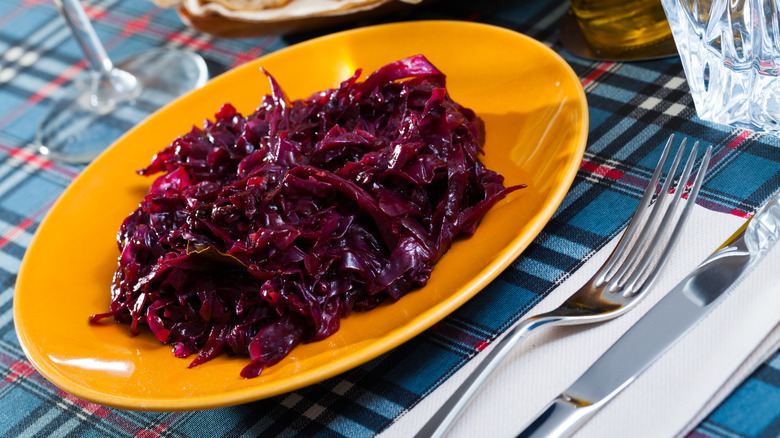
This pickled red cabbage dish is typically served on Christmas Eve for dinner, but it's so accessible and tasty that you should not be afraid to make it whenever the red cabbage simply looks good. It was a specialty of my grandfather, and so it's not just a delicious and warming side, but one that tastes like home.
Braised in fruit juices, Scandinavian spices, and, among other things, vinegar, the final result is a pop of magenta. It's sweet and sour, and many love serving it alongside heavier entrees like red meats and potato-based plates. But I also love this with seafood when I want to bring some heftiness to what would otherwise be a pretty light meal — salmon aligns well with the flavors, but even white fish is complemented beautifully by the zingy flavors of the apple cider vinegar, star anise, and other Rødkål ingredients. It's flexible, so while it's traditional to throw it together on December 24th, I think it's a lovely recipe to nail down for any-season dinners.
Rød Pølse
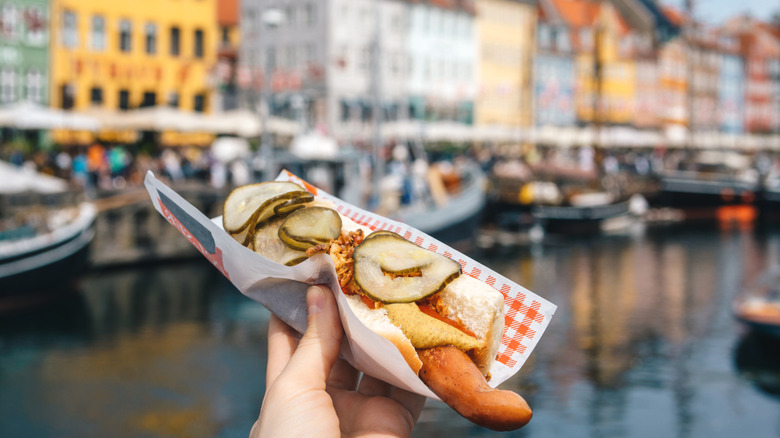
It's no secret that Nordic countries love hot dogs. But what makes Danish hot dogs so unique? For one thing, they tend to be bright red.
It's believed that this tradition of dyeing the sausages scarlet began as a way to let customers know which hot dogs were the oldest and less fresh. Other theories suggest that vendors of Pølsevogn (sausage wagons) dyed all of the sausages red in the 1920s to hide imperfections. While food standards are higher and hot dogs must be fresh in order to be served, the colorful custom remains intact.
Many Danish birthday parties, particularly those thrown for children, center the food menu on Rød Pølse. And whether you eat them at celebrations in Denmark or just for a quick, grab-and-go meal, toppings on them will generally include remoulade, ketchup, mustard, crispy onions, and the aforementioned Agurksalat. It's a medley of textures and flavors that keeps things interesting, making it easy to see why hot dogs have such a hold on the hearts of Danes.
Smørrebrød
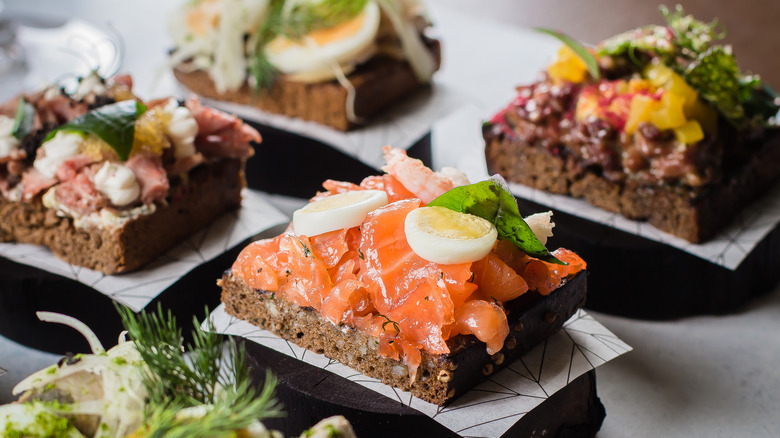
Smørrebrød might be the most famous food from Denmark. These Scandinavian open-faced sandwiches traditionally come with plenty of rules, but today, people are getting creative and making them more accessible.
Traditionally speaking, this Danish food involves bread (usually rye) spread with a thick layer of butter before being topped with cleverly paired ingredients like meats, seafood, or vegetables. The butter (or other forms of fat) ensures that the bread won't be soggy beneath it all, and it's all eaten with a knife and fork.
While those in the medieval ages used bread like plates (slices like these are called "trenchers"), this open-faced masterpiece has reportedly been around since the 1800s. This is when factory workers appreciated this option for an easy, away-from-home meal (but it also found its way into pubs since it was inexpensive to make and paired well with drinks). Now, it's a staple lunch item, with most Danes eating it every day — it's also a fantastic way to use up leftovers. My favorite types of Smørrebrød are Kartoffelmad or Rejer og Æg (or the potato and shrimp with egg versions, respectively), and they happen to be the most beginner-friendly.
Rygeost
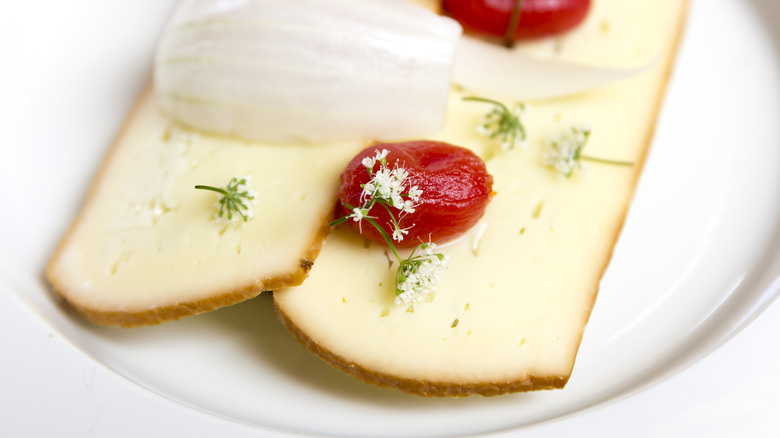
There are all kinds of amazing Danish cheeses everyone should try. Many around the world are fans of Danish Blue; Fynbo's buckwheat flavor notes offer a nutty yet distinctly Danish twist; Havarti has a famously tasty bite; and Danbo is known as Denmark's national cheese. Needless to say, there are lots of great types to dig into. However, Rygeost stands out for its unique flavor, smokiness, and classically Danish qualities.
Originating on the island of Fyn, it's deeply tied to place in the way it's prepared and the way it tastes. Rygeost is soft and smoked using nettles or straw. It's mild, but that smoky flavor offers a mysterious profile that goes so well with both light and heavier accompaniments alike. Try it with mushrooms for a full-bodied, autumnal dish, or alongside fruit for something elevated.
Danish to the core, Rygeost has been around since the 1800s, when farmers in Fyn would slice and serve it up fresh. However, many think this cheese likely has older roots and may have been enjoyed by those who lived during the Viking Age.
Rødgrød Med Fløde
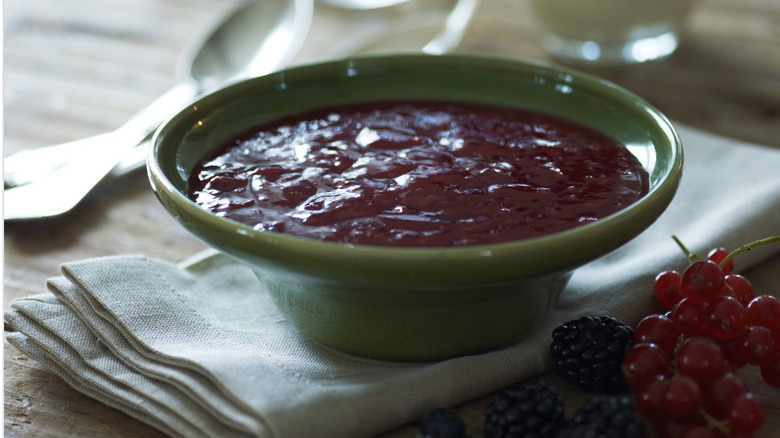
For a treat that brings Danish summers to life, look no further than this tongue-twister. Rødgrød Med Fløde is a red berry and fruit pudding, generally served with some fresh vanilla cream on top. While it's enjoyed year-round by locals, its undeniably sunny flavor profile and the inclusion of berries make it a classic for the extra-long summer days.
This dessert can be made with so many different kinds of fruit, including rhubarb, currants, blueberries, strawberries, raspberries, and others — however, as the name suggests, it typically mainly consists of red berries. And although "grød" means porridge, there aren't oats in this dish. Instead, thickening is achieved through cornstarch or other accessible means. As a result, this is more of a pudding than it is a porridge. And it's often sprinkled with slivered almonds for crunch.
One of the many reasons that this is an iconic Danish food to try is because of its famous name. Since the 1900s, Danes have used this as a tool for figuring out who is a native speaker of the language and who is not — for those who aren't native Danish speakers, Rødgrød Med Fløde is a notoriously difficult name to say.
Rugbrød
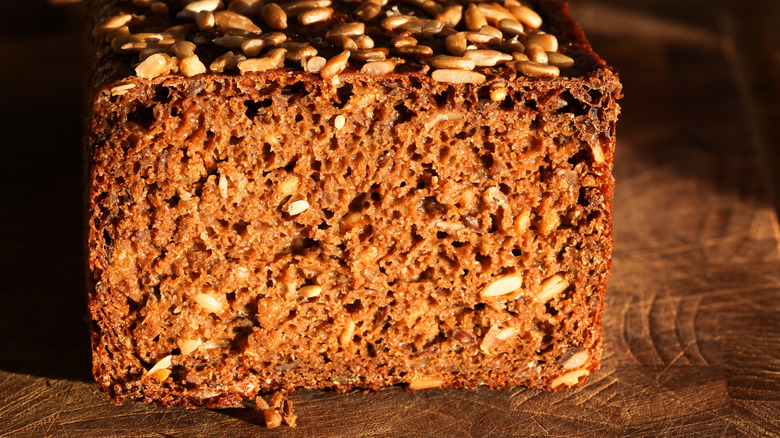
This is one of the best kinds of Danish bread, and it's a quintessential food from Denmark. Made with a sourdough base, this rye is a must-try for anyone who wants to taste classic Scandinavian flavors, enjoy something ultra-hearty, or connect with Nordic history through their palate.
While recipes for Danish rye bread can be traced back to the early 1700s, Rugbrød has been on the plate in Denmark for thousands of years. In modern times, it's eaten at least once a day, serving as a foundation for most renditions of Smørrebrød and lunches enjoyed by Danes. But since the times of the Vikings, this dense rye bread has offered sustenance in even the most sparse seasons, filling bellies in the darkness and scarcity of winter while also fueling farmers' summertime work in their lush fields. The rye itself grows where wheat can't always thrive as well, surviving harsh, cold, and wet conditions — it should be no surprise that it's the favorite grain of Scandinavia.
There are so many ways to eat this traditional Danish food, from dunking it into vegetable and mushroom stews to, as mentioned, piling it high for a Scandinavian open-faced sandwich. But if you're new to it, I recommend trying it on its own or simply at first, so you can appreciate the flavors. For this purpose, I love mine with Danish butter and sea salt sourced from the country's shorelines.