

Forget Coffee Grounds And Banana Peels: A Better Way To Fertilize Soil Before Fall And Winter
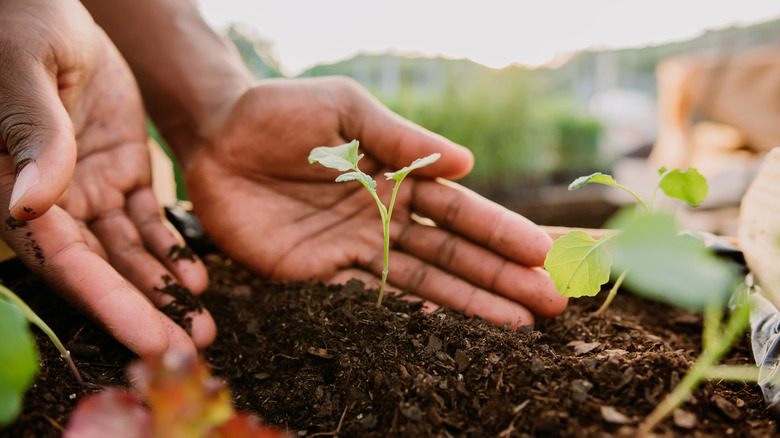
Store-bought fertilizers make life very easy. You don't need to mix anything; you can usually trust it'll work, and there are typically instructions right on the packet. But some kitchen scraps work just as well. While coffee grounds and banana peels are common choices, there's another natural fertilizer hiding in your kitchen cabinet that'll make your plants thrive: apple cores.
Apples transfer a lot of moisture into the soil and improve its structure. They also contain natural sugars that benefit microbes and worms, which feed off the fruit and, in turn, create nutrients that encourage your plants to grow. So, keep those apple cores handy, and don't throw out the peels.
Furthermore, apples contain essential nutrients, including potassium and calcium, which are great for enriching compost mixture. These benefits come in handy any time of year, but they especially help ahead of the autumn and winter seasons.
How to use apple cores in the garden
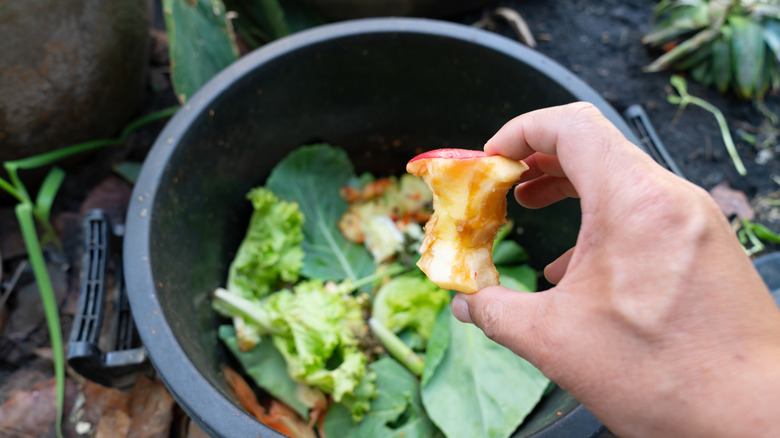
To use apples in your garden, throw leftover cores right into a compost heap or chop them into smaller pieces so they break down more quickly. You can mix them with other kitchen scraps, making sure to include carbon-rich materials like shredded paper and to remove any stickers or inorganic materials. You can also make a powerful fertilizer base with tea and oats that you can add them to.
If you don't feel like doing a lot of work, another option is to dig a few small holes around your garden, paying special attention to any empty spots, and drop the cores right in them. Just be careful not to put the apples too close to the roots of your plants, as they can attract pests and add unnecessary nitrogen to the soil. You should also make sure the holes are about 8 to 12 inches deep.
You can even utilize leftover apple cores in your garden without getting your hands dirty by using the peels and cores to make homemade apple cider vinegar. Just check that it's suitable for your particular plants first, then dilute it and use it to kill weeds, ward off pests, or clean your garden tools. You can even add some diluted apple cider vinegar to your garden soil to make it more acidic.