

What Is The 4-Minute Rule At Starbucks? And What Happens If It's Broken?
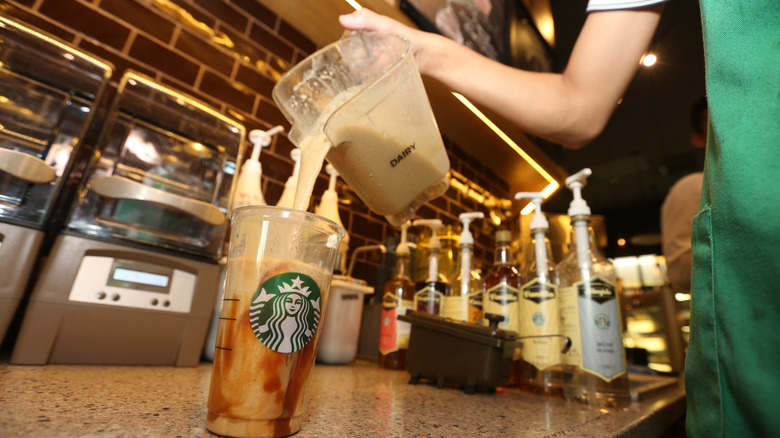
Whether you're queuing for your pre-work caffeine fix or waiting impatiently for the seasons to change so you can savor Starbucks' Pumpkin Spice Latte, no one wants to spend a long time waiting for their drink. Because of this, Starbucks instituted an operating model known as the Green Apron Service, which mandates no custom order should take more than four minutes — here's what you need to know about the rule, and what may happen if it's broken.
The directive originated in 2024, when newly appointed chairman and CEO Brian Niccol voiced his ambition that Starbucks customers should get their orders hand-delivered by a barista in four minutes or less. Niccol also proposed the Starbucks 30-second rule, which noted that a cup of brewed coffee should be in your hands in less than half a minute.
A year into his tenure, the Green Apron Service was one of five big changes the new Starbucks CEO made in 2025. Niccol's commitment to the four-minute rule did not waver, and it became one of a handful of measures intended to combat falling sales and increasing disengagement from Starbucks' customer base. While it remains unclear how Starbucks enforces this expectation of speed, one Starbucks employee wrote on Reddit that their location had just instituted a policy of four minutes for every cafe order and seven minutes for mobile orders, noting ominously: "The DM will be tracking our times, and 'taking action' if we cannot meet this new requirement."
Starbucks employees have pushed back against 'impossible' expectations
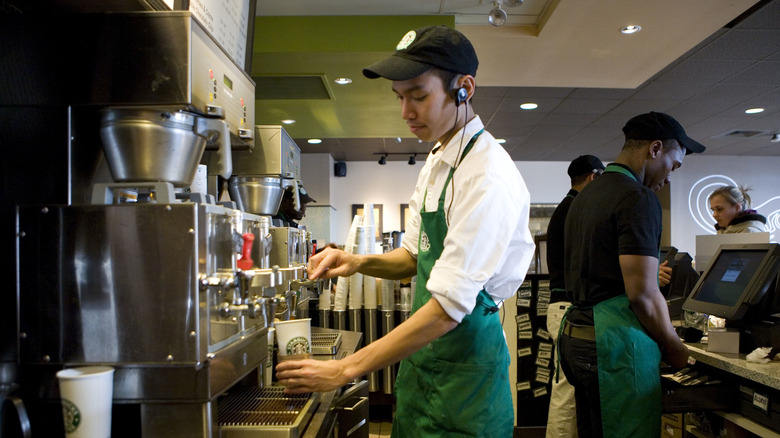
The four-minute rule was highlighted on Starbucks' 2026 Investor Day in January by the company's chief operating officer Mike Grams, who outlined several initiatives that led to faster service and an average of less than four minutes for orders to be fulfilled across Starbucks cafes in the first quarter of the fiscal year. However, less enthused by the four-minute rule were some of those baristas. Starbucks has frequently had a fraught relationship with its frontline staff, with some of the 13 biggest controversies in Starbucks history being the result. The Starbucks Workers United union, which, as of April 2026, represented 550 Starbucks locations throughout the United States, has argued that long wait times for customers are due to chronic understaffing.
Some Starbucks employees have complained about how difficult it is to work as fast as the rule demands, and expressed their fears that they will be disciplined or fired if they cannot meet its requirements. On the subreddit r/starbucksbaristas, one Starbucks employee complained: "I'm watching my store manager get stressed because corporate is breathing down her back, and I'm really out here doing my best but corporate keeps pushing unrealistic goals because they aren't the ones behind the bar," adding that Niccol was "willing to cut perfectly fine workers who can't fulfill the impossible leaving floors massively understaffed." On r/starbucks, another Redditor wrote: "Until Mr. ceo can do it in those times for a year without getting written up or let go (with no severance of course), then forget it."