

Sauvignon Blanc Vs Pinot Blanc: What's The Actual Difference

For the casual wine drinker, seeing two similar names like Sauvignon Blanc and Pinot Blanc may lead you to assume they are pretty similar to drink. Most people will parse that "blanc" means both these wines are white, but in the world of wine labels, any broad category like that contains endless multitudes that render any assumptions moot. And different production and growing conditions can mean that even within Sauvignon Blanc and Pinot Blanc you can get quite a range of outcomes. So while you'll find these two wines have some distinct characteristics, remember that a lot can come down to the individual bottle.
Both Sauvignon Blanc and Pinot Blanc come from two famous wine grape families. Sauvignon Blanc is the origin of the sauvignon wine family, coming from France, particularly the Loire Valley and Bordeaux. It's one of the parent grapes of Cabernet Sauvignon, which was produced by a natural crossbreeding of Sauvignon Blanc and Cabernet Franc. Pinot Blanc comes from the family that includes Pinot Noir and Pinot Gris, which first appeared in Burgundy, France. Pinot Blanc isn't a hybrid, but instead a white-skinned mutation of Pinot Noir.
Sauvignon Blanc and Pinot Blanc have some overlap in where they are grown, particularly in France and Italy, but outside of that they come from quite different regions. As you might have guessed from the lack of Pinot Blanc on your local shop's shelves, it is much more popular in Europe, and rarely grown in "New World" wine regions like the U.S. or Chile. Within Europe, it's also grown in colder regions like Austria and Germany. Sauvignon Blanc is abundant outside of Europe, with New Zealand and California both producing popular styles.
Pinot Blanc is more balanced and fruit-forward compared to acidic, crisp Sauvignon Blanc
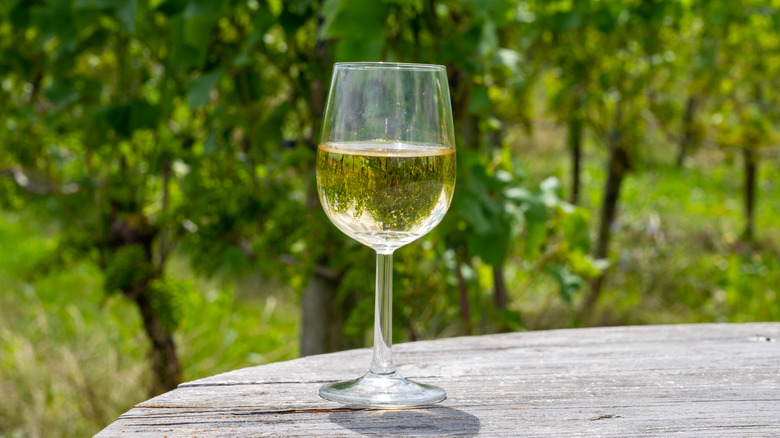
Being lighter-bodied white wines, Pinot Blanc and Sauvignon Blanc certainly share some tasting notes, but there are real distinctions you'll find when you drink them. Pinot Blanc is among the most balanced of white wines. Its most common flavors are apples, pears, and stone fruit, with a little minerality. It's more refreshing and light than a Chardonnay, with more acidity, but has more body and less tartness than Sauvignon Blanc. Its closest comparison, somewhat unsurprisingly, is its close relative Pinot Grigio, although Pinot Blanc is a little softer in flavor. To those who don't like it, being so balanced can sometimes mean it lacks distinction, but to those who do, it's a very versatile, easy-drinking wine. And because it's so balanced, where it comes from can greatly impact its characteristics, with Pinot Blanc from Italy being more crisp, while bottles from Germany or France can be smoother with more body.
Sauvignon Blanc can also have those fruity notes like peach, but it leans more towards bracing citrus. It also stands out compared to Pinot Blanc for its more "green" vegetal taste that can be grassy, herbal, and peppery, giving a more earthy, light flavor. It's particularly known for its high acidity, giving it an even more crisp bite than Pinot Blanc. Similar to Pinot Blanc, Sauvignon Blanc is highly sensitive to the nuances of local climate. A bottle of Sauvignon Blanc from popular regions like New Zealand, France, and California will all taste quite different. In general, bottles from cooler regions that get less sun, like France, will be more grassy and herbal, while those from warmer climates, like California, will be much more fruit-forward.
Drink both Pinot Blanc and Sauvignon Blanc with lighter dishes like seafood and salads
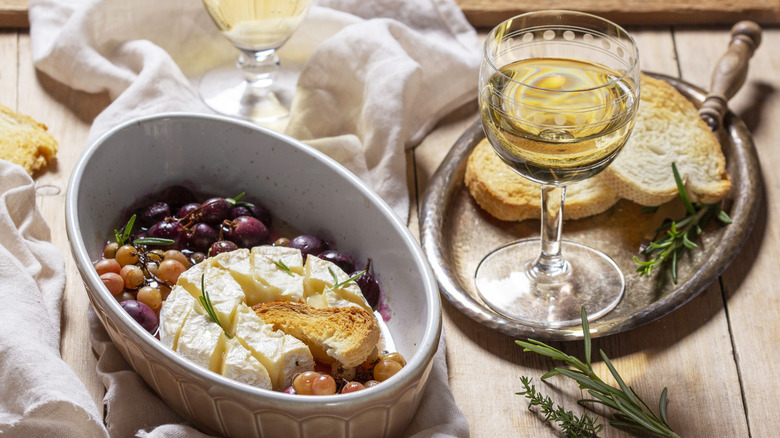
With the mild overlap in taste, there are meals where both Pinot Blanc and Sauvignon Blanc will be good choices. Light white wines go with a lot of food, but will be overwhelmed by some heavier dishes. Light green salads, shellfish, and grilled white fish are all great for wine pairings. The crispness of both wines is also great for cutting through creamy meals. Think pasta with cream sauces, or cheeses like goat cheese and brie. And of course, vegetable dishes and herbal flavors like pesto will also go well with these wines' refreshing notes. If you would prefer meat, poultry like chicken and turkey are best.
The body and balance of Pinot Blanc is better if you want to go a little heavier. It can be a great accompaniment to roast or grilled pork, and lighter fried foods like seafood or fried vegetables. Rich white pizza will benefit from lighter Pinot Blanc, which brightens it up as well. In that same vein, egg dishes like quiches are also a good pairing.
The acidity of Sauvignon Blanc helps it work with a few additional categories as well. It can cleanse the palate and cool you down when eating spicy foods, and is fun to pair with peppery Asian dishes. That refreshing nature also makes it satisfying to quaff with salty cheeses and nuts. And its citrus-forward flavor profile will also complement sauces on poultry with similar characteristics, like chicken piccata. But don't sweat the pairings too much. Both Pinot Blanc and Sauvignon Blanc are delicious and refreshing enough on their own to leave you happy.