

Quote Of The Day By Rick Martínez: 'I Have Come To Hate The Word Authentic As Well As Genuine, Cookable...'
We may receive a commission on purchases made from links.
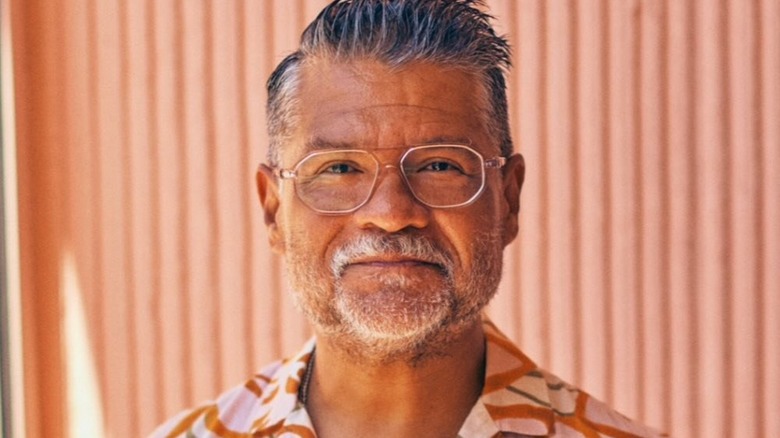
Rick Martínez was born to second-generation Mexican parents in 1975 in Austin, Texas. As he grew, he began crossing the border into Mexico with his mother, where he was immersed in vibrant markets teeming with colors, spices, dried chilies, and Mexican flavors. At his first job at a barbecue restaurant in Austin, Martínez learned to grill, smoke, and fry meat. He interviewed at the Culinary Institute of America, but his parents discouraged culinary school in favor of a traditional degree, which he received from the University of Texas in Austin. However, he would go on to graduate from the French Culinary Institute at the top of his class. Martínez spent 20 years in New York City, working in media, restaurants, and advertising, including as a senior food editor at Bon Appétit.
After leaving that job in 2019 over wage disputes, in an urge to discover himself and his heritage, Martínez went to the culinary destination of Mexico City, where he took off on a road trip through all 32 Mexican states. He travelled over 20,000 miles, eating and experiencing all the diversity that Mexican cuisine had to offer, which became the foundation for his first cookbook, "Mi Cocina: Recipes and Rapture from My Kitchen in Mexico."
"Mi Cocina" became both a New York Times and Los Angeles Times best-seller, and the book won Martínez a James Beard Award and an International Association of Culinary Professionals Cookbook Award. Martínez decided to pack up his life and move to Mazatlán in Mexico permanently. Since then, he's remodeled a house in vibrant, joyous colors, where he writes and teaches, and has published a renowned second cookbook, "Salsa Daddy: A Cookbook: Dip Your Way into Mexican Cooking."
Quote of the Day by Rick Martínez
"I have come to hate the word 'authentic' as well as 'genuine,' 'cookable,' 'modern,' 'easy,' and 'simple.' When you're a person of color, those words are like cattle prods. They're what people use when they want to extract something — the truth, the real story, the universal flavor — from you, a single person forced to represent an entire country, an entire culture, an entire people. They're the place where marketing and racism intersect. They're what people have been trying to use on me my entire life."
This quote comes from the introduction of Rick Martínez's first cookbook, "Mi Cocina: Recipes and Rapture from My Kitchen in Mexico." Here, Martínez describes the internal challenges he faced when beginning his cookbook process. He struggled to figure out where he belonged and in what direction to take the cookbook after decades of working in food media and having outside forces pigeonhole him into creating certain types of "authentic" recipes. He felt forced to limit or compromise his recipes to make them more palatable for a wider audience. Ultimately, he decided to eschew making recipes simpler or easier for home cooks unused to the laboriousness of many Mexican dishes. He created a cookbook full of recipes that felt authentic to him personally and based on his travels throughout Mexico.
The deeper meaning of Rick Martínez's quote
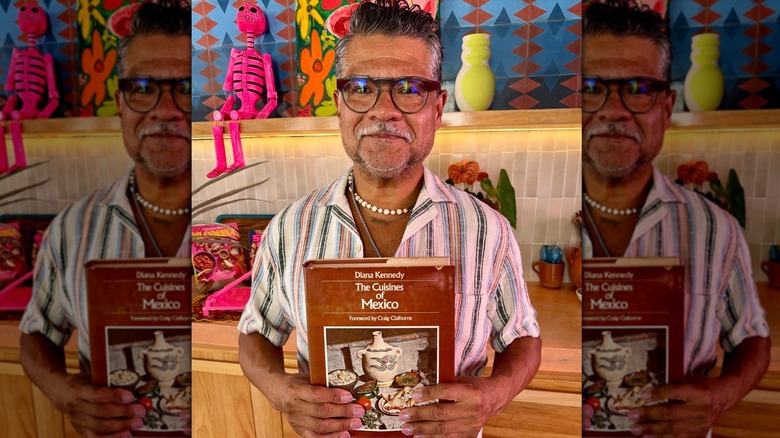
Rick Martínez grew up watching television cooking shows with his mother, wondering why non-Mexican authors of essential Mexican cookbooks — such as Britain's Diana Kennedy and America's Rick Bayless — were considered authorities on cooking Mexican food. However, he also wished to emulate their careers. Alongside this goal, Martínez yearned for both the colors and textures of Mexican food he saw on television, along with understanding himself and his heritage.
In his cookbook's introduction, Martínez writes about growing up in Texas feeling like an "other" as a brown-skinned kid, mentioning the desire to fit in amid white suburban Texas eclipsing his own identity as Mexican-American. This feeling would later grow and return, as food media wanted Martínez to create only certain types of recipes deemed fit for someone of Mexican heritage. This made him feel stifled and disconnected, which he also compares to how he felt when coming out as gay in his youth.
Martínez describes feeling complicit in the practice of labeling various foods and cuisines as "authentic," as if there were only one singular way to cook certain foods that came from decades of creation and human variations. Martínez writes that by referring to something as authentic, that inherently discredits anyone else's recipe or technique. The term can result in simplifying centuries of tradition and evolution for a singular example of authenticity, or dismissing differences in technique based on regionality or even between families.
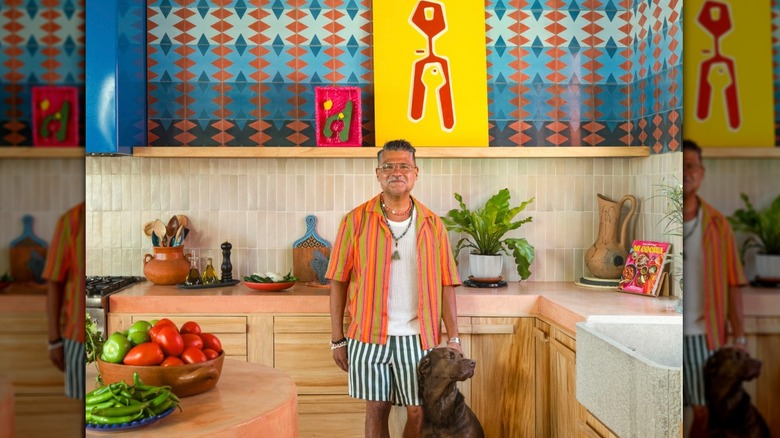
Eventually, Martínez rejected these third-party guardrails for his work, and embarked on his journey through Mexico before writing "Mi Cocina," reconnecting to his Mexican roots through the process of researching the book. He now creates food and content that are as colorful as his wardrobe and his home, making whatever feels right to him and the ever-evolving cuisine of Mexico.
More quotes from Rick Martínez
- "Because I've been living here with Mexican ingredients, I understand how flavors and textures are put together in a way that I didn't know before. There's something so second nature about cooking the food for me to the point now where I feel like I can almost Mexicanize any dish." — Interview with Brianna Plaza
- "Follow your passion, not your desire for fame or money. Cook because you love it and become great at it. Money and sometimes fame will come if you are doing the thing that you love and are great at it." — Interview with BusBoy
- "I was always thinking about food, what I wanted to cook, the parties I wanted to host, the menus." — Interview with Brianna Plaza
- "Store-bought to homemade tortillas are like sliced white bread to crusty warm French baguette. There is absolutely no comparison." — Exclusive interview with Tasting Table