

Grilling Galbi: 8 Tips For The Absolute Best Korean BBQ Short Ribs
We may receive a commission on purchases made from links.
When it comes to Korean cuisine experts, Roy Choi's name is high on the list. The James Beard Award-winning Korean-American chef has been impressing diners with his culinary endeavors since founding Kogi BBQ Taco Truck back in 2008. Now he's back with a new project, bringing his Park MGM, Las Vegas restaurant concept Best Friend to Orange County's OCVIBE in the fall of 2027.
The restaurant highlights the delicious flavors of Korean BBQ and the diverse cultural landscape of Southern California, an area that connects chef Choi to his upbringing and to his introduction to cooking at his parents' restaurant. "It mirrors the lineage of my life in sequence," he shares. The OCVIBE district will bring together a range of restaurants and chefs who go beyond serving amazing food by emphasizing a conversation with their surrounding communities.
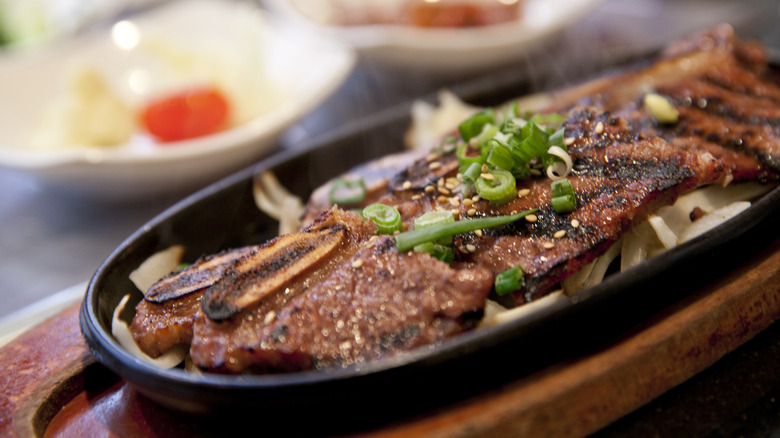
Ahead of the opening, we spoke with chef Choi to get the inside scoop on top tips for trying your hand at Korean BBQ at home. In particular, we wanted advice on how to grill galbi (or kalbi), aka Korean BBQ short ribs. If you've perfected your recipe for bulgogi (Korean BBQ beef), it's time to move on to a different menu item, and galbi is the perfect pick. From the meat cut to the marinade to the type of heat, chef Choi shares everything you should know for recreating this dish at home. Read on to learn how to grill galbi like a pro.
The marinade is the key to success
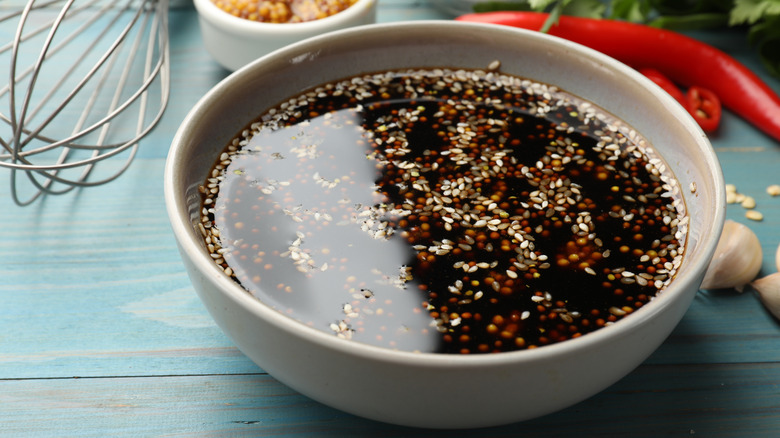
Marinating meat isn't unique to Korean BBQ or galbi, but the former's identity is really founded on the flavorful, tender meat that results from a solid marinade. Roy Choi emphasizes its importance, starting by building the optimal concoction. "Soy sauce, sesame oil, kiwi, onion, sugar, salt, pepper, orange juice or apple juice, green onions, garlic, sesame seeds," he lists as his go-to marinade ingredients. Thanks to his experience in the kitchen, chef Choi notes that you can "go by feel," but for home cooks who are a little wary of eyeballing it, he recommends following a recipe, such as the one in his cookbook "L.A. Son: My Life, My City, My Food."
Together, the various components help infuse plenty of flavor into the meat, as well as making it tender and ready to grill. Kiwi might seem like an odd addition, but it contains an enzyme that helps tenderize meat. Similarly, Asian pear is the sweet ingredient that keeps bulgogi tender. Don't skimp on the duration of the marinade, either. Choi recommends marinating the meat for at least two hours and up to two days. Flipping it at some point during that time will help the marinade soak in evenly. Of course, sometimes it's hard to plan ahead, and he adds, "If you're hungry, you can just dip and grill. Still gonna be bomb."
Seasoning doesn't stop at the marinade
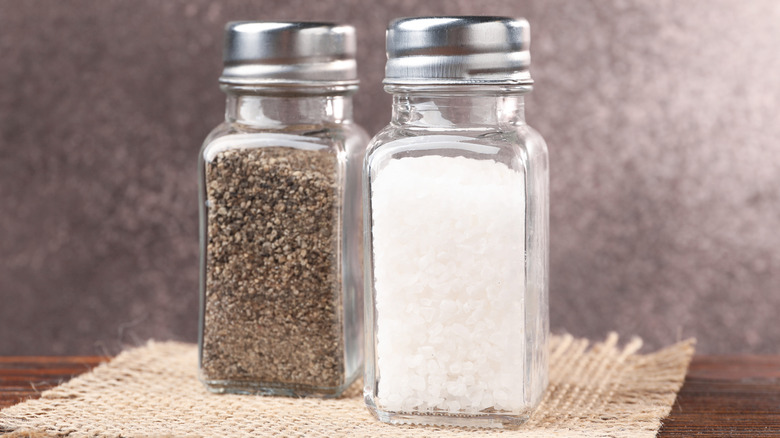
The benefits of a marinade are twofold. You're maximizing flavor while simultaneously ensuring your meat will be pleasantly tender for grilling. However, chef Roy Choi recommends a straightforward seasoning while you grill the meat. "The marinade is 99% of the flavor and saline, but you need that last 1% of magic that only salt and pepper can give," he explains.
Granted, those components will be present in pretty much any marinade recipe you follow, but adding a bit more during and after the grilling process will ensure the flavors pop and stand out. It also allows you to customize the seasoning without worrying that the meat will be marinating in too much salt for too long. While salt and pepper in the marinade will infuse into the meat, a final sprinkle of both will permit the flavors to layer on nicely. Meanwhile, adding cracked black pepper during the grilling process can help it better form a crust, rather than if it were only present in the marinade.
You can use a few different cuts of meat
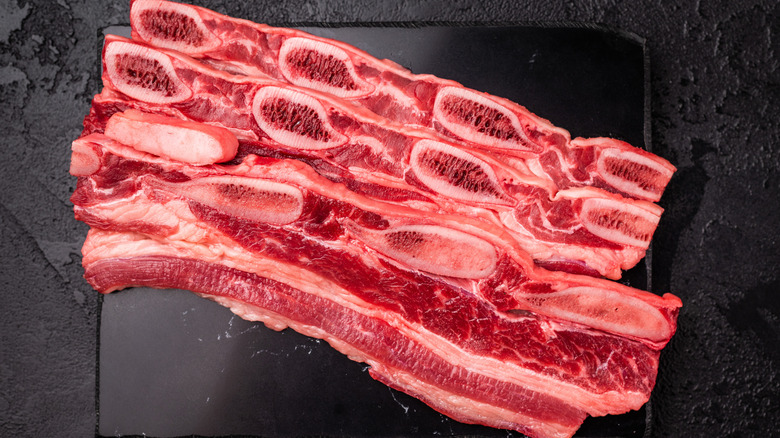
Galbi might translate to "ribs," but the specific cut of ribs leaves room for interpretation. According to Roy Choi, "For grilling, the thin flanken cut or what's called LA Kalbi is best." Typically, they're cut across the bone, between ⅛- and ¼-inch thick. Some people attribute the name to the city of Los Angeles, where Korean immigrants popularized this specific cut. Others suggest it stems from the fact that the ribs are cut laterally, hence, using the first two letters "la" to identify the cut. The result is a thin piece of meat with three pieces of bone that cooks up super fast.
On the other hand, in Korea, the ribs used for galbi are more commonly thickly cut across and along the bone, resulting in a chunkier piece with one bone. Meanwhile, chef Choi adds, "But I also like the boneless short rib cut thin and marinated, then seared on a flat top. Or thick cut short ribs braised, then seared or fried." Each variation offers different flavor benefits, but when it comes to LA galbi, the thin cut offers more surface area to absorb the marinade, making it extra flavorful as it caramelizes on the grill.
Timing is important
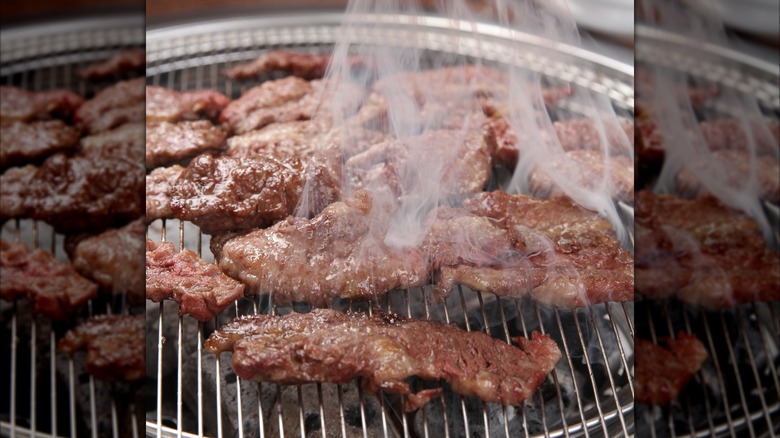
Considering LA galbi is cut so thinly, it's important to keep things moving quickly on the grill to prevent the marinade from burning before the meat is cooked. This is especially important since it contains sugar, juice, and fruit, all of which have the potential to burn. For chef Roy Choi, the solution is simple: "Grill, move, eat," he says when listing the proper method for cooking the meat. This can be as quick as five minutes total on the grill, including flipping the meat from one side to the other partway through.
Indeed, flipping the meat is an important step to avoiding a burnt marinade. Additionally, before placing the ribs on the grill, it's helpful to shake off the excess marinade so that less drips off and burns. You'll want to be sure no bits of kiwi remain stuck to the ribs either, as they'll quickly burn on the hot grill. Finally, lightly oiling your grill can prevent the marinated meat from sticking and burning, and make it simpler to flip the ribs as they quickly cook.
High heat is essential
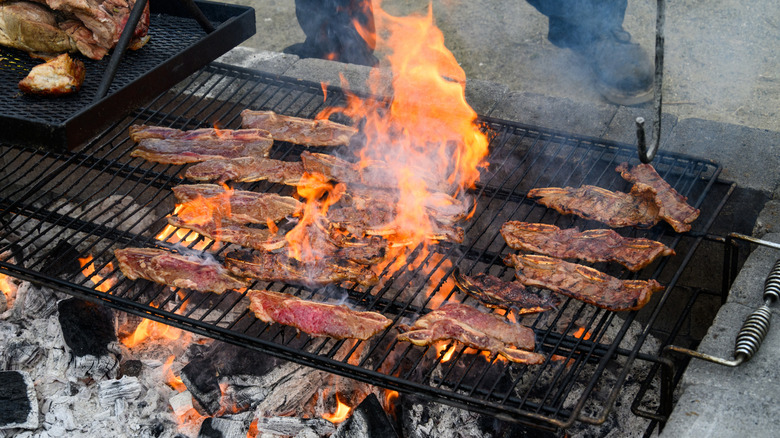
No matter what you're grilling, the type of heat and its intensity are often key to success. Chef Roy Choi notes that one of the biggest mistakes people make when grilling galbi is "Not getting enough char on the edges." Comparing the process to cooking yakitori, he explains, "You really need to understand the flame and let that kiss the kalbi to transform it into something special."
To ensure you're charring the meat properly and using the flame to your advantage, he instructs that direct heat over coals is the best method. "This ain't low and slow. This is hot and fast," he adds. Considering the thin cut of LA galbi and the sugary marinade, it makes sense that a quick, high-heat cooking method would be optimal to prevent the meat from overcooking and the marinade from burning. Ultimately, this technique helps the marinade become caramelized and lightly charred on the outside, while the rest of the meat stays juicy and tender.
Use your senses
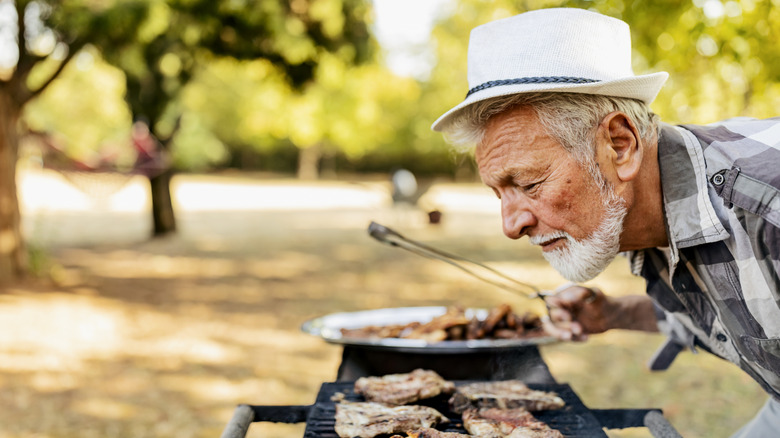
If you're a pro chef like Roy Choi and have frequently cooked galbi, you'll naturally be attuned to the characteristics that signal the meat is done. However, if it's your first time grilling Korean short ribs, chef Choi still recommends relying on your senses to determine when things are ready. He lists "Char, caramel color, smell, [and] taste" as the key elements to assess when you're deciding whether you can pull the meat off the grill. Keeping an eye on the meat, noticing the smells, and finally, tasting it will tell you everything you need to know about the doneness.
Char can be seen visually as the exterior of the meat develops a darkened crust-like layer. The caramel color typically accompanies the char, as the marinade caramelizes right before it darkens. Use your sense of smell to ensure the meat smells like it's cooking nicely, without burning. And of course, your sense of taste is key. "Always sample taste," chef Choi advises. As long as you're using thin-cut LA galbi, once you've cooked the short rib meat for five minutes or so, flipped it, and noticed some caramelization and char, tasting it is the final indicator as to whether it's ready to dish out. Here, you'll want to focus on factors such as a crispy exterior and succulent interior, but personal preference is also important.
You can recreate galbi without a grill
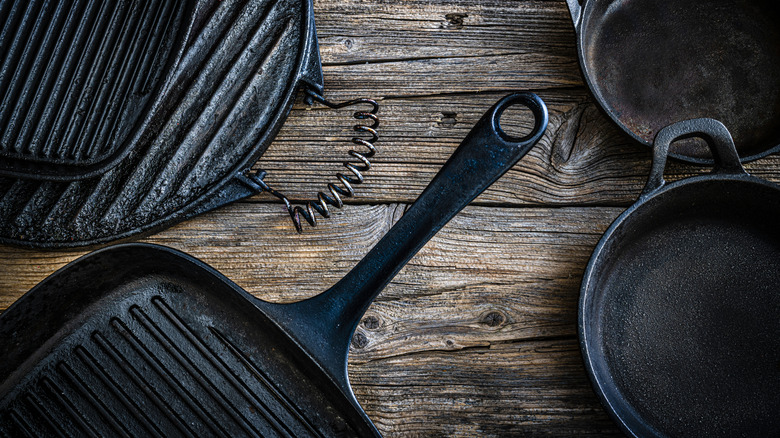
Although the essence of Korean BBQ is a grill, there are alternatives if you don't have one. Typically, a gas, butane, or electric grill might be used in a restaurant, whereas coal is a more traditional source of heat. Chef Roy Choi prefers using coal to fire his grill, but understands that's not always feasible. Whether you don't have the necessary equipment or aren't looking to heat charcoal to make your dinner, you can still recreate a delicious galbi recipe at home. Chef Choi notes that a cast iron grill pan, an electric griddle, and even an air fryer can all work as alternatives. You'll want to use a recipe directed toward the particular cookware you choose for best results, but each has a useful purpose.
A cast iron skillet retains heat really well, acting like a grill with direct heat to allow you to quickly sear meat. Meanwhile, the grooves on a grill pan (which could also be cast iron) allow some of the marinade to drain off the meat, so it doesn't burn when it contacts the hot pan. As for an electric griddle, it allows for optimal temperature control while you cook the meat, making it easy to determine if it's hot enough. Plus, it usually has a non-stick surface, which is especially nice when dealing with a sticky marinade. Finally, an air fryer offers consistent heat and can quickly cook and caramelize the meat with zero hands-on effort.
Master a classic recipe first
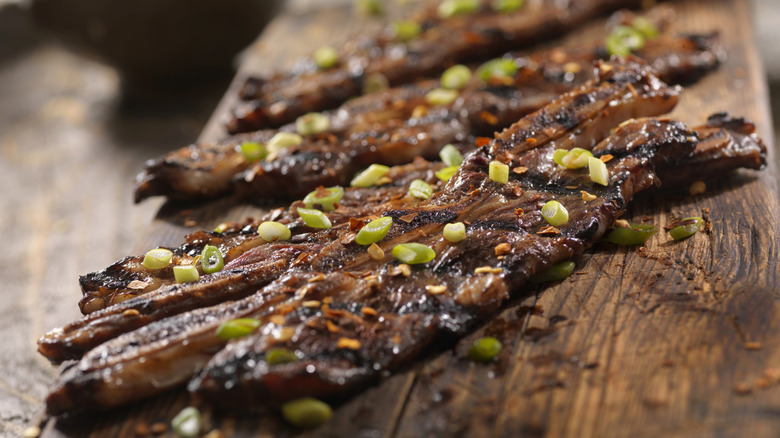
There are plenty of fun twists on traditional galbi marinades and recipes, but before you start experimenting, chef Roy Choi recommends perfecting the classic components. That's his philosophy when it comes to preparing this dish at his restaurant, Best Friend. "We try to make the kalbi as authentic as possible first, then make tweaks from there," he shares. He adds, "The litmus test for me has always been, can this hold its own at a family picnic just as-is first?"
Once you master the marinade components and ratios that are optimal for galbi, you can start playing around by swapping ingredients. For example, you could use pear or pineapple as a meat tenderizer. Meanwhile, you could swap in honey or maple syrup for the sugar, introducing subtle differences that add up. Similarly, try variations on the short rib cut and cooking equipment to see how these modifications affect the final flavor of the dish. And if you really want to think outside the box, chef Choi suggests, "Use the marinade for steaks and chicken and veggies too. Use it on anything."