

Which Salmon Cooking Method Is Easiest For Beginners?
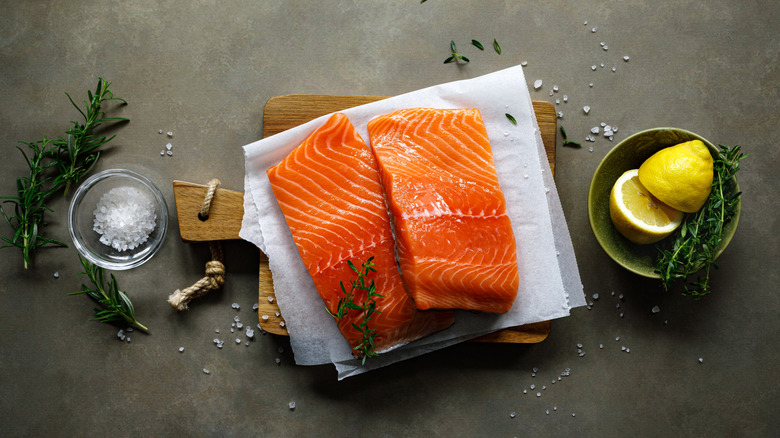
Salmon is a perfect weeknight protein that's a great starting point for beginner cooks. Salmon is famous for being a healthy choice, packed with omega-3 fatty acids, vitamins, and other nutrients, all while offering a meaty, mild flavor that's approachable even for people who don't usually like seafood. It's also easy to cook salmon quickly in a variety of ways. Still, beginners can be wary of preparing fish, so we reached out to Roberta Muir, a cookbook author and CEO of Be Inspired, to ask which salmon cooking method she would recommend to beginners.
Muir tells us, "My favorite way to cook salmon — and the one I think is the most foolproof — is to pan-fry it, skin down, for most of the cooking time, as the skin protects the delicate flesh." She reassures cooks that salmon isn't as intimidating as it seems, thanks to its high fat content which makes it especially forgiving. To make it even easier you can use a nonstick pan, or a well-seasoned cast iron, to prevent the skin from clinging when you try to flip the salmon. Before the it goes in the pan Muri also recommends, "the fish must be at room temperature when it goes into the pan, so take it out of the fridge 30-60 minutes before cooking."
Pan-frying salmon is quick, delicious, and hard to mess up
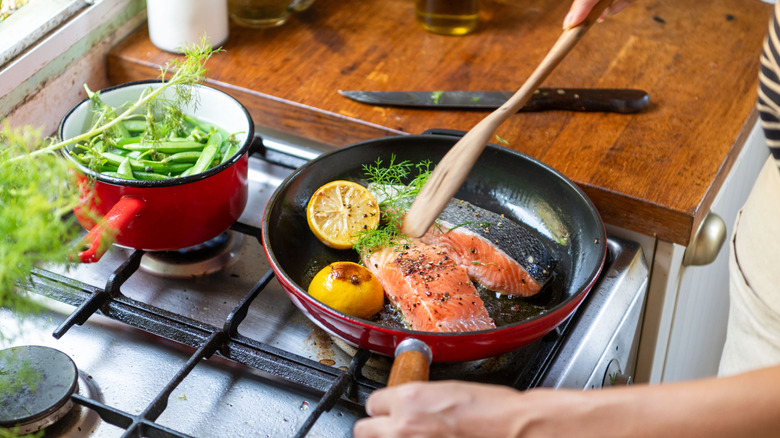
Actually cooking it is so simple you can probably memorize it after one go. Roberta Muir says, "Pat the skin dry, rub it with oil (I prefer olive oil, but it can be a neutral vegetable oil), and place it into a preheated frying pan over medium-high heat." She recommends cooking on the first side for four to five minutes, but the best clue for when to flip is simple and visual. Muir says to turn the salmon over when, "it's opaque halfway up the sides and the skin is well-colored." Once flipped, it only needs a quick sear. Muir explains, "30 seconds will leave the center rare, which is how I like it, A minute will cook it through." She also reminds us that sushi or sashimi-grade salmon, which is the most common type of salmon, is totally safe to serve rare to medium-rare.
The one final note she has for your seared salmon is to rest it. Muir says to "remove it from the pan to a warm plate and set aside for 3 minutes before serving," explaining that the delicate fish will finish cooking from its residual heat. Once you've mastered the basics of pan-frying salmon, you can move on to plenty of delicious recipes, from a simple blackened salmon to endless flavor combinations with soy sauce, lemon butter, honey mustard, and more. Its versatility makes pan-fried salmon a staple in many cooks' rotations long after they've moved beyond the beginner stage.