

A Grilling Expert Says To Skip The Steak If 'The Menu Is Hiding Something'
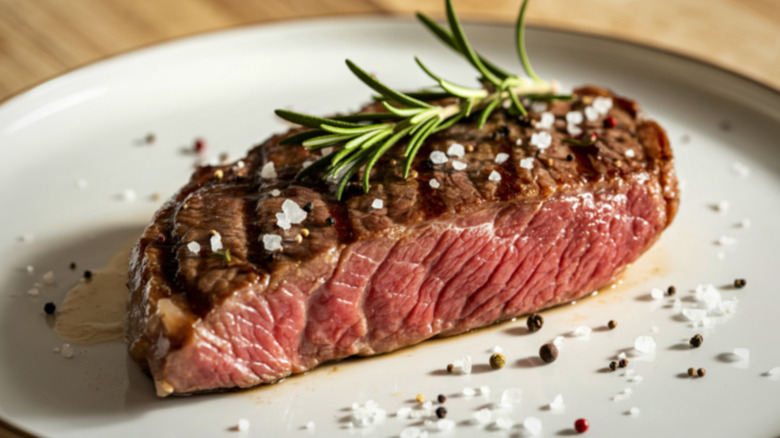
A juicy, tender cut of steak is the height of decadence, and it directly represents the quality of the steakhouse that's serving it. However, before even ordering at a restaurant, the menu itself will tell you if you should skip the steak or not. We spoke with Silvio Correa, Brazilian grill master, culinary consultant, and co-founder of Silvio's House restaurant in Hermosa Beach, California, who said that you can't ignore a menu that hides vital information.
Chef Correa told us, "If the menu is hiding something, I walk away." He explains, "If I see 'steak' with a high price and no story, no cut, no source, no method, that is a restaurant that is hoping I am too impressed by the price to ask questions." Where a steak is sourced, how the cattle is raised, and how the cut is prepared are all crucial factors that any steakhouse worth its salt should share with its customers. In fact, Correa says, "A serious steakhouse wants to brag. They want to tell you about the dry-aging room, the ranch in Nebraska, the wood they are burning."
The details you want to look for when it comes to steak descriptors include the breed or type of beef, where it comes from, and its grade. The optimum USDA grade for beef is USDA Prime or USDA Choice, for example. Wagyu beef, which doesn't fall within the same grading system, should still specify origin and some other grading level. As Correa reminds us, "Silence on the menu means they are buying commodity meat, charging premium prices, and praying you don't notice."
More steakhouse red flags

Missing information about a steak's grade, origin, and preparation is a major menu red flag you shouldn't ignore. But some steakhouse red flags are present before you even sit down at your table, let alone peruse the menu. For example, if you don't see any cars in the parking lot at prime dinner or lunch hours, you might as well not even stay. A restaurant full of clientele or, better yet, a restaurant with a wait indicates that its food and service are in high demand and worth the price tag. Speaking of pricing, a steakhouse menu that charges next to nothing for steaks is another sign of poor quality ingredients. If you want a delicious steak, the time it takes to raise and care for certain breeds, along with expert butchering and preparation like dry or wet aging, should not only be outlined on the menu, as stated by Correa, but should also be reflected in a respectably elevated price.
If the menu doesn't have information listed about its steaks, you can ask your server for details about the cuts. If they are as quiet as the menu pages, then you've got another red flag that screams: "Skip the steak!" Of course, meat isn't the only menu item that indicates the caliber of a steakhouse. The quality and execution of the side dishes are as important as the steak itself, as any steakhouse meal is a sum of all its parts. So, poorly executed sides are probably an indicator that your steak will also be subpar.