

The Biggest Misconception About USDA Prime Beef, According To An Expert
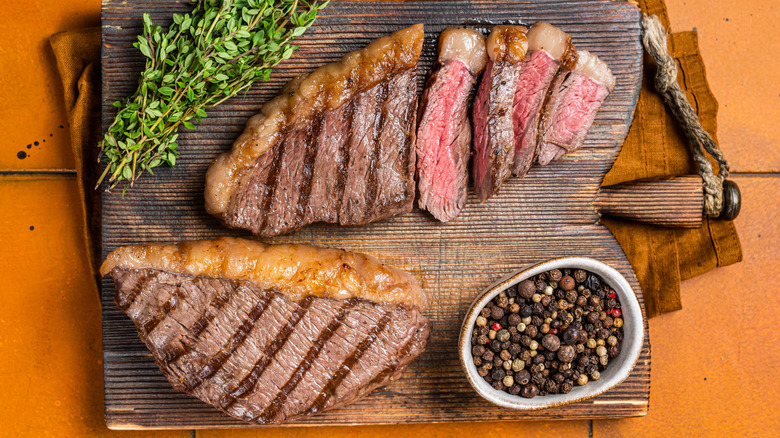
When the cut of beef is good and the fire is just right, the result is a thing of beauty. But the artistry of an excellent steak extends well beyond the kitchen. Selecting the right piece of meat can be a complicated task, and the more knowledge you have, the better. The USDA guide of beef cut grades is a handy tool, but as Silvio Correa, Brazilian grill master, culinary consultant, and co-founder of Silvio's House restaurant in Hermosa Beach, California explains, there is more to choosing a good steak than just grabbing something with a "USDA Prime" sticker on it.
"People think Prime is a magic word," Correa says, "like if it doesn't say Prime, you're wasting your time ... But Prime is just a photograph of fat." USDA Prime is the highest grade of beef, coming exclusively from young cattle and boasting abundant marbling. According to USDA reports for 2025, this grade accounts for just 11.5% of the beef harvested in the U.S., with most of that going straight to restaurants. Still, as Correa explains, the grade is only one piece of the puzzle. "It tells you the marbling looks good on paper," he says of the USDA Prime grade. "It does not tell you if the cow lived well, if the butcher knew what he was doing, or if the chef understands fire."
That extra fat operates like an insurance policy, Correa says, delivering a delicious final product even if the cook makes a mistake. It is not, however, a guarantee of the the best steak quality. Finding that is a slightly more complicated task.
There is much more to a good steak than its USDA grade
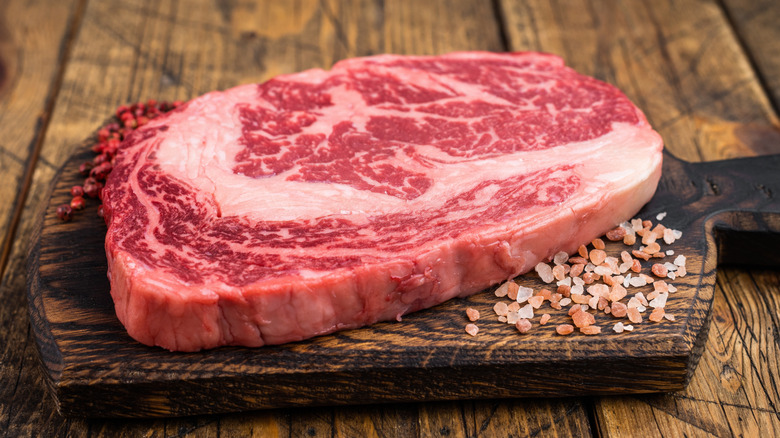
"In Brazil, we don't grow up with USDA stickers," Silvio Correa says. "We grow up eating beef from cattle raised on open pasture, and sometimes that meat has less marbling than Prime. But the flavor? The flavor comes from the life of the animal." The types of beef you're most likely to find in restaurants, such as USDA Prime or Choice, tell you something about the age and fat content of the beef — but that's about it. They don't account for every factor that can influence the final product, from farming practices to preparation techniques. So while it may be a green flag to see the "USDA Prime" label on a steakhouse menu, it isn't the only measure of quality. At a truly excellent steakhouse, the beef may be exceptional because of factors that go far beyond its grade.
Marbling is an easy characteristic of steaks for consumers to see and key in on, and may be part of why ribeye tops the list of the most popular cuts of steak, but when handled properly leaner cuts can be every bit as good. "At my grill," Correa says, "I cook a lot of picanha, the queen of Brazilian churrasco." Correa explains that when cared for properly — sliced with the grain, seasoned simply, and grilled with patience over charcoal — picanha is as good or better than the fattier steaks in fancy restaurants. "The secret is not the grade on the box. The secret is the fire, the rest, the respect," he says. "Choice with respect beats Prime with arrogance every single time."