

Salted Vs Unsalted Butter: Which Has A Longer Shelf Life?
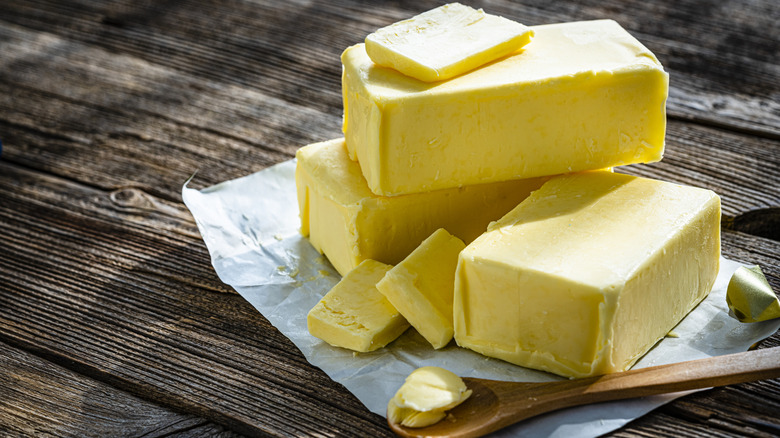
Standing at the butter section in a grocery store can be overwhelming. From Irish, cultured, grass-fed, plant-based, and even Amish butters, the different types of butter available at various prices are sometimes confusing even for practiced home chefs. While some European-style butters are always worth the money, they aren't necessarily what you need for everyday cooking and baking. But one factor you do really need to consider is whether butter is salted or unsalted, as the salt content affects the butter's shelf life.
Salt has long been used as a means of preserving food. It stops the growth of bacteria by drawing out excess moisture from food, as water is essential for bacteria to grow and multiply. Historically, before the modern invention of refrigeration, salt was used to give food a longer shelf life — especially when it came to making, storing, and transporting butter. Now that we mostly depend on salt in butter for enhanced flavor rather than preservation, the choice between the two is really up to the consumer. But salted butter actually has a longer shelf life than unsalted butter, lasting about five months when refrigerated, whereas unsalted butter's shelf life is about three months.
Salted butter's shelf-life advantage matters less today
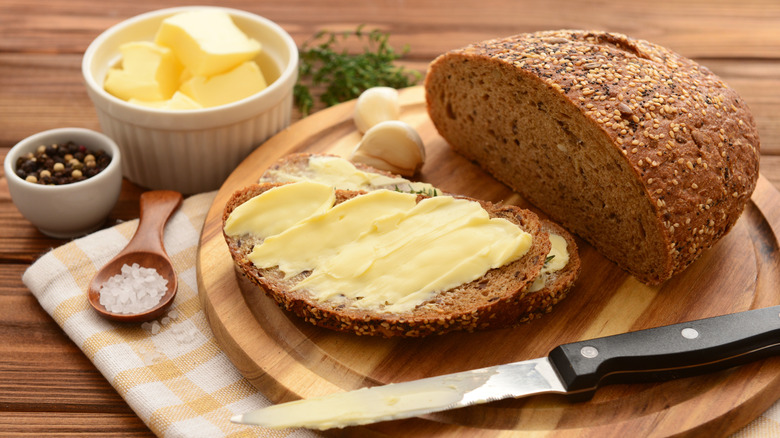
Although you can leave salted butter out at room temperature for long periods of time, if you're really looking to get the longest shelf life out of your butter, you should keep it in the refrigerator. However, if you want softened butter on demand, there's an option for you. Butter crocks, sometimes known as French butter keepers or even butter bells, are vintage vessels specifically made to keep butter safe when left out at room temperature for long periods.
When it comes to deciding which version of butter to use, most people say to use unsalted butter to better control the sodium content and saltiness of your food. This is solid advice for beginner cooks and novice bakers, but as a professional chef, I rarely even have unsalted butter in the house, and most of my culinary colleagues don't either. While you should of course be cognizant of the fact that salted butter adds a tiny bit of salt to your baking or cooking, it's really not a large amount of salt. Rather than keep two kinds of butter in the fridge and confuse the two, I prefer to stick to one type, and that's usually a large block of salted, bright yellow Kerrygold.