

10 Deli Meats Your Italian Sub Is Missing
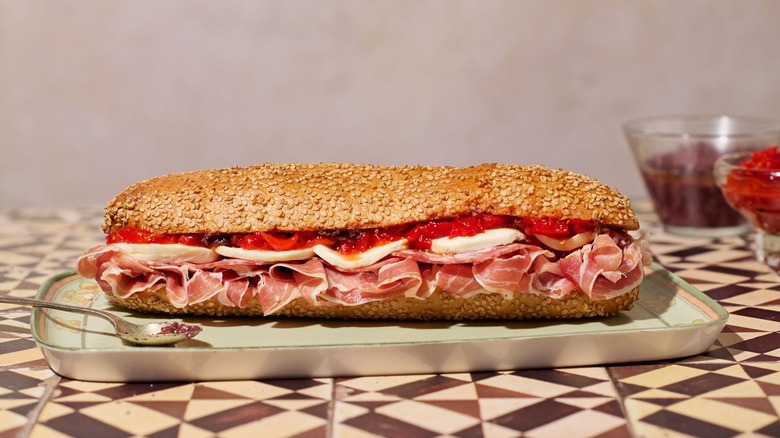
An Italian sub doesn't live by hard and fast rules; it's open to interpretation. And with so much wiggle room, we as sandwich lovers are given the opportunity to take this beast of a sandwich and make it truly delicious. If you're living in a world that says an Italian sub has to be made just one way, let us assure you that your sandwich deserves better.
The conventional instruction of most Italian subs includes a hearty roll, fresh cheeses like mozzarella, acidic condiments to cut through all the richness, and a healthy drizzle of red wine vinegar and olive oil. And of course, we have the meat. Three to four different kinds are usually piled high, and the sandwich usually includes a type of cooked ham, a dried sausage or salami, and a spicy pepperoni. But here is where we have to ask ourselves: Is something missing? In short, yes. Your traditional Italian sub is missing out on some seriously delicious deli meats that you probably never considered. Lucky for you, we love providing the meaty knowledge for those who are hungry for a sandwich upgrade.
To get some insight on the topic, we spoke with two NYC-based sandwich experts: John Ratliff, owner of butcher shop Ends Meat, and Jon Streep, CEO of Italian sandwich shop Alidoro. Both agree that the Italian sub is a concept and offer meaty suggestions to make it more delicious.
Sopressata
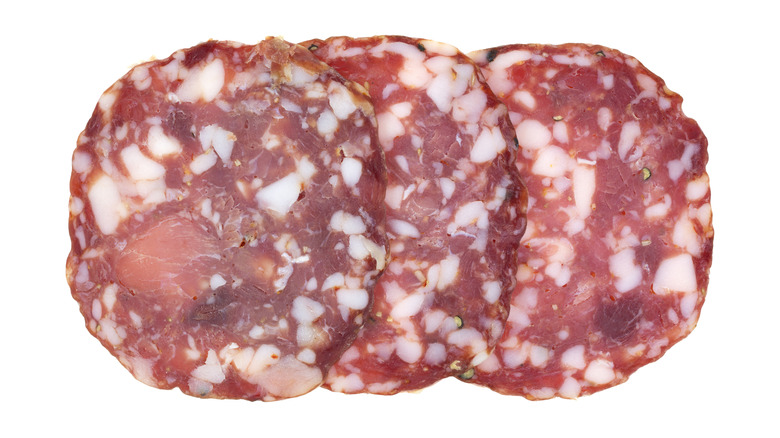
Sopressata, which Jon Streep, CEO of Alidoro, recommends adding to an Italian sub, is a versatile, rustic cured sausage that can be made from a variety of cuts, including the shoulder, loin, or assorted pork bits. It resembles salami, but it is different. "All sopressata is salami, but not all salami is sopressata," Streep says. Unlike salami, it is heavily spiced for an intense flavor, and its coarser grind offers a rougher mouthfeel. When you look at a slice of sopressata, you'll be able to see the little globs of fat throughout, which means plenty of rich flavor in every bite. And within the sopressata category, you've got options — hot, salty, and sweet sopressata are all available for your sandwich pleasure — each of which brings a different sort of flair to the Italian sub.
So what does this deeply flavored, beautifully spiced meat bring to the Italian sub? In addition to being one of the thicker sliced meats on your sandwich, it can also bring the heat. While a traditional Italian sub from a deli may have a few slices of spicy pepperoni on it for heat, you can (and should) do better. A spicy sopressata will have a richer, more intense hot pepper flavor, which can really turn up the overall flavor when paired with saltier, more savory meats and fresh cheese.
Mortadella
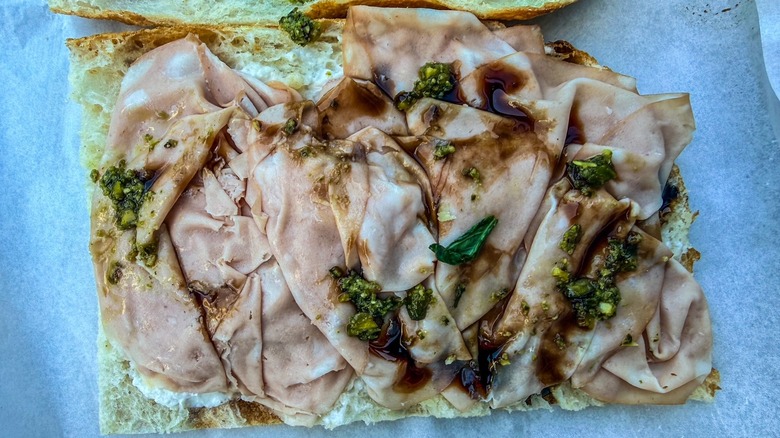
According to Jon Streep, mortadella is "considered the crown jewel of all the meats in Italy." If you've tried it on its own, you can understand why it's worthy of royal status. Mortadella is a cured pork sausage made with pork, cubes of fat, and plenty of herbs and spices. If you can see the little white globs of fat scattered throughout each slice, you'll know you're eating the right stuff. You may even occasionally see it spotted with coarse black pepper and pistachios, which add more flavor and a satisfying bit of crunch throughout.
Mortadella is a great meat to include on a stellar charcuterie board, in a selection of European-inspired bar snacks, or in a homemade ravioli filling, but why add it to an Italian sub? The answer is simple: texture. When sliced paper thin, mortadella has a luxuriously silky, almost velvet-like texture that is the ultimate contrast to the thicker, chewier meats and marinated peppers on your sub. Plus, mortadella is often eaten alongside cheese, bread, and accoutrements in Italy, so it's easy to see how similar flavors could work on your Italian sub.
"When you take a bite of a sandwich, you're getting these various textures, and that's creating the flavor that you're getting and feel in your mouth," says Streep. "That's one of the reasons it works really well, when it's combined the right way, it makes for this sort of beautiful harmony of textures and flavors."
Porchetta
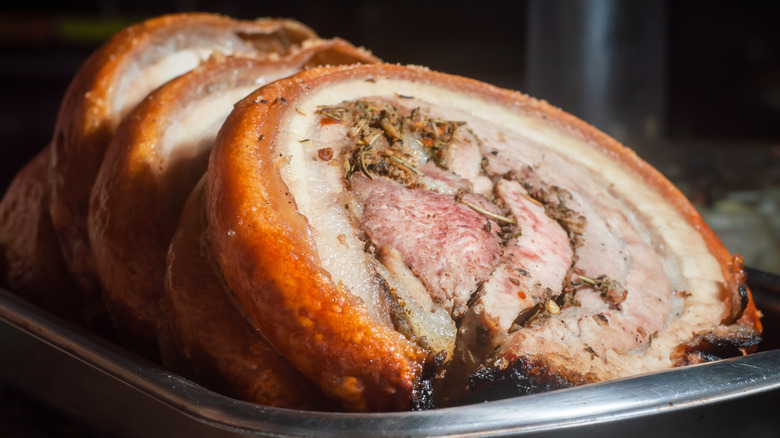
Porchetta is a bit different from some of the other meats on this list. In one version, porchetta is made using pork loin wrapped in pork belly — which is heavily seasoned with herbs and spices and wrapped with string so it resembles a sort of pork log — before it's roasted. In another, it's only the skin-on pork belly that's seasoned and wrapped. Some versions of of porchetta also use pork shoulder instead of the loin or the belly.
While versions change from one recipe to another, a traditional porchetta will be seasoned with plenty of fennel, thyme, rosemary, salt, and pepper. As Jon Streep describes it, porchetta is "like the mole of Italy." "Everybody has their own recipe, and everybody's is the best. Porchetta is similar, everybody has their own spin on the herbs, what cut of pork they're using," he says. This makes porchetta a sort of open-to-interpretation dish — and what makes it such a phenomenal addition to an Italian sub.
Rather than go with the typical prosciutto cotto on your Italian sub, we recommend opting for the far more flavorful porchetta instead. Thinly slice it for a silky-smooth mouthfeel, or keep the slices thicker to accentuate its richness and the crunchy exterior. If you truly want to elevate your Italian sub, porchetta is the way to do it — regardless of how you slice it.
Cecina
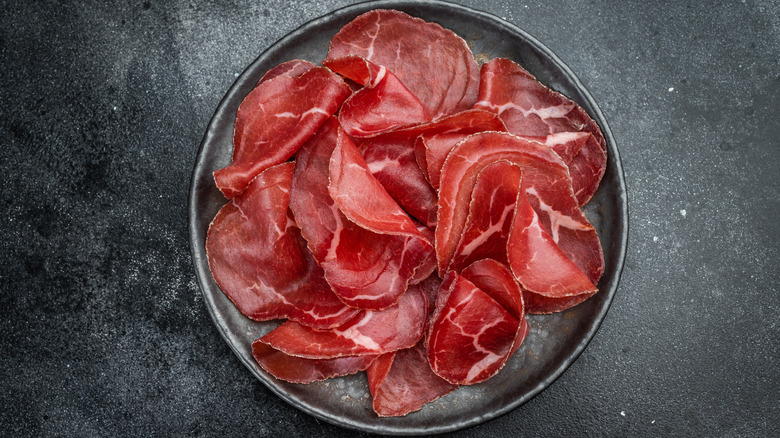
Pork and ham tend to be the stars of the Italian sub, and for that, a hungry and grateful nation of sandwich lovers thanks them. But there are other proteins that are notably underused on the Italian sub — ones that could really beef things up. In a world of ham-heavy Italian subs, butcher shop owner John Ratliff is making space for beef. "We do a lot of beef salami, instead of pork we do it out of grass-fed beef, and that's pretty rad," says Ratliff. "That has a good flavor profile, and it can be a big deal in a city with a large Jewish population, you can offer this Italian hero that generally is always dominated by pork, and do it all out of beef, which is really cool."
Want to seriously amp up your Italian sub? Ratliff recommends cecina, a cured beef from Spain. It can be made from a variety of beef cuts, which are cut into strips and heavily seasoned with salt, garlic, paprika, and various other herbs and spices. It's then marinated, cured, and dried for several weeks, giving it some smoky notes and intensifying its savory, beefy flavor. The texture is also a little chewy, almost jerky-like, offering an interesting textural contrast from the softer pork and ham salamis. You can also make this an Italian-meets-Spanish sub by using manchego instead of the fresh mozzarella, which just so happens to pair beautifully with cecina.
Beef sopressata
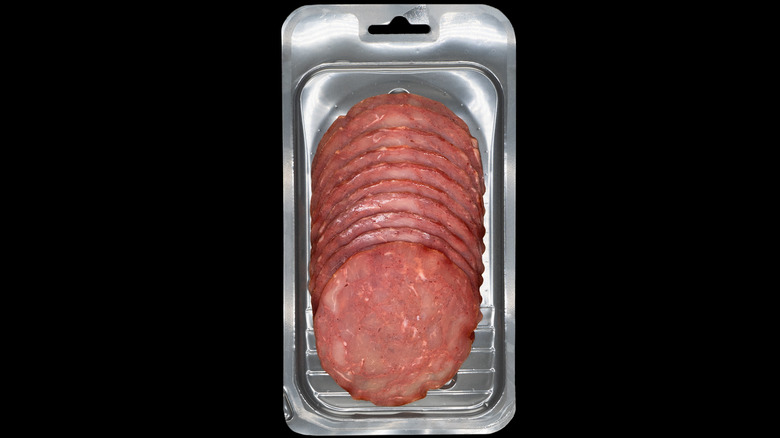
Another beef entry John Ratliff recommends for an Italian sub? Beef sopressata. It's sopressata, which we already included on this list in its traditional pork form, but his suggestion is all beef.
At Ends Meat, Ratliff is making beef sopressata, as well as plenty of other beef salamis, as counterparts to their pork counterparts, giving non-pork eaters the opportunity to indulge in these meats. Similar to pork sopressata, beef sopressata can be the sweet, salty, or hot addition to your Italian sub rather than the everyday spicy pepperoni. And just like the cecina, it can bring an entirely different beef-forward flavor profile that differs greatly from the pork and ham products. And since an Italian sub marries supporting textures and flavors, beef sopressata can be a welcome change, as it can contrast everything else happening in between the bread. To accompany the beef sopressata, swap out the marinated peppers for a spicy, crunchy giardiniera and finish it all off with a sharp provolone.
Unlike pork sopressata, beef sopressata may not be as easy to come by. But if you can find it at a specialty butcher shop or even order it online, we recommend making it one of your Italian sub's featured players.
Finocchiona
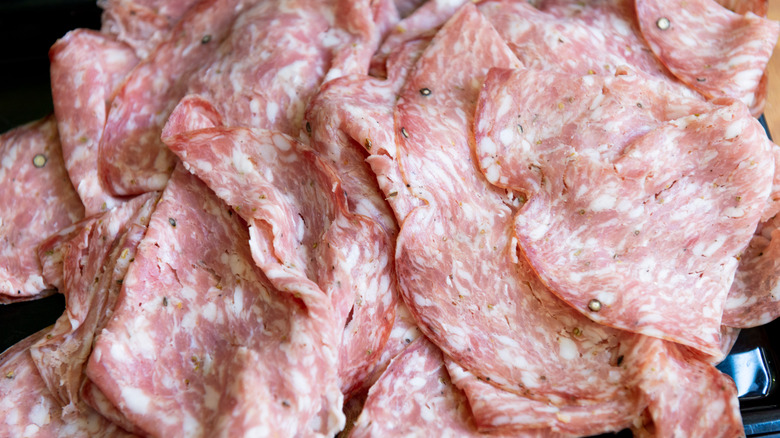
Fennel can be polarizing. It lends a slightly sweet, licorice-like flavor to whatever it makes an appearance in, and finocchiona is no exception. This Italian cured salami gets its flavor from fennel seeds and, in John Ratliff's opinion, it would certainly be a welcome addition to an Italian sub. Finely ground pork is seasoned with salt, garlic, sometimes red wine, and fennel, then slowly fermented and cured. The result is a richly flavored salami with a soft, slightly chewy texture that almost melts in your mouth. If you're used to ordering Genoa salami on your Italian sub but want something with a more invigorating flavor, finocchiona is an excellent salami swap.
While the fatty, unctuous texture of the finocchiona is a welcome addition to the Italian sub, it's the flavor we're really excited about here. The fennel seed, with its delicate sweetness, is an exciting contrast to all the other savory meats. Combined with the other meats, the cheese, tangy peppers, and crusty Italian bread, that warm, rich flavor from the finocchiona will bring some subtle sweet notes to an otherwise heavy-on-the-salt sandwich, making for an excellent sweet and salty contrast in every bite. If you do decide to use finocchiona on your Italian sub, let it be the star, flavor-wise, and opt for some less intensely flavored salamis like salty sopressata and mortadella in the supporting role.
Lonza
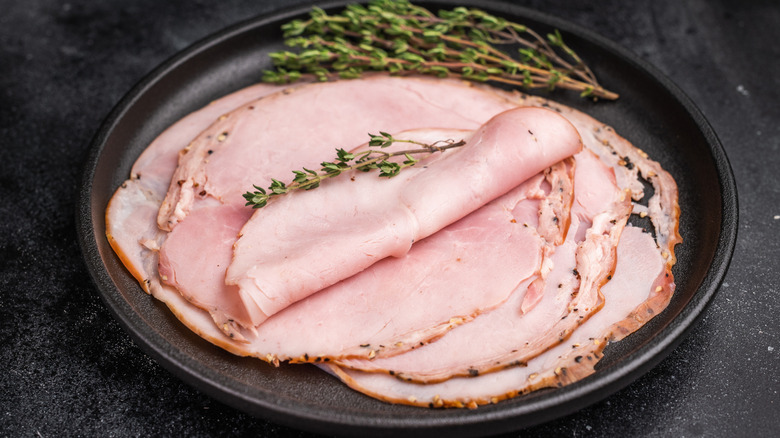
If you've spent as much time as we have casually browsing charcuterie boards and learning about the different types of cured meats, you've probably come across lonza, even if you didn't know you did. It's one of the many cured deli meats that John Ratliff makes at Ends Meat, and it's an addition that you didn't know you needed until you try it. At Ends Meat, pork loin is rubbed with salt and various spices like coriander and juniper, then aged for six months. The end result is a savory flavor profile and a tender mouthfeel that, when thinly sliced, pulls apart beautifully. If you're accustomed to the mild flavor and balance that comes with slices of prosciutto cotto on your Italian sub, lonza is the ideal Italian deli meat to use instead, as it has a similar texture but a far more enticing flavor.
On an Italian sub, think of lonza as one of your thinner-sliced, softer meats, like mortadella, which starkly contrasts harder salamis like sopressata or cecina. If you're used to having capicola on your Italian sub, lonza isn't all that different, as it's cured from the long, lean muscle along the back of the pig.
Pancetta
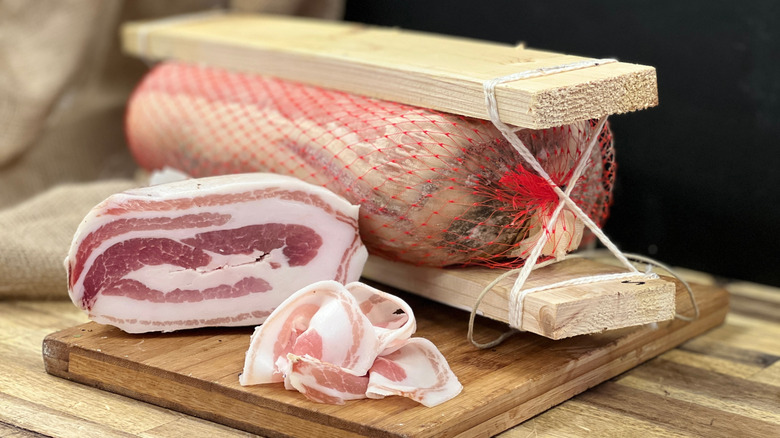
If you've been wondering all this time whether we're going to say that bacon is one of the meats that has been missing from your Italian sub, well, here we are. We love bacon in the traditional breakfast sense, but in its crispiest, smokiest form, it's not quite what we're looking for. However, there are some Italian deli meat lookalikes, like pancetta, that are absolute favorites of ours. Like bacon, pancetta is made from pork belly, but that is more or less where the similarities end. The bacon that typically accompanies your eggs and cheese on a roll is cured with nitrites, smoked, and salted, while pancetta brings a lot more herbaceous flavor and spice to the curing process. The pork belly is salted and marinated in a brine seasoned with spices like rosemary, nutmeg, black pepper, cloves, and garlic. Unlike bacon, pancetta can be eaten uncooked.
There are two types of pancetta: arrotolata, which is rolled pancetta, and stesa, which looks more like thick-cut bacon. For Italian subs, opt for the arrotolata. The deli meat is thinly sliced with plenty of herbaceous flavor paired with salty, smoky notes and has a wonderfully rich, tender texture. Think of pancetta as a gentler, more subtly flavored bacon, bringing just the right level of salt and a wisp of smoke without overpowering the rest of the sandwich. In this busy sandwich, the salty pancetta plays well and stands out against the milder ingredients, like the fresh mozzarella, making its flavor that much more appealing and obvious.
Speck
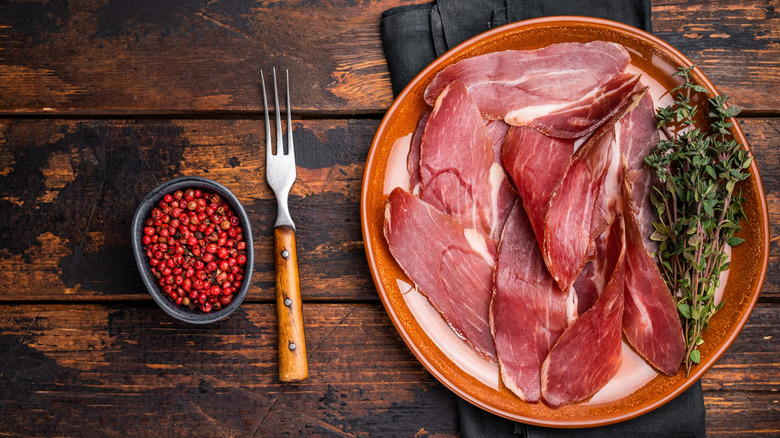
Another Italian cousin to bacon that Jon Streep would love to see on more Italian subs? Speck. It's cut from the leg of the pig and lightly smoked. Streep features it on the Breakfast BEC at Alidoro. "It gives a very similar flavor profile to bacon and so it plays really well for this application," he says. Similarly, on an Italian sub, there are so many competing flavors and textures, meaning speck is bound to stand out in a positive way. Bacon may not be a commonly featured meat on an Italian sub, but it certainly has a place in the greater sandwich world.
Speck's texture and flavor are what make it stand out on this list and why it's a great addition to the Italian sub. Its firm, chewy texture offers a contrast to the other softer meats on this list. Plus, if you like the idea of bacon on your Italian sub, but pancetta doesn't seem like it brings enough bacon-like flavor, speck may be just the smoky, salty meat you've been looking for.
'Nduja
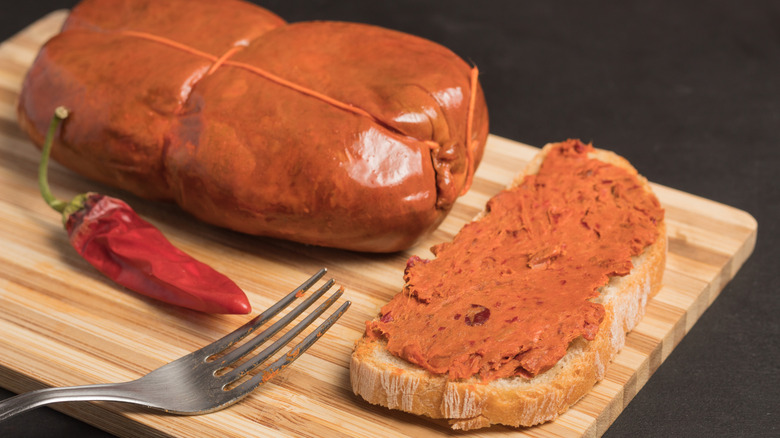
You want to talk about deli meats that your Italian sub desperately needs? Try 'nduja. While we aren't here to pick favorites, 'nduja may edge every other one out as the most interesting and underutilized meat on this list. The coolest part? It's not even sliced deli meat: It's a meat spread.
'Nduja, which John Ratliff recommends adding to Italian subs, is a soft, spreadable salami paste made from pork meat and pork fat. It can act as both a deli meat and a condiment. 'Nduja comes from the Calabria region of Italy, which explains why Calabrian chilis are the star ingredient. It has an unctuous texture and plenty of savory flavor from the pork fat, and an intensely fiery kick of heat from the chilis. Together, they create a salty and spicy symphony. It gives the same effect as pâté on a Vietnamese bánh mì sandwich, bringing flavor, texture, and plenty of spice. It's robust and exciting, and when combined with the other herbaceous meats, fresh mozzarella cheese, and sweet-and-sour peppers, it may just become your favorite addition to an Italian sub.