

Why Costco Steaks Are Blade-Tenderized (And Why It Can Be Unsafe)
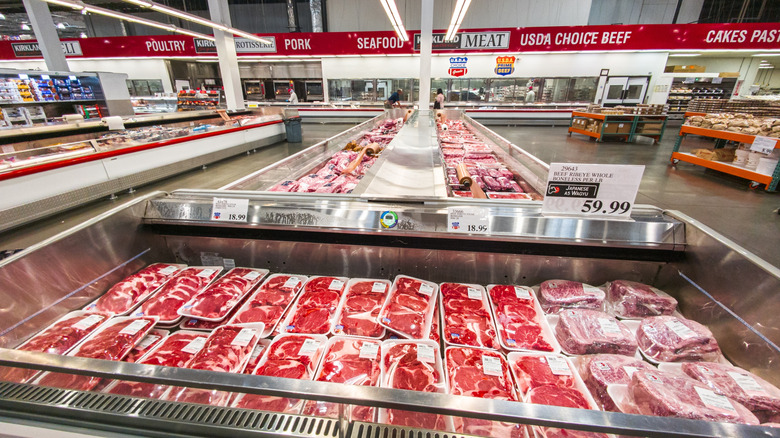
Tenderization is the process of breaking down tissue fibers to soften the meat and make eating it more pleasant. Costco streamlines the process by blade-tenderizing (sometimes called "mechanically" tenderizing) its steaks. In this process, meat is passed through a conveyor system that drops a rack of long, thin, closely packed blades through the meat. This breaks down much of its connective tissue and muscle structure, which should make it easier to cook into a perfectly tender steak. Blade-tenderization is more efficient, improves consistency, and simply requires less elbow grease than hand tenderizing. The problem is, this process introduces additional risk of contamination to the meat's interior, requiring additional care when cooking to make it safe to eat.
Typically, food-borne pathogens exist on the outside surface of raw meat. Putting that perfect sear on your steak not only makes it taste incredible; it also kills off the surface bacteria, and the less-exposed interior can get away with reaching a lower cooking temperature. When the thin tenderization blades puncture and pass through the steak, they can potentially deliver bacteria like E. coli throughout the often less-cooked interior of the steak (when cooked rare, for example), or even cross-contaminate between pieces of meat, making consumers sick.
Blade-tenderized steaks need longer on the grill
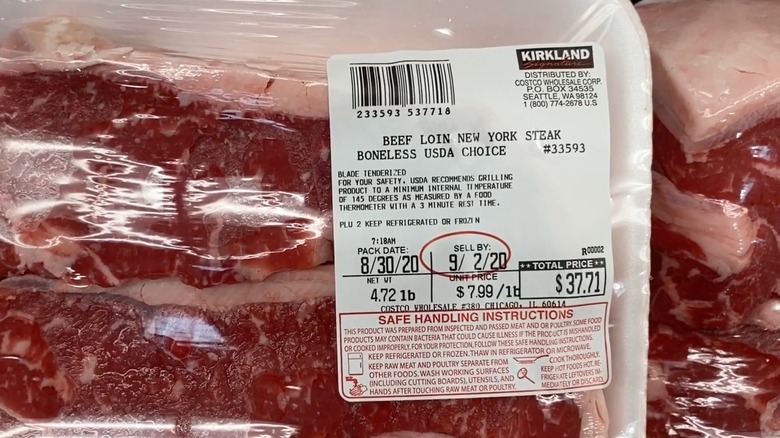
Eating a blade-tenderized steak doesn't mean that the meat is certain to give you food poisoning; it just means that there's a pathway for surface bacteria to set up shop in the interior of the steak. Time is also a factor, and a steak that was blade-tenderized days ago may have propagated more bacteria under the surface than one that was processed that morning. The solution is to thoroughly cook the steak all the way through. The USDA recommends cooking blade-tenderized steak to an internal temperature of at least 145 degrees Fahrenheit, checking with a thermometer, and allowing it to rest for at least three minutes. This extra time helps the cooking complete while the temperature stabilizes — but resting a steak is a good rule of thumb anyway if you want it juicy. This 145-degree target is bad news for many steak purists, as that means cooking the meat past the level of medium-rare (around 125 degrees) and into the neighborhood of medium-well and beyond.
Since 2016, the law has dictated that retailers are to explicitly label meat as being blade-tenderized and to recommend the USDA's cooking instructions. This law was introduced to create transparency and equip shoppers with knowledge about how to safely cook their steaks. Whenever you're shopping for steaks at Costco, it should say blatantly on the label if the meat was tenderized with blades. Otherwise, there are several ways to tenderize your own steak when you get home.