

Homemade Pancakes Taste Diner-Worthy When You Make This Flour Swap
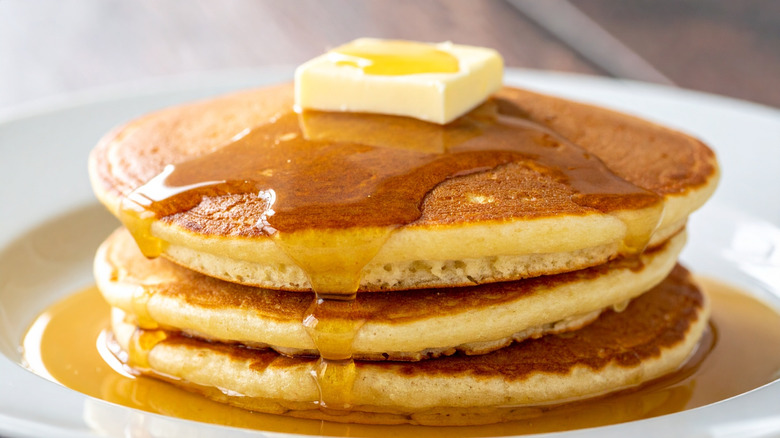
There's no denying how tasty a stack of pancakes is, especially on a lazy Sunday morning. These pan-fried wonders are surprisingly versatile, as you can load them up with any number of toppings (that aren't maple syrup) and add unique ingredients to the batter to change its texture. One of the flour varieties that is most deserving of a spot in your homemade pancake batter is none other than cake flour.
Most pancake recipes call for all-purpose flour. This workhorse of a flour is the one type that most people have on hand. All-purpose contains anywhere from 10% to 12% protein, which allows you to get the structure that you're looking for from your pancakes, without adding any sort of unique flavor like you'd get from buckwheat, whole-wheat, or spelt flour. However, the smarter move is to instead use cake flour in your batter. Cake flour is ground more finely than all-purpose flour, which will give your flapjacks a lighter and fluffier consistency. The key difference between the two flours is gluten content, of which, most all-purpose brands have around 10%. Since cake flour has less gluten, it will give you a softer bite, making all the difference in a stick-to-your-ribs pancake recipe.
Tips for adding cake flour into your pancake recipe
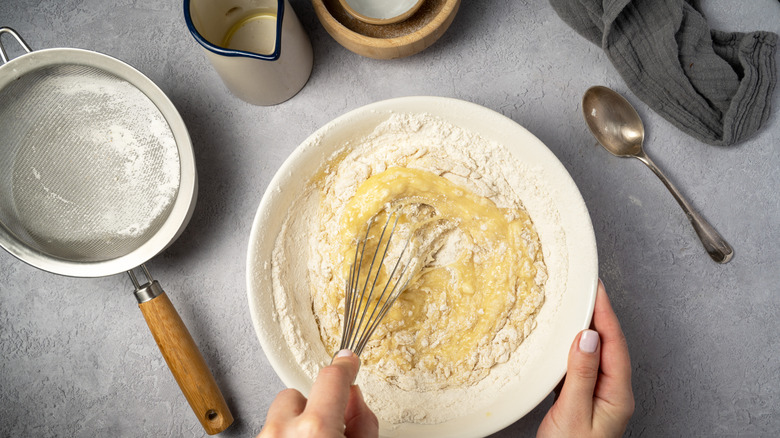
Unlike many other flour substitutes, you can usually substitute equal parts of cake flour for all-purpose flour in your pancake recipe. However, there are some important things to note about making this swap.
For one, since cake flour has a lower gluten content, the batter may have a different texture than you're used to, if you've only used all-purpose flour in the past. Pancake batter is also incredibly easy to overmix, but when you use a lower-gluten option like cake flour, you don't have to worry about that as much. However, any recipe made with cake flour can risk becoming overmixed due to the flour's unique absorption rate. We still recommend abiding by the golden rule of only mixing batter until the flour dissolves (it's even okay to leave lumps behind) to prevent this from happening.
Another tip is to sift your flour before using it. You can do this for a batter made with all-purpose flour, too. While it's not an absolute must for pancakes, if your cake flour has been sitting in the back of your pantry for a while, you may want to incorporate more air into it by passing it through a mesh strainer before working it into your batter for a lighter bite. Lastly, handle the delicate pancakes with care and, of course, flip them at the right time.