

The Roast Deli Meat That's Almost Never Worth The Effort To Make It At Home
We may receive a commission on purchases made from links.
Many ambitious, tedious DIY cooking projects do pay off (ahem, pandemic sourdough). Homemade deli meat can be one of them, but it depends on which one. When we talked to Owen Han, sandwich expert and author of "Stacked: The Art of the Perfect Sandwich," about pre-packaged deli meats, he told us that "not every meat is worth the effort." According to Han, turkey is one such disappointing DIY deli meat. "It can be tricky to get right," Han said, "and often requires a lot more work for a result that's not dramatically better than what you can get from a good deli."
What it mainly comes down to is the anatomy of both the animal and the cut — the same reason turkey is considered a "diet food," and why a lot of people associate the Thanksgiving roast with being dry and boring, and others obsess about flavor-enhancing, moisture-inducing workarounds like deep frying or brining the turkey. Turkey breast is an exceptionally lean muscle. Unlike most cuts of beef or pork, it contains very little intramuscular fat and comparatively little connective tissue, two features that make meat taste very good and give cooks a wider margin for error. Fat greases up and cushions the meat against drying out and, of course, contributes flavor, while the connective tissue melts into a rich and silky gelatin.
Without those components, the proteins in turkey breast just tighten quickly when exposed to heat, pushing out the moisture. If you leave it just a little too long in a hot, dry cooking environment like an oven or a smoker, you have created the reason everyone politely drowns their holiday meal in gravy.
Don't DIY roast turkey deli meat
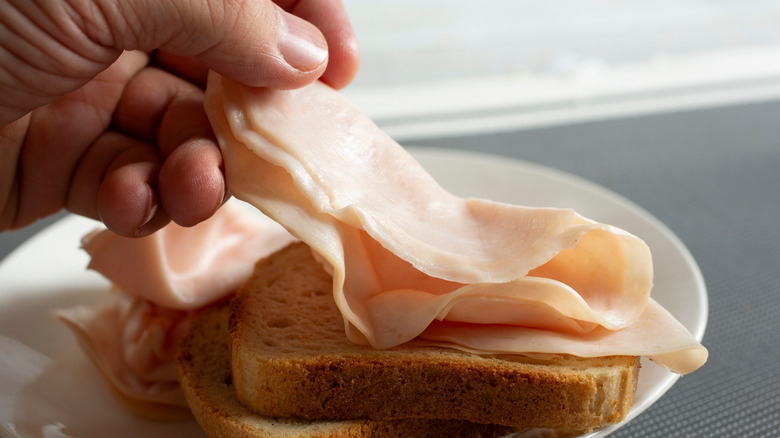
Could you take this as a challenge and become the best at-home deli turkey maker on all of TikTok? Absolutely. You could also, probably, spend years recreating an approximation of a McDonald's French fry. But ... is that really a good use of your time and energy? In any case, it's definitely more involved than just throwing a turkey breast in the oven and hoping you can slice it thin enough. Commercial operations often brine, or otherwise season and tenderize the meat for moisture retention. They also cook it under tightly controlled conditions, chill it with scientific precision, and run it through commercial slicers that shave it into those nearly-translucent slices. Unless you're the type to genuinely enjoy a rather Sisyphean DIY project, and you happen to have a smoker, a deli slicer, or maybe a post-November freezer full of discounted turkey breasts, the payoff probably doesn't justify the effort.
If you're looking for a weekend cooking project, there are meats that will reward your elbow grease. They all require intention and technique, but, say, a roast beef with a deeply browned crust and a rosy inside is very attainable at home. You can glaze a ham that will caramelize into a sweet, lacquered exterior. Those meats gain distinctive flavor and texture from home cooking in ways that are obvious and satisfying between two slices of bread.
The ambition of deli turkey is also, at its heart, different. Good deli turkey is supposed to be mild, moist, low-fat, evenly and inoffensively seasoned: the drywall for sharper cheeses and crunchy vegetables, and strong-tasting condiments like mustard and cranberry sauces. That kind of neutral consistency is exactly what reputable commercial processors excel at producing. If you want to focus on getting good at something, pick something worth it.