

Paper Straws Have An Eco-Friendly Reputation — But The Reality Is More Complicated
We may receive a commission on purchases made from links.
The infamous, viral video from 2015 that saw the removal of a plastic straw from a sea turtle's nostril is still as present in the minds of eco-conscious consumers over a decade later. This masterclass in pathological public messaging unofficially triggered a tidal wave of discourse surrounding straws. Suddenly, folks worldwide began ditching single-use plastic straws for biodegradable paper ones. In 2021, the European Union officially banned single-use plastics (including disposable straws), and various alternative straw materials have since emerged as commercially-available solutions to reduce plastic pollution. After all, according to Turtle Island Restoration Network, plastic straws take 200 to 500 years to fully decompose. However, going the paper route isn't as straightforward of a solution as it may have initially seemed.
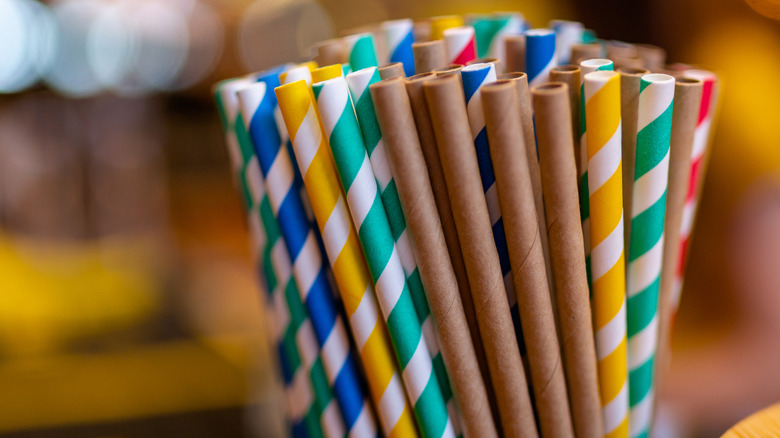
Studies have shown that paper drinking straws can contain poly- and perfluoroalkyl substances (PFAS), aka "forever chemicals." These chemicals are commonly added during the manufacturing process to make plant-based straws more water repellent. But, these synthetic pollutants can be absorbed by the body when people drink through a straw. Not only does this make paper straws potentially harmful to humans, it also carries the possibility of exposing the environment to excess PFAS, which can contaminate water supplies, bringing their projected life-cycle duration and overall sustainability into question.
A 2024 study published in Food Packaging and Shelf Life also found that non-volatile compounds migrate from paper straws into glasses of carbonated soda whether or not the straws are printed. In just 30 minutes, 19 leached chemicals were found in concentrations as high as 3.6 milligrams per kilogram of soda, including some of the same additives used in commercial plastic products.
To avoid the leaching of forever-chemicals, opt for glass or metal straws
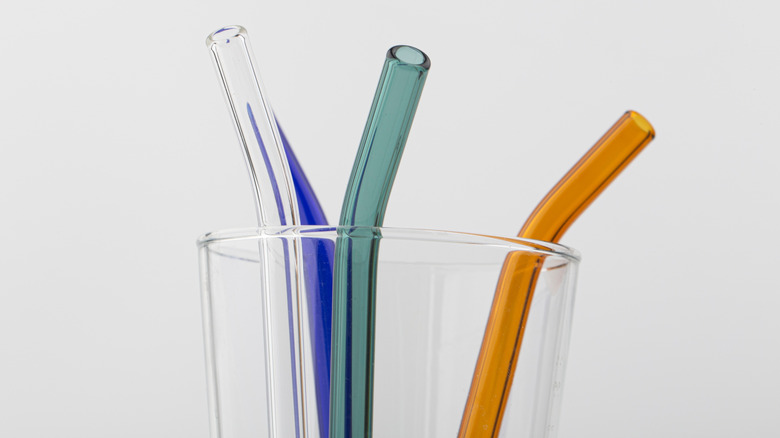
Soon thereafter, a 2025 study published by the National Library of Medicine concluded that "paper and bioplastic alternatives showed up to 2.5 times higher climate impacts than plastic." These findings indicate that paper straws aren't necessarily a safe, or especially biodegradable, alternative as once suggested. Luckily, there's no need to give up straws altogether — according to science, drinking your favorite beverages through a straw might even make them taste better. To bypass these negative aspects, simply opt for reusable drinking straws that are made of glass or stainless steel.
Investing in the right reusable straws is an easy way to reduce plastic waste in the kitchen, and it won't break your budget, either. The HeykirHome Glass Straw Set (currently $5.99 on Amazon) includes four straws and two cleaning brushes, enough for a whole household. As an added bonus, they're wide enough to accommodate smoothies and milkshakes. On the go? This ZOKU Reusable Metal Straw ($11.99) features a foldable design and a compact travelling case for popping into purses or pockets. It's easy to whip out during coffee runs or at restaurants, and its silicone mouthpiece tip protects teeth from abrasive impact with the stainless steel. To reap those health and safety benefits, proper cleaning is essential. Like any utensil, reusable straws should be washed after every use. Dish soap and hot water will get the job done, and the included scrub brushes helps keep every crevice germ-free.