

This Opulent Mid-Century Glassware Brand Could Be A Rare And Worthwhile Thrift Find
We may receive a commission on purchases made from links.
If you're a Mad Men enthusiast or simply have an appreciation for gorgeously elaborate cocktail sets etched in gold, there's a certain collectible brand you should look for on your next thrift hunt: Culver. Known for its luxurious use of 22-karat gold, bold geometric patterns, and mid-century glam, the glassware is a favorite for vintage barware lovers. While some pieces can fetch hundreds of dollars, plenty of others are still affordable. If you're a professional thrifter, you should seek out which designs are genuinely scarce, but for the casual buyer, plenty of patterns are easy enough to find without paying a fortune.
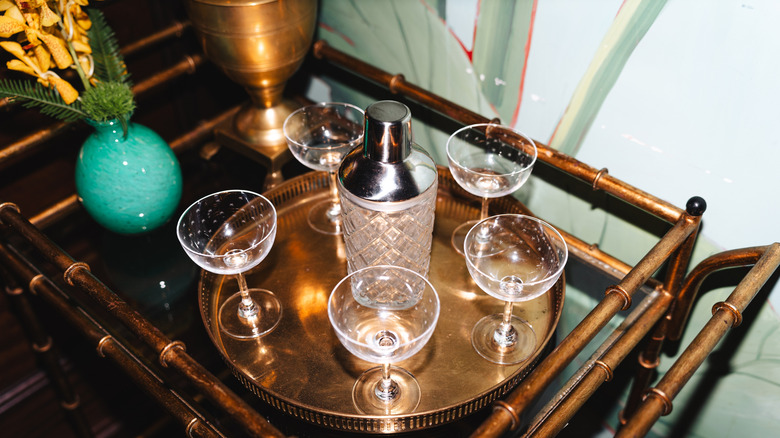
Culver Ltd. was founded in Brooklyn, New York, in the late 1930s by Irving Rothenburg. Though the company began by producing its own glass, in the late 1980s, it switched to purchasing high-quality glassware from other glassmakers. Culver's focus was on making drinking glasses both beautiful and eye-catching. During the 1950s, '60s, and '70s, the brand was deeply embedded in home cocktail culture and the trend for entertaining that flourished after World War II. Its highball glasses, double old-fashioned glasses, decanters, and ice buckets were proudly displayed on bar carts around the country.
What set the company apart was its proprietary method of applying intricate gold foils to the glassware using high heat, which is a closely guarded trade secret. Whatever the exact method, the glass sets looked fit for a queen, which is probably why these items were sold in high-end department stores and jewelry shops, often nestled in black velvet for displays.
Identify Culver glassware by its patterns, not its shape
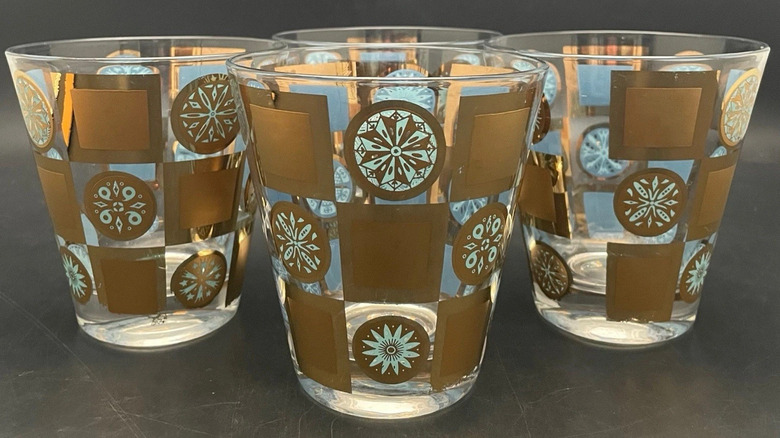
While Culver produced more than 75 different patterns in its heyday, there are a few highly collectible versions to look out for. One of the most coveted patterns is Seville, a gold filigree design with blue diamonds interspersed. If you're a lover of New Orleans, the Mardi Gras pattern features gold jesters and whimsical shapes; a set of six lowball glasses will run you around $525. For a similar price, there's also the rare Leopard set from the 1970s, which screams Miami opulence and mirrored glass coffee tables.
Besides scarcity, condition plays a big role in pricing. The gold decoration, while stunning, is delicate. Years of dishwashing or heavy handling can wear thin the metallic overlay, which makes intact gold designs all the more valuable. Authenticity is another consideration. Many Culver pieces are marked with a gold "Culver Ltd." signature, but later models only came with a foil label, which frequently fell off after decades of use. It's the patterns, not the glass shape, that can help you find an authentic Culver, which is why it's always a good idea to brush up on the history of vintage items before buying.
While common patterns like Valencia (its most popular line) remain accessible to new collectors, the rarer designs have become increasingly hard to find. The next time you thrift, keep your eyes peeled for rich gold overlays, repeated geometric motifs, and bold mid-century colors. You just might find the ideal glass for Don, Roger, or Joan.