

The Country With The Most KFC Locations Isn't The U.S. Or Japan
For a restaurant that started as a one-man gig on the roadside of the American South, the name "Kentucky Fried Chicken" is now known in virtually every continent. You'll find the red-and-white chicken buckets in strip malls from Lagos to Bangkok. Sure enough, according to Yum! (KFC's parent company), the chain is present in 149 countries worldwide. This leads us to an interesting question, though: which country among these has the most KFCs? Take a guess.
If you said the United States, home turf, you'd be... wrong. It's not Japan, either, despite fried chicken having become a Christmas dinner staple and a national obsession (and treasure) there. The real answer is China, and it doesn't beat the other countries by a margin.
The first KFC restaurant opened in China's capital, Beijing, all the way back in 1987. In four decades, up until March 2026, Yum China reported that there are now 13,000 stores, spread over 2,600 cities (and towns). To put that into perspective, the second country with the most KFCs is the United States, and we only have 4,000 stores to date (and most of them aren't even concentrated in Kentucky!). China's KFC footprint outnumbers America's by more than three to one. KFC execs understand their advantage in China well and are hellbent on fortifying it. That's why, if you were to read the Chinese menu, you'd find more locally-adapted items aside from the regular fried chickens and burgers — BBQ lamb skewers, lotus root-and-beef wraps, coffee and traditional teas. None of which you'd be able to find stateside.
How exactly did KFC get here?
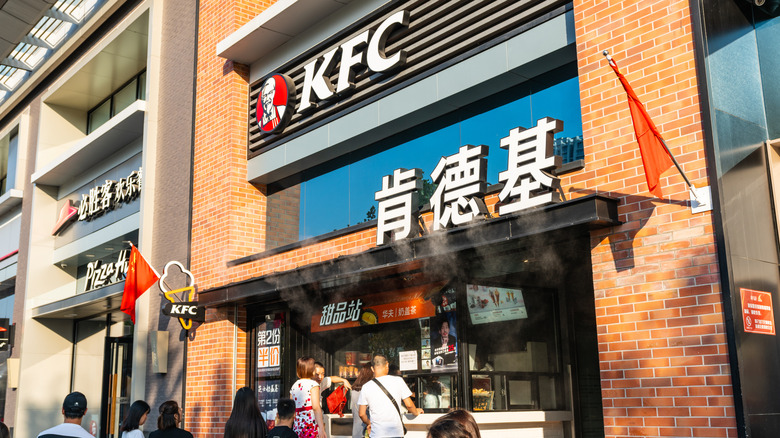
Not by accident, that's for sure. Yum China spent all this time investing in building a supply chain and logistics network needed to open restaurants in towns that most other Western brands either don't have the reach or didn't bother to serve. Recent years have seen net new stores grow above 22% annually, and a new location typically breaks even within about two years, which is quite fast by industry standards.
As we mentioned earlier, KFC took special care to tailor their menu to suit the taste, culture, and sensibilities of the local people — that did the brand a lot of favors, as well, by turning KFC into something that's closer to a daily lunch spot than an occasional splurge the way people do with McDonald's (which maintains a more Western menu and, according to David Chang, even better fried chicken). Execs have credited that flexible strategy, paired with China's expanding middle class over the years, as the key reason the brand caught on so fast in the first place.
In the last few years, KFC has been having to adapt to an increasingly more competitive market — local fast food chains are sprouting up, more foreign brands are entering China, and, occasionally, the political flare-ups between China and the U.S. put brands like KFC into inadvertent hot water. But growth hasn't stopped, and KFC hasn't given up on its ambition of reaching more than half of China's population with smaller-format stores and locations built specifically for cities that have never had a KFC. More than 1,000 Chinese towns are still untapped by the brand, so there's still a long way to go (and more to watch) from the brand.