

Wagyu Has A Lesser-Known Cousin, But Don't Expect A Cheaper Price
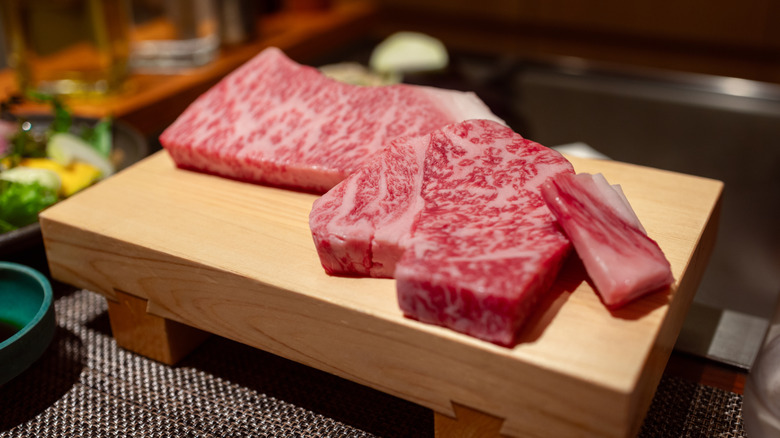
Wagyu beef has become highly desired by steak connoisseurs across the country, and while you can find some interesting alternatives, they aren't likely to be cheaper. Japanese-bred cattle are famed for their amazing marbling, giving it a buttery texture and rich flavor. The increasing global demand has led to a surge in exports, with a 17% increase in 2025 alone. It has also led to a search for similar beef sources, such as Wagyu beef grown outside of Japan, like American Wagyu. One of the most interesting examples is Korean Hanwoo beef, a beef that might be considered a distant cousin of Wagyu.
While it's hard not to compare the two East Asian luxury beef varieties, just calling Hanwoo "Korean Wagyu" does it a disservice. The history of Hanwoo beef is longer than that of Wagyu, dating back thousands of years. For centuries, Hanwoo cattle were used as a working animal. Improvements in breeding methods and livestock management over the last century gradually turned Hanwoo from a workhorse to a prized source of beef on the Korean peninsula.
Today Hanwoo is famous for its rich marbling and tenderness, much like Wagyu, although there are real differences between the two. Given Korea's small size, Hanwoo beef production is quite small compared to other major cattle breeds, making it very rare and hard to find outside of the area. So if you were hoping it was a cheaper alternative for Wagyu, you're out of luck.
The limited supply and high standard of treatment impact the price of Hanwoo beef
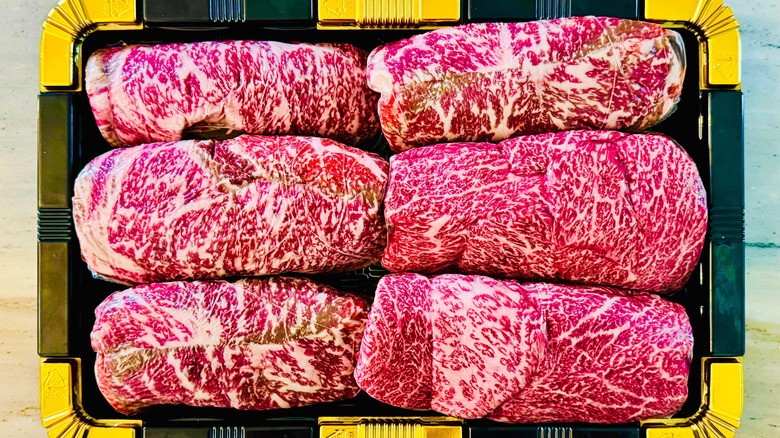
If you are an American looking for Hanwoo beef, you will need to travel to Asia because export of the beef is highly restricted. Only five nearby countries and regions are authorized for export: Hong Kong, Macau, Cambodia, and Malaysia, with Singapore recently approved in late 2025. Because of its limited production and revered status in South Korean culture, more than 99% of all Hanwoo beef remains within the country.
That limited supply is part of what drives Hanwoo's high price. South Korea's beef industry is less industrialized than other countries, with most Hanwoo raised on small farms with around 30 animals. Then there are the high standards of treatment. Hanwoo are fed specialized diets that combine grains, rice straw, and other supplemental food. Cows are cleaned and brushed constantly, and given far more space in feedlots than is standard for most other cows. They are even bred through artificial insemination to ensure all the cattle come from top-ranked breeding bulls.
Like Wagyu, Hanwoo aims for high amounts of marbling, but the taste is actually quite different. While Hanwoo does contain a high amount of fat, it is still solidly less than Wagyu. Hanwoo aims for 40-50% marbling, while the famously buttery Wagyu is as high as 70%. This gives Hanwoo a more beefy flavor, almost like a midpoint between American steaks and the meltingly tender texture and fatty flavor of Wagyu.
Hanwoo beef is a favorite ingredient of local Korean barbecue
Like the grading system for Wagyu beef, Korean Hanwoo is assigned scores based on the quality of the marbling, texture, and maturity of the animal. 1++ is the highest score, the Korean equivalent of A5 Wagyu. It then runs down to 1+, 1, 2, and 3 at the lowest. However, all levels are still desirable, and different grades are often preferred for different types of cooking.
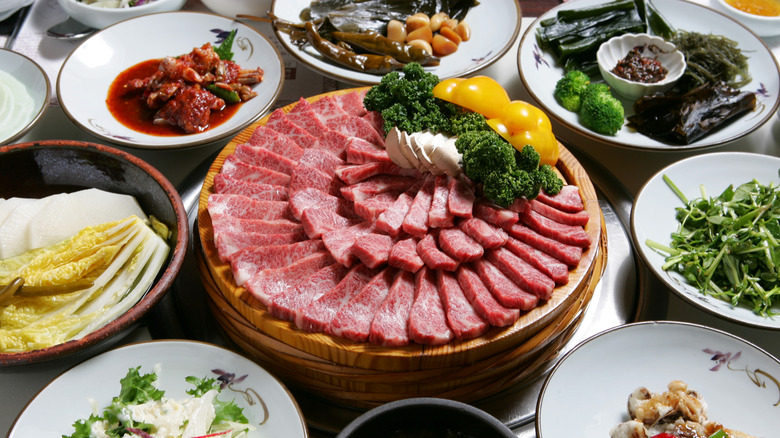
The more balanced, meat-forward flavor of Hanwoo makes it versatile for the many ways beef is prepared in South Korea, but it is ideal for Korean barbecue. The rich fat rendering over the coals creates an excellent smoky cooking experience. And unlike high-quality American steaks, which many meat lovers will scold you for cooking with anything other than salt and pepper, Hanwoo is popularly prepared with mild Korean marinades, as they elevate the more delicate beef and pair well with the charcoal flavor. Hanwoo can be found at many local barbecue spots in South Korea, not just high-end restaurants, although it will still command a high price. In fact, barbecue is so popular that supermarkets have grills set up in store for people to cook the meat they just purchased.
Korean Hanwoo beef is a beloved tradition rooted in local history and regional flavors. So while it may be tough to hear you can't get it in the U.S., that's part of what makes it special.